Deadly Ambush in Southern Somalia Exposes Heavy Cost of Army Offensive Against Al-Shabab

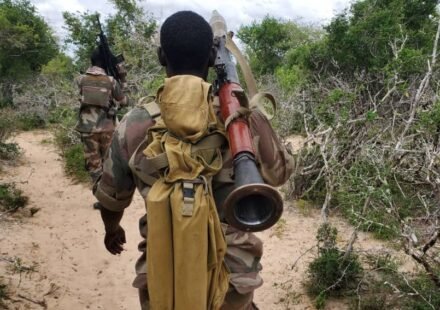
At least 20 Somali soldiers were killed in an ambush by Islamist militants in southern Somalia, according to a military officer who survived the attack. The fighting has raised fresh concerns about the risks facing government forces as they attempt to regain control of territory held by the al-Qaeda-linked al-Shabab group.
The attack occurred on Monday, October 26, near Jameeca village in the Buurhakaba district of the Bay region. Somali troops were advancing through the area as part of a military operation targeting militant positions along an important road connecting Mogadishu and Baidoa.
A military officer travelling with the convoy said he had seen at least 20 fellow soldiers dead after the fighting. Other soldiers who spoke to journalists reported substantially higher losses, while Somalia’s Defence Ministry focused its public account on militant casualties and damage to military vehicles.
The competing accounts have made it difficult to establish the full human cost of the confrontation. Neither the government’s reported militant death toll nor the insurgents’ claims about government casualties have been independently verified.
Explosives-Laden Vehicles Hit Advancing Troops
The fighting took place during Operation Banooda, a government offensive aimed at striking al-Shabab positions and reopening a strategically important route through southern Somalia.
According to the Somali Defence Ministry, militants used vehicles packed with explosives to attack army vehicles. The ministry acknowledged that some military vehicles were damaged but did not provide a complete account of government troop casualties.
Abshir Abdikarim, an officer who was travelling with the convoy, said he saw at least 20 soldiers killed. Separate accounts from two soldiers who spoke to journalists described dozens of government troops killed and more than 100 wounded. One soldier said he had helped transport dead and wounded personnel to hospitals in Mogadishu.
These accounts have not been independently confirmed, and the final number of casualties remains unclear.
The militants also claimed to have captured military equipment and prisoners during the confrontation. Those claims have not been independently verified either. The discrepancy between the accounts illustrates the difficulty of assessing battlefield losses when access to the affected area is limited.
Government Reports Heavy Losses Among Militants
Somalia’s Defence Ministry said government forces killed approximately 75 al-Shabab fighters and wounded another 56 during hours of fighting around Jameeca.
The ministry described the engagement as an assault against militant positions. Its public statement did not disclose how many Somali soldiers had been killed or wounded.
Al-Shabab, meanwhile, claimed that it had killed 321 government soldiers and allied fighters and seized weapons, vehicles and prisoners. The group’s figure has not been independently verified and differs sharply from the account provided by the surviving military officer.
The two sides therefore offer markedly different descriptions of the outcome. The government has reported substantial militant casualties, while accounts from soldiers indicate that the army also suffered serious losses.
Until additional evidence becomes available, the precise number of people killed, wounded or captured should be treated as unresolved.
Why the Baidoa–Mogadishu Route Matters
The fighting has taken place along a strategically important corridor linking Baidoa, a major city in southwestern Somalia, with the capital, Mogadishu.
Road access matters for more than military movements. It can influence the delivery of food and other essential goods, the movement of civilians, access to hospitals and the ability of authorities to maintain links between government-controlled areas.
An offensive intended to reopen the route could improve the government’s ability to move personnel and supplies if it succeeds. However, a heavily contested road can remain dangerous even after troops advance through parts of it.
Further attacks could force security forces to devote additional personnel and equipment to protecting convoys and securing transport links. They could also disrupt civilian travel and commercial activity in communities along the route.
The immediate consequences will depend on whether government forces can maintain access to the corridor and prevent militants from repeatedly attacking military movements.
Al-Shabab Remains a Persistent Security Challenge
Al-Shabab has fought Somalia’s federal government for nearly two decades. The group has used guerrilla attacks, suicide bombings, roadside explosives and targeted killings as part of its campaign.
Although Somali forces and international partners have conducted repeated operations against the organisation, al-Shabab continues to operate across parts of central and southern Somalia.
Its ability to attack military convoys demonstrates the continuing danger posed by insurgent networks, particularly in areas where government control remains contested.
Military operations can weaken militant positions and disrupt their movements, but holding territory presents a separate challenge. Authorities must also maintain security, protect transport routes and support local communities after combat operations move elsewhere.
The latest battle highlights the difficulty of turning battlefield advances into lasting control. Even when government forces report significant losses among militants, attacks on advancing troops can complicate efforts to secure newly contested areas.
Political and Humanitarian Implications
The confrontation comes as Somalia faces wider challenges involving regional political tensions, security operations and the need for sustained support for its armed forces.
Heavy casualties among government troops could place additional pressure on military planning and the resources available for future operations. If equipment has been lost or damaged, replacement and logistical demands could also affect the pace of the campaign.
For civilians, insecurity along major roads can make travel more dangerous and complicate the movement of supplies. Continued fighting may also make it harder for humanitarian organisations to reach communities affected by conflict.
These are potential consequences rather than confirmed outcomes of the latest battle. Their scale will depend on the subsequent security situation, the condition of transport links and the ability of authorities to protect civilian movement.
What Happens Next?
The key questions are whether the Somali military can maintain its advance, restore reliable access along the route and establish greater security around Buurhakaba and nearby communities.
Authorities will also face pressure to clarify the number of government casualties and determine whether any soldiers remain missing or have been captured.
For now, the conflicting reports make it impossible to establish a definitive death toll. What is clear is that the fighting has inflicted serious losses, according to military personnel who survived the confrontation, while the government has acknowledged damage to its vehicles.
The battle underscores the continuing difficulty of Somalia’s campaign against al-Shabab. Success will depend not only on defeating militant forces in individual engagements but also on protecting key routes, sustaining military operations and improving security for civilians living in affected areas.
US-Designated LeT Figure Abu Hashim Dies After Fall at Lahore Complex
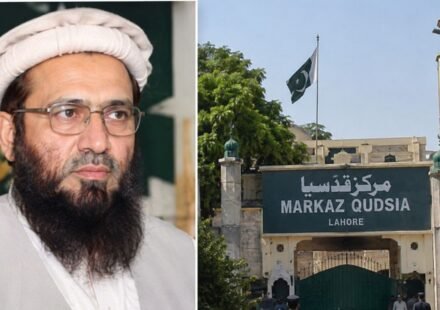
Chaudhry Mohammad Sarwar, also known as Abu Hashim, a founding member of Lashkar-e-Taiba (LeT) who was designated a terrorist by the United States, has died in Lahore, Pakistan, after reportedly falling at a building associated with the group.
The incident took place on Sunday, October 18, at Markaz Qudsia in Lahore. Reports identified Sarwar as a senior figure linked to LeT’s financial operations and fundraising activities in Pakistan’s Punjab province.
The circumstances surrounding his death have not been fully established in publicly available reports.
Conflicting Accounts of the Fall
Initial media reports differed over how Sarwar fell. Some said he fell from the fourth floor of the building, while others reported that he slipped on the stairs while heading to offer prayers.
According to reports citing an audio message from LeT deputy chief Saifullah Kasuri, Sarwar suffered fatal head injuries after falling near the mosque’s stairs.
There was no independently confirmed evidence in the reports establishing that the incident involved an attack. The exact sequence of events remains unclear.
Who Was Abu Hashim?
Sarwar was described in reports as one of LeT’s founding members and a close associate of the organisation’s chief, Hafiz Saeed. He had previously served as LeT’s Lahore emir and was associated with fundraising and the movement of funds for the group.
The US Department of Justice designated Sarwar as a terrorist in 2016. Its account at the time described his links with senior LeT figures and his role in fundraising activities on behalf of the organisation.
Recent reports also linked him to financial activities connected with Pakistan Markazi Muslim League, a political organisation associated with the broader network around Saeed.
Questions Remain About the Circumstances
Sarwar’s death was reported by multiple media outlets on Sunday. However, the available accounts do not establish all the circumstances leading to the fall, and no conclusion should be drawn about whether it was accidental or involved any other cause without further verified evidence.