
UN Nuclear Watchdog Sees No Sign Iran Is Rebuilding Bombed Nuclear Sites

The United Nations’ nuclear watchdog has found no evidence that Iran has attempted to repair or reconstruct nuclear facilities damaged in US and Israeli military strikes, but serious questions remain over the country’s nuclear material and the international community’s ability to verify its status.
Rafael Grossi, director general of the International Atomic Energy Agency (IAEA), delivered the assessment during a briefing to the UN Security Council on Tuesday. He said the agency had detected no repair or reconstruction activity at the affected facilities since June 2025, when attacks on Iran’s nuclear infrastructure disrupted international inspection work.
The assessment provides an important update on Iran’s nuclear programme. However, the absence of detected rebuilding activity does not mean inspectors have verified the complete condition of the damaged sites or established the current location and status of all Iran’s declared nuclear material.
Inspectors Still Lack Access to Key Nuclear Facilities
The IAEA has been unable to carry out its normal verification activities at several Iranian nuclear facilities damaged during the military attacks. Grossi told the Security Council that remote monitoring had revealed no signs of reconstruction, but he stressed that satellite-based observation cannot replace physical inspections.
The affected locations include Iran’s Fordow fuel-enrichment plant, enrichment facilities at Natanz, parts of the Isfahan nuclear complex and the Khondab heavy-water research reactor.
Without direct access, inspectors cannot independently establish the full extent of the damage, determine whether equipment has been moved or confirm the current condition of the facilities. The agency has repeatedly called on Tehran to allow inspectors to resume their work.
The situation leaves an important gap in international oversight: information gathered remotely can help identify visible changes, but it cannot answer every question about activities inside damaged or restricted facilities.
Concern Over 440.9 Kilograms of Enriched Uranium
One of the central concerns is Iran’s previously declared stockpile of uranium enriched to 60% purity.
The IAEA has estimated that the stockpile stood at approximately 440.9 kilograms, or 972 pounds. Uranium enriched to this level is well above the concentration generally required for civilian nuclear power generation, although it is below the roughly 90% enrichment level commonly associated with weapons-grade uranium.
Grossi said the agency has not been able to verify the status of this material since its inspectors lost access following the June 2025 attacks. The agency therefore cannot confirm that all nuclear material subject to its safeguards remains accounted for.
This distinction is crucial. The lack of evidence that damaged facilities are being rebuilt does not establish what has happened to the uranium stockpile or resolve questions about Iran’s wider nuclear activities.
The IAEA is seeking the information and access required to determine the status of the material and fulfil its international safeguards responsibilities.
Iran and the United States Remain at Odds
The dispute over nuclear inspections is unfolding amid a wider confrontation between Iran, the United States and Israel.
US President Donald Trump has defended military action as necessary to prevent Iran from acquiring nuclear weapons. He has also previously described the damage caused by earlier US strikes as having effectively destroyed Iran’s nuclear programme.
Iran, meanwhile, maintains that its nuclear programme is peaceful and has criticised military attacks and international scrutiny of its nuclear activities.
The latest IAEA assessment introduces an important qualification into the debate. The agency has not identified efforts to rebuild the damaged facilities, but because inspectors lack access to most of the affected sites, it cannot provide a comprehensive, on-the-ground verification of their current condition or the status of all relevant nuclear material.
The findings therefore do not, by themselves, establish whether Iran has abandoned its nuclear ambitions or whether all potential proliferation concerns have been resolved.
Diplomatic Efforts Could Offer a Way Forward
Grossi has urged Iran to consider gradual technical steps that could make it possible for inspectors to return. He has also pointed to diplomatic engagement and regional mediation as potential ways to address Tehran’s security concerns while restoring international verification.
The IAEA has said that technical groundwork for an arrangement to facilitate the return of inspectors has advanced. However, a workable agreement would still need to establish how inspectors could access facilities, verify nuclear material and resolve outstanding safeguards questions.
Restoring inspections would not automatically settle the wider political dispute between Tehran and Washington. It could, however, give international governments and the agency a more reliable basis for assessing developments inside Iran.
For Iran, renewed cooperation could help address concerns about its nuclear programme. For the United States and other countries, independent verification would provide stronger evidence for evaluating whether Iran is meeting its safeguards obligations.
What the Latest Assessment Means
The latest findings point to two issues that should not be confused: the absence of detected reconstruction at damaged nuclear sites and the unresolved status of Iran’s nuclear material.
The first suggests that the IAEA has not observed a visible effort to rebuild the affected facilities. The second highlights the limits of what the agency can currently confirm without access to those sites and the information it has requested.
If inspections resume, the agency could improve its understanding of the damage, verify relevant nuclear material and provide a clearer assessment of Iran’s activities. If access remains restricted, uncertainty is likely to persist, making diplomatic efforts and independent monitoring increasingly important.
For now, the IAEA’s position is measured: it has detected no repair or reconstruction activity at the damaged facilities, but it cannot fully verify the situation without access. The next significant development will depend on whether Iran and the international community can agree on practical steps to restore inspections.
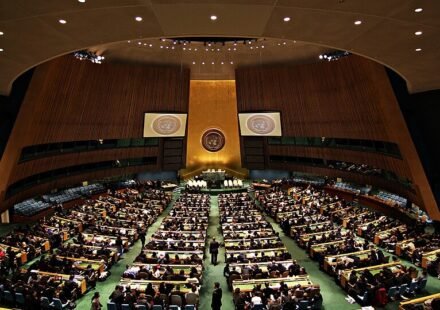
India Challenges Pakistan at UN, Says Islamabad Has No Standing to Lecture New Delhi on Minority Rights
India has strongly challenged Pakistan’s comments on religious freedom and minority protection at the United Nations, arguing that Islamabad should address its own human-rights concerns before questioning New Delhi. During a discussion at the UN General Assembly’s Third Committee, Indian representative Bhavika Mangalanandan raised questions about Pakistan’s record on minority rights, its position on the 1999 Kargil conflict and its repeated statements concerning Jammu and Kashmir.
The exchange took place during a session addressing freedom of religion or belief and issues surrounding funeral rights in exceptional circumstances. India used the discussion to challenge what it described as inconsistencies in Pakistan’s position on religious freedom, the treatment of minorities and the rights of people affected by terrorism.
India Questions Pakistan’s Credibility on Minority Rights
In its intervention, India argued that Pakistan’s own record on protecting religious minorities undermined its criticism of other countries. The Indian representative pointed to concerns over the safety and rights of minority communities in Pakistan, maintaining that governments should be prepared to answer questions about their domestic practices when raising human-rights issues internationally.
India’s central argument was that the protection of religious freedom must be applied consistently rather than used selectively in diplomatic disputes. The statement brought renewed attention to longstanding concerns about the treatment of minority communities in Pakistan, including Hindu and Christian populations.
Issues involving alleged forced conversions, marriages without free consent and the vulnerability of minority girls have repeatedly featured in human-rights discussions about Pakistan. Such allegations require credible investigation and effective legal safeguards to ensure that victims can seek protection and justice.
India’s intervention framed minority protection as a matter of responsibility and credibility, questioning whether Pakistan could effectively criticise another country while similar concerns continued to be raised about its own record.
Kargil Conflict Becomes Part of the Debate
A significant element of India’s response concerned the 1999 Kargil conflict between Indian and Pakistani forces. Mangalanandan referred to the handling of Pakistani soldiers killed during the fighting, saying Indian troops had buried a number of them with military honours and in accordance with Islamic religious customs.
The historical reference was used to challenge Pakistan’s position in a discussion that included questions about religious practices and the treatment of the dead. India argued that its actions during the conflict provided relevant context for assessing the statements being made at the international forum.
The Kargil conflict remains an important episode in relations between the two nuclear-armed neighbours. The fighting followed the infiltration of Pakistani soldiers and armed personnel into positions in the Kargil region of Jammu and Kashmir, prompting Indian military operations to regain control of the affected areas.
By invoking that history, India connected the immediate debate over religious freedom and burial practices with the wider legacy of conflict and mistrust between the two countries.
Jammu and Kashmir Remains a Major Point of Disagreement
India also objected to Pakistan’s continued focus on Jammu and Kashmir. The Indian representative argued that Islamabad should concentrate on developments in areas under Pakistani control rather than repeatedly commenting on India’s Union Territory.
Jammu and Kashmir has remained a central source of tension between the neighbours since their independence in 1947. Both countries have fought wars and experienced repeated military confrontations over the region. India considers Jammu and Kashmir an integral part of the country, while Pakistan continues to dispute India’s position.
The latest exchange at the United Nations illustrates how the territorial dispute continues to influence discussions that formally concern other subjects, including human rights and religious freedom.
For India, Pakistan’s comments on Kashmir form part of a broader pattern of diplomatic criticism that New Delhi rejects. Islamabad, meanwhile, has consistently raised concerns about the region internationally. The disagreement reflects the deep divide between the two countries over sovereignty, security and the role of international forums.
Religious Freedom and Minority Protection Under Scrutiny
The discussion also highlighted the challenge of separating genuine human-rights concerns from political competition between states. Religious freedom, minority safety and the dignified treatment of the dead are important international issues, but disagreements between governments can turn such discussions into exchanges of accusations.
Protecting minorities requires more than diplomatic statements. It depends on the enforcement of laws, access to justice, accountability for violence and safeguards against discrimination. Allegations of forced conversion or abuse should be assessed through reliable evidence and fair legal procedures, regardless of the country involved.
The UN provides a platform where governments can present their positions and challenge one another’s claims. However, statements delivered during diplomatic exchanges do not, by themselves, establish the truth of every allegation made by either side.
A Continuing Diplomatic Rivalry
India’s latest remarks underline the persistence of tensions with Pakistan over minority rights, terrorism, historical conflicts and Jammu and Kashmir. The exchange also demonstrates how both countries use international forums to defend their policies and question the credibility of the other’s arguments.
For New Delhi, the message was that Pakistan should address concerns about the treatment of its own minorities before presenting itself as a critic of India’s record. The reference to Kargil and the dispute over Jammu and Kashmir further widened the scope of the confrontation.
The episode is another reminder that relations between India and Pakistan remain burdened by decades of conflict and competing political narratives. Whether such exchanges lead to meaningful progress on human rights remains uncertain. The central challenge is ensuring that concerns about religious freedom and minority protection receive serious attention beyond diplomatic rhetoric.