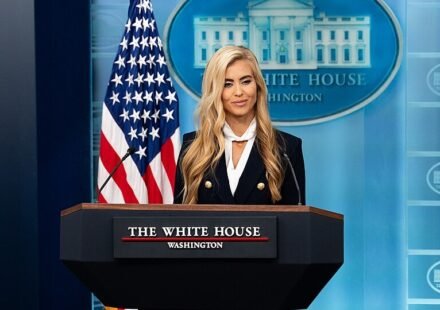
Katie Zacharia’s Legal Career Under Scrutiny After Appointment as White House Press Secretary

US President Donald Trump’s newly appointed White House press secretary, Katie Zacharia, is facing questions about her legal credentials after media investigations found no public records confirming that she is licensed to practise law in any US state or Washington, DC.
The controversy emerged following Zacharia’s first press briefing on October 13, when reporters questioned her about where she had passed the bar examination. Her response, referring to her move to China, intensified questions about her professional background.
According to Reuters, The Associated Press and The Washington Post, Zacharia has described herself publicly as a lawyer and has held positions involving legal and advisory work. However, the available public records reviewed by these outlets have not established that she was admitted to practise law in the United States.
What Triggered the Controversy?
During questions from reporters after her first briefing, Zacharia was asked where she had passed the bar examination. She replied, “When I moved to China,” without identifying a US state or jurisdiction.
The answer prompted further questions because graduating from law school does not, by itself, authorise someone to practise law in the United States. Lawyers generally must meet the licensing requirements of the relevant jurisdiction.
Reuters reported on October 14 that it could not find records showing Zacharia was registered as an attorney or admitted to a state bar in the United States or Washington, DC.
The absence of a publicly located record does not, on its own, establish that she misrepresented her qualifications. However, it has increased scrutiny of how her legal background has been described.
Her Education and Professional Background
Zacharia earned a law degree from Pepperdine University’s Caruso School of Law in 2011, according to the university. Her professional history includes work at Zhong Lun Law Firm in Beijing from 2011 to 2013, where her profile identifies her as an associate working on international practice matters.
She later held a role described as general counsel at Fix California, a conservative advocacy organisation, between 2024 and 2025. More recently, she worked in communications and advisory roles connected to Trump Media & Technology Group.
Reuters reported that Ric Grenell, who founded Fix California, described Zacharia as a senior adviser who performed several roles, including leading outside counsel. The law firm and the White House had not responded to Reuters’ questions about her legal background at the time of publication.
What Has Zacharia Said?
In an emailed statement to Reuters, Zacharia said she had practised international transaction law “with all the appropriate credentials.”
The statement did not identify a jurisdiction in which she had passed a bar examination or provide details confirming a US licence. The White House also had not publicly supplied a definitive explanation of her bar-admission status in the reporting available on October 14.
The distinction matters because foreign legal work can involve advising on international transactions without necessarily requiring admission to practise as a lawyer in every jurisdiction where the work takes place.
Why the Issue Matters for the White House
A press secretary does not need to hold a law licence to serve in the role. The position primarily involves communicating the administration’s policies, answering questions from journalists and representing the president’s public messaging.
Nevertheless, questions about an official’s professional credentials can become a matter of public trust, particularly when the person has repeatedly described herself as a lawyer.
The scrutiny also comes shortly before the November midterm elections, a politically sensitive period in which the White House is seeking to communicate its record and policy priorities.
What Happens Next?
The questions surrounding Zacharia’s credentials remain unresolved in the reporting available as of October 15. A watchdog organisation, Campaign for Accountability, has asked the State Bar of California to investigate whether her public descriptions of herself as a lawyer violated state law.
The State Bar’s review status and any eventual findings would need to be confirmed through official statements. Until further evidence or an official determination emerges, the issue should be described as scrutiny of her credentials rather than a finding of professional misconduct.
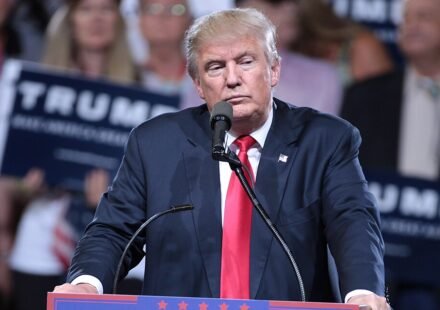
Trump Urges Supporters to Vote by Mail Despite Past Fraud Claims
US President Donald Trump has urged his supporters to vote by mail or cast their ballots early in person ahead of the November 3 midterm elections, marking a notable change from his long-standing criticism of mail-in voting.
Trump said on Monday that supporters could use mail voting if they wanted, although he said he personally preferred voting in person. He also encouraged Republicans in a campaign message to vote early, by mail or in person on Election Day.
Trump Changes His Message on Mail Voting
Trump has spent years questioning the reliability of mail-in ballots and has repeatedly claimed that voting by mail can lead to fraud. His latest comments represent a significant change in emphasis as Republicans prepare for a closely watched congressional election.
In a campaign video posted over the weekend, Trump urged Republicans to use every available voting option, including early voting, absentee ballots, mail voting and voting in person on November 3.
His comments suggest that the priority for the Republican Party is now maximizing turnout, regardless of how supporters cast their ballots.
Republicans Seek Maximum Turnout
Mail voting can be particularly useful for voters who cannot easily reach polling stations on Election Day or who prefer to cast their ballots before November 3.
Republican officials and strategists have previously warned that discouraging mail voting could hurt conservative turnout, particularly among rural voters who may live farther from polling locations.
Trump's latest appeal therefore comes as Republicans enter the final weeks of the midterm campaign and seek to mobilize voters across the country.
Supreme Court Rejected Trump’s Mail-Ballot Restrictions
The shift comes after the US Supreme Court declined in September to allow the Postal Service to enforce new restrictions targeting mail-in ballots before the midterm elections.
Trump's administration had sought tighter federal rules for mail voting, arguing that they were necessary to protect election integrity. The Supreme Court's decision left existing state procedures in place while the legal fight continues.
The ruling was a setback for Trump's effort to impose nationwide changes to mail-ballot procedures ahead of the election.
Trump Has Also Used Mail Voting
Trump's position has drawn attention because he has himself used mail voting.
The president has continued to criticize the method while using it when politically or practically convenient. His latest appeal to Republican voters reflects the tension between his previous rhetoric and the campaign's current need to encourage as many supporters as possible to participate.
Evidence of widespread voter fraud in US elections remains extremely limited, despite Trump's repeated claims about election fraud.
Midterm Elections Approach
The US congressional midterm elections will take place on November 3, 2026, with control of Congress at stake.
A Reuters/Ipsos poll released this week showed a difficult political environment for Republicans. Trump's approval rating stood at 32%, while registered voters preferred Democratic candidates over Republicans by 44% to 37% when asked which party they would support in the midterms.
With the election approaching, turnout is likely to be crucial. Trump's decision to openly encourage mail voting could help Republicans reach supporters who might otherwise struggle to vote on Election Day.
The change also highlights how political parties can adjust their voting strategies when election turnout becomes the central priority.
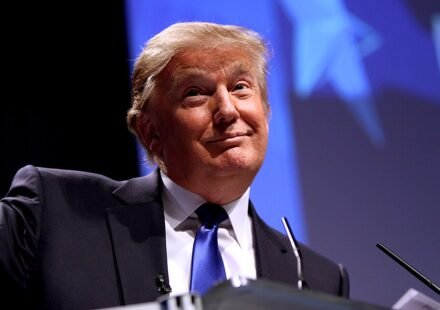
Trump Mistakes Brazil for India, Claims 125 Million Voted in India’s Presidential Election
US President Donald Trump has mistakenly referred to Brazil's presidential election as India's presidential election, claiming that 125 million people had voted in the first round of an “India's Presidential Election.”
Trump made the claim in a post on Truth Social on Monday, a day after Brazil held its first-round presidential vote.
Trump Appears to Confuse Brazil With India
Trump wrote that 125 million people had voted in the first round of India's presidential election and praised the speed with which the results were announced.
He then compared the process with elections in the United States, saying results in places such as Detroit, Philadelphia and California can take weeks to calculate. He also criticised the integrity of the US voting system.
However, the figure Trump cited closely matches the number of valid votes recorded in Brazil's election, strongly indicating that he was referring to Brazil rather than India. About 125.3 million valid votes were recorded in Brazil.
India Does Not Hold a Direct Presidential Vote
Trump's reference to an Indian presidential election was inaccurate on another important point.
India does not elect its President through a nationwide popular vote. The President is elected by an Electoral College consisting of elected members of both Houses of Parliament and elected members of state legislative assemblies, along with the elected assemblies of Delhi and Puducherry.
India therefore does not conduct a presidential election in which millions of citizens directly vote for the head of state.
Brazil Held the Election on October 4
Brazil held the first round of its presidential election on Sunday, October 4.
The contest produced a runoff between incumbent President Luiz Inácio Lula da Silva and Senator Flávio Bolsonaro, son of former President Jair Bolsonaro.
With almost all votes counted, Flávio Bolsonaro received about 47% of the vote, while Lula secured about 45%. Neither candidate crossed the 50% threshold required for an outright victory. The two are scheduled to face each other again on October 25.
Trump Uses Vote Counting to Criticise US System
Trump's post was primarily aimed at the US electoral system.
He argued that American election results can take much longer to be announced despite smaller numbers of votes in individual cities and states.
He ended the post by declaring that voting in America is “corrupt.”
Trump did not provide evidence in the post to support that allegation. The comparison came as the United States prepares for its November midterm elections.
Why the Error Drew Attention
The mistake quickly attracted attention because India and Brazil have very different presidential systems.
Brazil uses a direct popular vote to elect its president, while India's President is chosen indirectly by elected representatives.
The number cited by Trump also corresponded closely to Brazil's election turnout, further highlighting the apparent mix-up.
The episode has therefore become a notable diplomatic and political gaffe rather than an issue concerning India's electoral process.
Source attribution: Reuters, Associated Press, The Indian Express, Hindustan Times, Times of India and Moneycontrol.