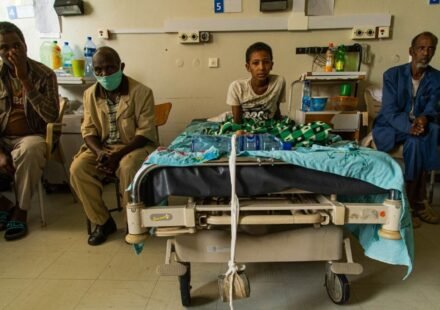
Ethiopia’s Conflict Pushes Hospitals to the Brink as Civilians Face Deadly Attacks

Renewed violence in northern Ethiopia is deepening a humanitarian crisis, with reported attacks killing civilians, including children, while hospitals struggle to provide essential medical care. World Health Organization (WHO) Director-General Tedros Adhanom Ghebreyesus has warned that the country’s already fragile health system is moving closer to collapse as insecurity disrupts medical services and blocks the delivery of life-saving supplies.
In a statement on Monday, Tedros raised concerns about reported attacks in the Amhara and Tigray regions. Children, including a newborn, were reportedly among those killed at the Jaari 2 displacement camp in Amhara. In Rama, a town in neighbouring Tigray, several people were reportedly killed while trying to obtain food.
Tedros did not provide casualty totals or specific dates for the incidents in his statement. He also did not identify those responsible. The reports come amid continuing insecurity across several parts of Ethiopia, where civilians face the combined pressures of armed violence, displacement and limited access to basic services.
Hospitals Face Shortages of Staff and Medicines
The effects of the violence extend far beyond the immediate loss of life. According to Tedros, hospitals in northern Ethiopia are facing shortages of healthcare workers, medicines and medical equipment. Ambulance services are severely limited, while insecurity is making it difficult to transport essential supplies to communities that need urgent treatment.
These problems can be particularly dangerous for patients requiring emergency surgery, maternal care, treatment for serious injuries or help with other life-threatening conditions. When ambulances cannot travel safely and hospitals lack essential supplies, patients may experience delays that worsen their chances of recovery.
The WHO and other United Nations partners are working to deliver additional medical supplies to affected areas. However, the success of these efforts depends partly on whether humanitarian organisations can reach communities safely and consistently.
Tedros called for civilians to be protected and for healthcare workers and humanitarian supplies to be allowed to reach people in need. His warning highlights the importance of maintaining medical services even as fighting and insecurity continue.
Violence Threatens Displaced Families
The reported attack on the Jaari 2 displacement camp has raised further concerns about the safety of people who have already been forced to leave their homes. Displacement camps are intended to provide temporary shelter, but residents can remain exposed to danger when fighting spreads or essential protection measures fail.
A separate report published on October 30 said at least 15 people, including five children, were killed in drone strikes on the Jaari 2 camp, according to sources involved in rescue efforts. The camp was reported to house more than 1,700 people displaced by earlier violence. The attackers and their motives had not been established in that report.
The deaths and injuries add pressure to an already stretched emergency response. Families who survive attacks may need urgent medical treatment, safe shelter, food and psychological support. Children, older people and those with disabilities can face additional difficulties when they are forced to move or lose access to routine healthcare.
In Tigray, the reported killings in Rama involving people seeking food underline how insecurity can interfere with even the most basic activities. When civilians cannot safely obtain food or reach healthcare facilities, humanitarian needs can grow quickly.
Renewed Fighting Undermines Ethiopia’s Peace Efforts
The latest violence comes amid renewed fighting that has undermined the November 2022 peace agreement between Ethiopia’s federal government and forces linked to the Tigray People’s Liberation Front. The agreement had raised hopes of ending the devastating conflict in Tigray, but fresh tensions have increased fears of further instability.
Amhara has also experienced prolonged fighting between federal security forces and Fano militias since 2023. Meanwhile, armed opposition and insecurity have affected other parts of the country, including Oromia.
Separately, Ethiopia’s Orthodox Church reported that at least 60 Orthodox Christians were killed in attacks in Oromia. The United States ambassador to Ethiopia condemned reported targeted killings in the region’s Arsi zone and called for an investigation. These incidents add to concerns about civilian protection in areas beyond the immediate focus of the latest WHO warning.
Ethiopian Prime Minister Abiy Ahmed, meanwhile, said government leaders were taking part in military training at the Hurso Military Training Centre in eastern Ethiopia. A coalition of seven opposition groups has also announced plans to strengthen cooperation and expand political and diplomatic activity, while accusing the government of contributing to conflict and displacement. Those accusations represent the opposition coalition’s position and are not an independently established finding.
Humanitarian Access Is Becoming More Urgent
The combination of attacks, displacement, staff shortages and disrupted deliveries creates a serious challenge for emergency responders. Medical supplies are useful only if they can reach facilities and patients, while healthcare workers need safe conditions to treat people without fear of further violence.
The WHO’s warning also points to the risk that a prolonged crisis could weaken routine healthcare, not just emergency treatment. Interruptions to vaccination, maternal care, disease surveillance and treatment for chronic illnesses can create further health problems over time.
Analysis: If insecurity continues to restrict medical access, the consequences could extend well beyond the communities directly affected by the reported attacks. Delayed treatment, interrupted healthcare and shortages of essential medicines could increase preventable suffering. Displacement may also make it harder for aid organisations to identify vulnerable families and deliver assistance consistently.
Preventing further deterioration will require protection for civilians, safe passage for humanitarian workers and medical supplies, and efforts to reduce fighting. Independent investigations into reported attacks would also help establish what happened and who was responsible.
For now, the WHO and its partners are working to support affected communities, but the needs remain substantial. The latest reports serve as a reminder that Ethiopia’s conflict is not only a security challenge: it is also placing lives at risk by weakening the healthcare system people depend on in emergencies.

Barbados Shows How Accessible Healthcare Can Prevent HIV Transmission From Mothers to Babies
Barbados has achieved a major public health milestone after the World Health Organization (WHO) certified the Caribbean nation for eliminating mother-to-child transmission of HIV as a public health problem. The recognition highlights how accessible healthcare, early testing and effective treatment can protect babies while ensuring that women living with HIV receive appropriate medical care.
The WHO announced the certification on October 30, 2026, following an independent assessment confirming that Barbados had met international targets for preventing HIV transmission from mothers to children. Between 2022 and 2024, the country reported no new HIV infections resulting from mother-to-child transmission among infants born during that period.
The achievement reflects years of cooperation between the Barbados government, healthcare professionals, international health organisations and community groups to strengthen maternal healthcare and HIV prevention services.
Three Years Without Reported Mother-to-Child HIV Transmission
Mother-to-child transmission, also known as vertical transmission, occurs when HIV passes from a woman living with the virus to her child during pregnancy, childbirth or breastfeeding.
Without appropriate medical care, transmission can occur even when a pregnant woman does not have noticeable symptoms. However, timely diagnosis and effective antiretroviral treatment can substantially reduce the risk.
Barbados reported no new HIV infections resulting from mother-to-child transmission among infants born between 2022 and 2024. The WHO's assessment also found consistently high coverage of essential maternal health services throughout the three-year period.
The certification does not mean that HIV has disappeared from Barbados. Instead, it recognises that transmission from mothers to children has been reduced to the level required for elimination as a public health problem. Continued testing, treatment and monitoring will remain necessary to maintain this progress.
How Barbados Achieved the Milestone
One of the most important factors behind the achievement was the country's ability to connect pregnant women with essential healthcare services.
According to the WHO assessment, during the evaluation period:
• 98% of pregnant women received antenatal care.
• 98% of pregnant women were tested for HIV.
• 98% of pregnant women living with HIV received antiretroviral treatment.
These figures demonstrate how broadly the country's healthcare system delivered the services needed to identify HIV and prevent transmission to babies.
Free and Accessible Healthcare
Barbados provides free HIV testing and treatment to pregnant women through public healthcare services, regardless of nationality. This reduces financial barriers that might otherwise prevent women from receiving timely diagnosis and treatment.
The country's public clinics and hospitals provide access to antenatal care, while specialist services support women who need additional medical attention. Making these services accessible helps ensure that treatment can begin promptly when HIV is identified.
Confidentiality is also an important part of the approach. Women need to feel safe seeking testing and treatment without fear of discrimination or unnecessary disclosure of their medical information.
Early Testing During Pregnancy
HIV testing helps healthcare professionals identify women who need treatment and plan appropriate care for both mother and child.
When a pregnant woman tests positive, medical teams can assess her health, explain available treatment and monitor her response to medication. Early identification also allows healthcare professionals to plan care around childbirth and arrange appropriate follow-up for the baby.
Barbados' high testing coverage indicates that HIV screening has become an important component of maternal healthcare.
Antiretroviral Treatment and Infant Follow-Up
Antiretroviral therapy, commonly known as ART, suppresses HIV in the body. When treatment is effective and taken consistently, it can greatly reduce the risk of passing the virus to a child.
The prevention process continues after delivery. Babies who may have been exposed to HIV need appropriate testing and follow-up care so that healthcare professionals can identify any infection and arrange treatment when necessary.
Barbados' public health services include early testing and follow-up for HIV-exposed infants, helping extend prevention and care beyond pregnancy itself.
International Recognition for Barbados
The WHO certification places Barbados among countries and territories that have made substantial progress in preventing infections from passing from mothers to children.
The organisation reported that 26 countries and territories worldwide had been recognised for eliminating mother-to-child transmission of HIV, syphilis or hepatitis B, or for being on track to achieve elimination. Fifteen are in the Americas, making the region a leader in this public health effort.
The achievement is also significant for the Caribbean, where countries continue working to improve maternal health and reduce new HIV infections among children.
It demonstrates that a country's size does not have to determine the effectiveness of its public health programmes. Consistent access to testing, medicines and professional care can produce measurable improvements when services reach the people who need them.
What the Achievement Means for Mothers and Children
For families, the milestone represents progress towards a future in which an HIV diagnosis during pregnancy does not automatically mean that a child will acquire the virus.
Women living with HIV can receive treatment to protect their own health while substantially reducing the risk of transmission to their babies. Access to respectful, confidential healthcare can also help reduce stigma and encourage people to seek medical support earlier.
The wider lesson is that prevention requires more than the availability of medicines. It depends on healthcare systems that can provide timely testing, maintain treatment access, support patients and monitor outcomes.
Other countries seeking similar progress may draw lessons from Barbados' emphasis on accessible maternal care, high testing coverage, antiretroviral treatment and collaboration among government agencies, healthcare workers and community organisations.
Maintaining Progress Will Remain Essential
Although the certification is a major achievement, Barbados will need to continue investing in its healthcare system to maintain the results.
The WHO has highlighted the importance of sustained investment, updated guidelines, stronger health information systems and improved follow-up care for women and children. Continued monitoring will help healthcare professionals identify any future cases and respond appropriately.
The achievement should therefore be viewed as an important stage in ongoing public health work, rather than a reason to reduce HIV prevention services.
Barbados' experience demonstrates how universal access to maternal healthcare, confidential testing and effective treatment can help protect children from HIV. Its next challenge will be to preserve these gains and ensure that every pregnant woman who needs care can continue to receive it.

WHO Targets Single-Injection TB Prevention and Shorter Treatment to Ease Patients’ Burden
The World Health Organization (WHO) has introduced new development targets for long-acting injectable medicines that could make tuberculosis (TB) prevention and treatment easier in the future. The proposed approach aims to reduce the need for months of daily medication, potentially helping patients manage treatment with fewer healthcare visits.
Published on October 28, 2026, the new guidance sets out the characteristics that future injectable treatments should achieve. WHO’s goals include delivering a complete course of preventive treatment through a single injection and developing treatments for active TB that last no more than four months, with three or fewer dosing visits. These are targets for medicine developers, not newly approved treatments available for routine patient care.
What Has WHO Announced?
The new guidance focuses on long-acting injectables, commonly referred to as LAIs. These medicines are designed to release their active ingredients over an extended period, potentially reducing how frequently patients need to take medication.
WHO has outlined two main objectives. For TB prevention, the ideal future regimen would provide the entire preventive treatment course through one injection during a single healthcare visit. For people with active TB disease, the target is a treatment regimen lasting four months or less and requiring no more than three dosing encounters.
The organisation has also specified that these treatments should be safe and effective at least to the same standard as existing oral regimens. They should ideally be deliverable by trained healthcare workers at the lowest feasible level of the health system, without requiring a cold chain for storage and transport.
Why Is TB Treatment Difficult for Some Patients?
Tuberculosis is an infectious disease caused by bacteria that most often affect the lungs, although other parts of the body can also be affected. It spreads through the air when a person with infectious TB releases bacteria, for example, by coughing.
Treatment requires the correct medicines to be taken according to a prescribed schedule. Depending on the type of TB and the medicines used, treatment may continue for several months. Some patients face difficulties maintaining this routine because of medicine-related side effects, travel expenses, work commitments or distance from healthcare facilities.
Interrupting or stopping treatment without medical advice can lead to poor outcomes and, in some cases, contribute to drug resistance. Long-acting injections could reduce the number of occasions on which patients must take medicines or travel to a healthcare facility. However, they would not eliminate the need for diagnosis, medical supervision and follow-up care.
What Could This Mean for India?
The development is particularly relevant to India, which has one of the world's largest TB burdens. Delivering effective treatment to large and diverse populations remains a major public health challenge, especially where patients face financial or geographical barriers to accessing care.
If safe and affordable long-acting medicines are developed, they could eventually make treatment easier for some patients. Fewer dosing visits could reduce transport costs and the time people spend away from work or family responsibilities. A simpler regimen might also help health services manage treatment delivery more efficiently.
However, these potential benefits depend on several factors. The medicines must prove effective in clinical trials, receive the necessary regulatory approvals and become affordable enough for public health programmes to use widely. Their introduction would also require suitable training, monitoring and reliable supply systems.
New Injections Are Still Under Development
WHO's announcement does not mean patients can currently replace their prescribed TB medicines with a single injection. The organisation has published target regimen profiles to guide researchers, pharmaceutical companies and product developers as they work on future treatments.
Several long-acting candidates for TB are entering or approaching clinical development, but their safety and effectiveness must be established before they can be adopted for routine care. WHO's targets are intended to help developers focus on treatments that meet patients' needs without compromising the quality of care.
The guidance also recognises that injections will not suit everyone. WHO says research into improved oral treatments should continue alongside injectable development, preserving patient choice when future treatment options become available.
What Happens Next?
The next stage will involve research and development, followed by clinical testing and regulatory assessment of potential medicines. Their success will depend not only on how long they remain active in the body, but also on safety, effectiveness, cost, ease of administration and accessibility in different healthcare settings.
If successful, long-acting injectable regimens could eventually reduce some of the practical difficulties associated with TB prevention and treatment. For patients, that could mean fewer medication-taking occasions and fewer clinic visits. For health systems, it could offer new ways to deliver care to communities facing barriers to regular treatment.
For now, existing treatment guidance remains in place. Patients should continue taking prescribed medicines and consult their healthcare providers before making any changes.
The bottom line: WHO is encouraging the development of simpler TB treatments, including a possible single-injection preventive course and shorter injectable regimens for active disease. These goals offer a promising direction for future research, but new medicines must first demonstrate that they are safe, effective and accessible.