Pakistan Denies Report of Air Strikes on Houthis as Mecca Defence Pact Faces First Major Test

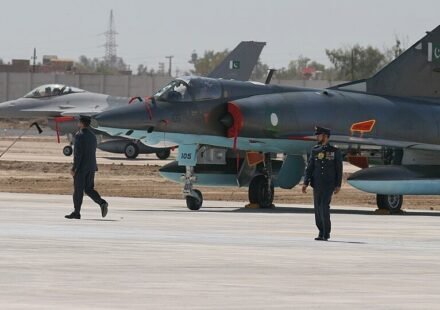
Pakistan has rejected a report claiming that its fighter jets have been used in air strikes against Yemen's Iran-aligned Houthi movement, calling the allegation “fake and fabricated” as the newly activated Makkah defence agreement comes under its first major regional test.
The controversy emerged after The New York Times reported that a senior Pakistani military official, speaking anonymously, said Pakistan Air Force fighter aircraft were taking part in strikes against Houthi targets in Yemen. A second Pakistani official was quoted as saying that Pakistan's role was expected to focus on countering Houthi missile and drone threats through air support rather than a ground operation.
Pakistan's Ministry of Information and Broadcasting subsequently rejected the claim. According to the ministry, the assertion that Pakistani aircraft were being used against the Houthis was “fake and fabricated.”
Report emerges after Makkah defence pact activation
The report comes days after Pakistan, Saudi Arabia and Türkiye activated the collective-defence mechanism of their Makkah Alliance for Defence.
At an emergency meeting in Riyadh on October 5, the three countries agreed to move toward the practical implementation of their collective-defence commitments and take measures to provide agreed military forces and capabilities for rapid deployment in Saudi Arabia, subject to their national laws.
The agreement was activated amid intensified Houthi attacks against Saudi Arabia. Riyadh has accused the group of targeting cities and civilian and economic infrastructure, while the alliance has condemned threats to Saudi territory and the holy cities of Makkah and Madinah.
Pakistan's role remains disputed
The conflicting accounts have created uncertainty over the precise military role Pakistan is playing in the escalating Yemen conflict.
Pakistan has acknowledged that its forces are present in Saudi Arabia, including personnel involved in multiple military capabilities and roles. Pakistani officials have previously described the Makkah agreement as defensive in nature.
Pakistan Defence Minister Khawaja Asif has also said Pakistani and Turkish forces were playing a supporting role, including reconnaissance, while Saudi forces were conducting the combat operations.
That distinction is significant because the official Makkah pact statement specifically refers to the deployment of military forces and capabilities in Saudi Arabia. It does not publicly announce Pakistani combat operations inside Yemen.
Saudi-led offensive intensifies in Yemen
The dispute comes as fighting between Saudi-backed Yemeni government forces and the Houthis has sharply intensified.
A Saudi-led coalition has launched an air campaign supporting Yemen's internationally recognised government along the Red Sea coast. Coalition officials have said around 100 fighter jets are supporting the campaign and that the operation aims to push back Houthi advances.
The fighting has also raised the strategic importance of the Bab el-Mandeb Strait, one of the world's major maritime chokepoints.
Saudi Arabia's renewed military campaign followed Houthi advances in western Yemen and increased missile and drone attacks against Saudi territory. The conflict has therefore become an increasingly important test for the newly established defence partnership between Saudi Arabia, Pakistan and Türkiye.
Türkiye takes a more clearly defensive position
Türkiye has separately indicated that its assistance to Saudi Arabia is primarily technical and defensive.
Reuters reported that Ankara is providing military equipment, intelligence and weapons systems, including air-defence and drone-related capabilities, while the country's Foreign Minister Hakan Fidan has described the Makkah agreement as a defensive arrangement.
This makes the reported Pakistani air role particularly significant if independently confirmed. However, Pakistan's public denial means the claim should currently be treated as disputed rather than established fact.
What happens next?
The conflicting reports are likely to increase attention on how far the Makkah defence agreement will extend.
The pact clearly commits the three countries to collective defence and has already moved into practical implementation. But the publicly available agreement does not establish that Pakistan has authorised offensive air operations inside Yemen.
For now, the most important development is the gap between the NYT's reported account and Islamabad's official denial. Until additional independent evidence or an official Pakistani military confirmation emerges, claims that Pakistani fighter jets have carried out strikes against the Houthis should be presented with that qualification.
Source attribution: Pakistan Ministry of Information and Broadcasting, Pakistan Ministry of Foreign Affairs, Reuters, Associated Press and other international reporting.