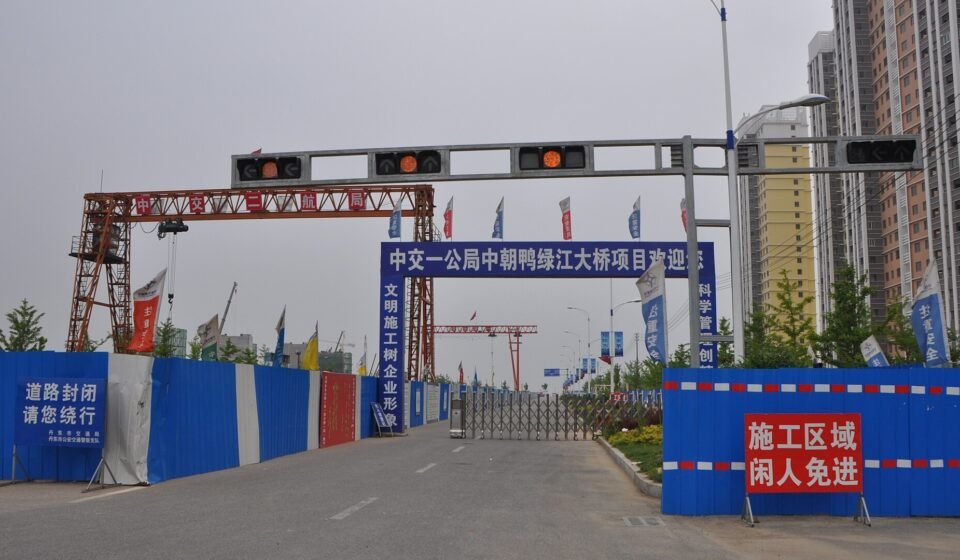

New Yalu River Bridge Officially Opens
China and North Korea have officially opened the long-delayed New Yalu River Bridge, a major infrastructure project connecting the Chinese border city of Dandong with Sinuiju in North Korea. The opening ceremony took place on Thursday, October 15, marking the end of more than a decade of waiting for the crossing to enter service.
The four-lane bridge stretches approximately three kilometres across the Yalu River, also known as the Amnok River in Korea. Chinese state media reported the ceremony, while trucks carrying the two countries’ national flags were seen waiting on the bridge ahead of cross-border movement. Reuters and the Associated Press reported the opening on Thursday.
Why Was the Bridge Delayed for 12 Years?
Construction began in October 2011 and the bridge structure was completed in 2014. It was initially expected to open that year, but the crossing remained unused because supporting roads, customs facilities and other infrastructure on the North Korean side were unfinished.
The prolonged delay prompted speculation about political and economic differences between the neighbours. Analysts and earlier reports suggested that Pyongyang may have been concerned about becoming too dependent on China, while relations were also affected by disagreements over North Korea’s nuclear programme and international sanctions.
The reasons for the delay should not be treated as definitively established: the bridge’s opening came after years in which the necessary border infrastructure had remained incomplete.
Trade and Transport Could Benefit
The new crossing is expected to improve the movement of goods and make cross-border logistics more efficient. It may also reduce pressure on the older China–North Korea Friendship Bridge, which has served as a major route between Dandong and Sinuiju for decades.
The existing bridge handles a large share of the countries’ official trade. A modern, four-lane crossing could provide additional capacity for freight and help streamline customs operations, although the scale and speed of any increase in trade will depend on border procedures, demand and the wider sanctions environment.
The opening does not automatically mean that trade will immediately return to earlier levels. Restrictions related to North Korea’s weapons programmes, along with the history of pandemic-era border controls, remain important factors.
A Sign of Renewed China-North Korea Engagement
The bridge opening comes amid efforts by Beijing and Pyongyang to strengthen bilateral ties. The countries’ leaders pledged at a June summit to deepen their relationship and expand exchanges, according to South Korean news agency Yonhap.
China remains North Korea’s most important trading partner. The new bridge could reinforce that economic connection by providing a more direct route for commerce and transport. However, the long delay also illustrates how political tensions and incomplete infrastructure can hold back even a major project.
The opening follows a separate recent development in North Korea’s transport links with Russia, highlighting Pyongyang’s efforts to maintain relationships with both neighbouring powers. The implications for regional diplomacy will depend on how the new crossing is used in practice.
What Happens Next?
The key test will be whether the bridge supports sustained commercial traffic rather than a one-day opening ceremony. Customs operations, border procedures and the volume of trucks using the crossing will help determine its practical economic impact.
For Dandong, the Chinese border city, the project has long been presented as an opportunity to increase trade and business activity. For North Korea, it offers another route for economic exchange with its largest neighbour.
The bottom line: The New Yalu River Bridge’s opening ends a 12-year delay and creates new potential for China–North Korea trade, but the scale of the economic benefits remains uncertain.