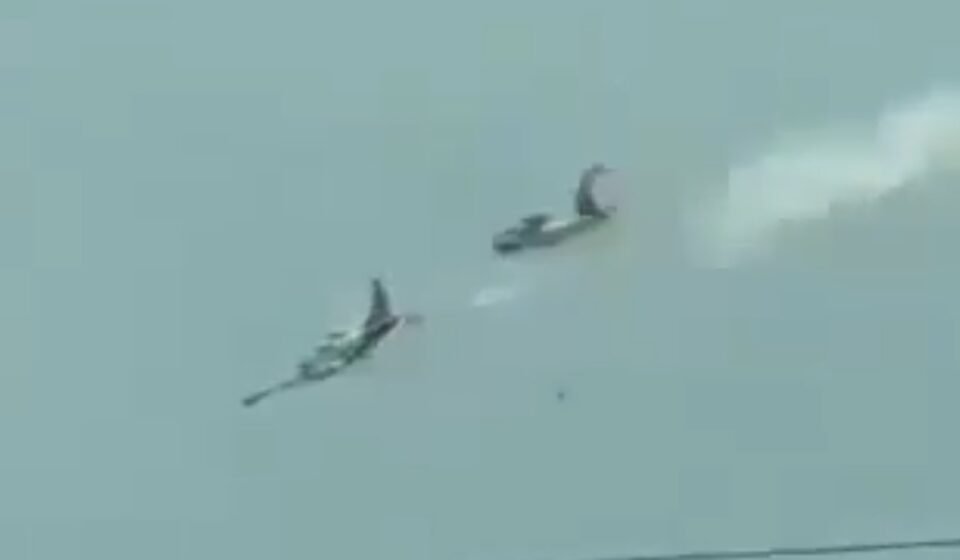

Four Philippine Air Force pilots have died after two military training aircraft crashed during a flight exercise at Fernando Air Base in Batangas province, south of Manila. The accident occurred on Friday afternoon, October 23, and prompted the air force to suspend flights involving the same aircraft type while investigators examine what happened.
The two aircraft involved were SF-260 trainer planes. The Philippine Air Force confirmed the four deaths in a statement released on Saturday, expressing condolences to the pilots’ families, friends and fellow service members. Both aircraft came down within the boundaries of the air base, and officials reported no additional casualties on the ground.
The incident has drawn attention after video footage circulated showing the aircraft flying close to each other before the crash. Local reports described the incident as a mid-air collision. While officials familiar with the circumstances also told reporters that the aircraft collided in flight, the precise sequence of events and the underlying cause remain subject to investigation.
What happened at Fernando Air Base?
The accident was recorded at approximately 3:51 p.m. local time on Friday, according to information released by the Philippine Air Force.
Fernando Air Base is located in Lipa City, in Batangas province, south of the Philippine capital. The aircraft were carrying out a training flight when the incident occurred. Both went down inside the base perimeter, bringing the exercise to a fatal end.
The SF-260 is a single-engine aircraft used for military flight training. Its two-seat configuration allows pilots to conduct training and other authorised aviation activities. The aircraft involved in the accident were part of the Philippine Air Force’s training fleet.
Footage reported by local media appears to show the two planes approaching one another before falling from the sky. However, video alone cannot establish why the aircraft came into contact, whether a technical or operational problem occurred, or whether other factors contributed to the accident.
Investigators will need to examine the available footage alongside flight records, aircraft condition, maintenance history and witness accounts to reconstruct the final moments of the flight.
Authorities have not publicly established a definitive cause, and it would be premature to attribute responsibility to a pilot, a particular manoeuvre or a mechanical failure.
Air force grounds SF-260 fleet
Following the accident, the Philippine Air Force temporarily grounded its remaining SF-260 aircraft as a precaution while the investigation proceeds.
The decision is intended to prevent further flights involving the aircraft type until officials can assess the circumstances and determine whether additional safety measures are needed.
A temporary grounding does not, by itself, establish that the aircraft have a design defect. Such a measure can provide investigators with time to inspect equipment, review operating procedures and identify any potential risks that might require corrective action.
The suspension could also affect the scheduling of pilot training activities that rely on the SF-260 fleet. The extent of any disruption will depend on how long the grounding remains in place and whether training can be transferred to other aircraft.
The air force has not publicly disclosed a final investigation timeline or detailed findings explaining the accident.
A difficult loss for military aviation
Military flight training involves procedures intended to prepare pilots for demanding operational conditions. Training may include coordinated flying, manoeuvres and exercises that require pilots to maintain awareness of their aircraft’s position and the movements of others nearby.
When two aircraft operate in close proximity, safety depends on multiple factors, including communication, visibility, separation, pilot coordination and adherence to established procedures. Mechanical performance and environmental conditions can also affect a flight.
These are general considerations in aviation safety, not findings about the Philippine accident. Investigators will need evidence before determining whether any of them played a role.
The loss of four pilots is also a major human tragedy for their families and colleagues. The air force has expressed condolences and said it is providing assistance to the bereaved families while asking the public to respect their privacy. The identities of the pilots and further personal details should be reported only when officially confirmed and appropriate for public release.
Previous SF-260 accidents raise safety questions
The latest crash comes after other fatal accidents involving Philippine military training aircraft.
Reporting indicates that an SF-260 aircraft crashed in northern Philippines in May 2026, killing two pilots. Another SF-260 training-flight accident in 2023 also resulted in two pilot deaths.
These earlier incidents provide relevant context, but they do not prove that the crashes share the same cause. Each aviation accident must be examined on its own evidence, including the aircraft’s condition, flight circumstances and operational records.
Investigators may review previous incidents to determine whether any recurring safety concerns warrant attention. If common factors are identified, the findings could inform changes to training procedures, maintenance checks or operating practices. No such connection has yet been established publicly between the earlier crashes and Friday’s accident.
The temporary grounding of the SF-260 fleet provides an opportunity for the air force to assess whether additional precautions are needed while the current inquiry continues.
What investigators will need to establish
A full understanding of the accident will depend on evidence collected from several sources. Investigators are likely to examine flight data and available recordings, maintenance and inspection records, communications during the training exercise, and statements from people who witnessed the incident.
They will also need to determine the aircrafts’ movements before the crash and establish whether any technical, environmental or operational factors contributed. The conclusions may take time, particularly if multiple lines of evidence need to be compared.
The video circulating online may assist in reconstructing the incident, but it should not be treated as a complete account of what happened. The angle, duration and quality of a recording can limit what it reveals, and investigators must corroborate visual evidence with other records.
Any eventual safety recommendations could influence the future use of the SF-260 fleet and the way similar training exercises are conducted.
What happens next?
For now, the immediate priorities are supporting the families of the four pilots, determining the cause of the crash and ensuring that the affected aircraft type can operate safely before flights resume.
The Philippine Air Force’s decision to ground the SF-260 fleet is a precautionary step while the investigation continues. Whether the inquiry leads to changes in training procedures, maintenance requirements or other aviation practices will depend on its findings.
The tragedy also underlines the risks faced by military aviators during training, even when flights take place within a controlled base environment. Training is essential to maintaining operational readiness, but it must be supported by rigorous safety systems and careful review of any serious accident.
The key unanswered question is what caused the two aircraft to crash. Until investigators publish their conclusions, the circumstances should be treated as unresolved rather than attributed to any particular failure or individual.