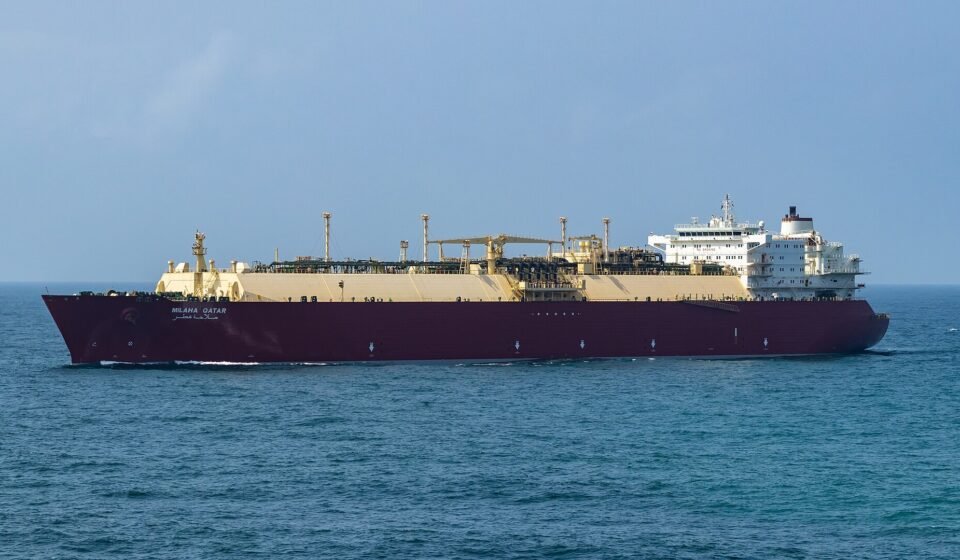

A liquefied natural gas (LNG) carrier linked to Qatar has been struck by unidentified objects while sailing through the Arabian Gulf, raising renewed concerns about the safety of commercial vessels navigating one of the world’s most strategically important energy corridors.
Qatar Gas Transport Company, widely known as Nakilat, identified the vessel as Al Mayeda. The incident occurred on the evening of Friday, October 30, while the ship was transiting Gulf waters. The company disclosed the incident on Sunday, November 1, confirming that the vessel remained safe and operational.
No crew members were reported injured, and the company said the incident had caused no environmental damage. The full impact on the vessel was still being assessed, and the nature of the objects that struck it had not been publicly established. No confirmed information was immediately available identifying who or what was responsible.
Vessel Remains Operational as Assessment Continues
According to the company’s statement, Al Mayeda remained in a safe condition following the incident. Nakilat said it was maintaining direct communication with the vessel and its crew while coordinating with relevant maritime security authorities in the region.
The assessment will be important in determining whether the ship sustained damage that could affect its continued operation or require repairs. Although the vessel was described as operational, the company had not publicly detailed the extent or location of any physical damage.
The circumstances surrounding the incident remain unclear. Until further information becomes available, it would be premature to attribute the strike to a particular country, military force or armed group.
The key confirmed facts are that the vessel was struck, its crew remained safe, and no environmental impact was reported by the company. Further details about the cause and consequences are awaited.
Why the Arabian Gulf Matters for Global Energy
The Arabian Gulf is a critical route for international energy trade. Qatar is among the world’s leading exporters of liquefied natural gas, which is transported by specialised ships to customers across Asia and other markets.
LNG is natural gas cooled to a liquid state so it can be transported efficiently over long distances. Because these shipments supply electricity generation, industrial activity and other energy needs, disruptions to LNG shipping can have consequences beyond the immediate region.
The Gulf’s connection to the Strait of Hormuz makes maritime security particularly important. The strait is a major passage for energy shipments moving between the Gulf and international markets. Any incident involving a commercial vessel can therefore attract attention from shipping companies, energy buyers, insurers and governments.
The latest incident does not, by itself, establish that Qatar’s LNG exports have been disrupted. However, repeated security incidents in busy shipping lanes can make operators more cautious and increase pressure on authorities to protect commercial traffic.
Possible Effects on Shipping and Energy Markets
The immediate impact appears limited by the reported absence of injuries and environmental damage. Nevertheless, the longer-term implications will depend on the findings of the vessel inspection and whether authorities identify a broader security threat.
If risks to commercial shipping increase, vessel operators could face higher insurance premiums, additional security requirements or delays while assessing routes. Such costs may eventually affect the wider transportation and energy supply chain.
Energy prices could also react if traders believe that LNG shipments or other Gulf exports face a greater risk of interruption. However, no specific price increase or supply disruption should be attributed to this incident without supporting evidence.
For Qatar, protecting shipping operations is important to maintaining confidence among international energy customers. For importing countries, the incident is another reminder of how regional instability can create uncertainty around energy transportation.
Investigation and Further Details Awaited
Nakilat said it was continuing to monitor the situation and working with the vessel’s crew and regional maritime security authorities. The assessment of the incident is expected to help clarify the damage and determine what further action may be necessary.
For now, the reported safety of the crew and the vessel’s operational status are the most significant immediate developments. The identity of the objects, the cause of the strike and any responsibility for the incident remain unconfirmed.
The broader significance will depend on whether this proves to be an isolated event or part of a wider pattern of threats to commercial shipping in the Gulf.
Disclaimer: This article is based on publicly reported information available on November 1, 2026. The cause of the incident and the identity of the objects have not been independently established. Further details may emerge as the assessment continues.