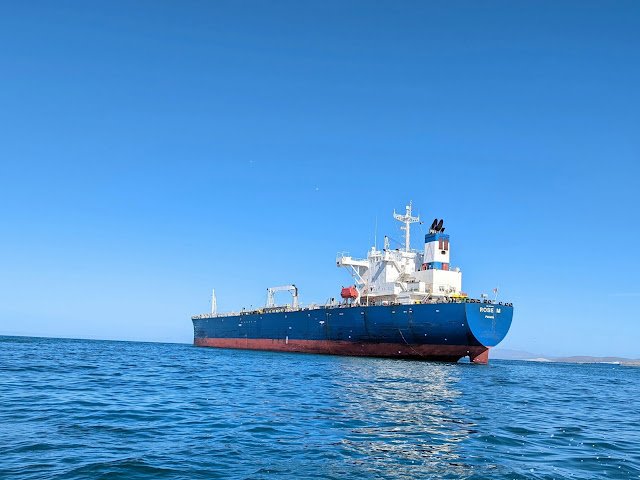
First Russian Diesel Tanker Heads to the US Despite Ukraine’s Objections

The first tanker carrying Russian diesel fuel to the United States has set sail under a new supply agreement between Moscow and Washington, the Kremlin said on Friday. The shipment marks a significant shift in US policy toward Russian energy imports following President Donald Trump’s agreement with Russian President Vladimir Putin.
Kremlin spokesman Dmitry Peskov confirmed that the tanker had departed and said regular supplies would follow. Russian Deputy Prime Minister Alexander Novak had earlier said the initial shipment would amount to approximately 40,000 metric tons of diesel. Maritime intelligence firm Kpler indicated that the vessel was heading toward New York, with arrival expected on November 7. If completed as expected, it would be the first Russian diesel delivery to the United States since July 2023.
A New Chapter in US-Russia Energy Trade
The shipment follows an agreement intended to increase the availability of fuel on international markets as energy costs remain a concern for consumers and policymakers. Trump has said that additional Russian diesel could reach the United States in the coming months.
The decision represents a reversal in the direction of US policy introduced after Russia launched its full-scale invasion of Ukraine in February 2022. Washington had imposed restrictions on Russian energy imports as part of its broader effort to pressure Moscow over the war.
The latest arrangement has prompted questions about how the United States will balance energy affordability with its sanctions policy and support for Ukraine.
How Much Fuel Is Being Shipped?
The initial cargo of 40,000 metric tons is equivalent to roughly 300,000 barrels of diesel. According to the Associated Press, that is about 7% of the approximately four million barrels of diesel consumed by the US economy in a single day.
Energy policy experts have cautioned that the shipment alone is unlikely to bring down US fuel prices substantially. Although additional deliveries could increase supply, the effect on prices will depend on the volume of future shipments, global demand, refining capacity, transportation costs and wider market conditions.
Trump has discussed the prospect of larger volumes arriving in the coming months. However, announced targets should not be confused with confirmed deliveries: the scale and timing of future shipments will depend on commercial arrangements and Russia’s ability to supply the fuel.
Ukraine Objects to the Decision
The agreement has caused concern in Kyiv, where officials have urged international partners to tighten restrictions on Moscow rather than reopen trade in Russian energy products.
Ukrainian President Volodymyr Zelenskyy criticised Trump’s decision, describing it as “a weak decision by strong partners,” according to the Associated Press. Ukraine’s concern is that revenue from energy exports could help Russia sustain its war effort.
The dispute highlights a difference in priorities between Washington and Kyiv. The Trump administration has presented additional fuel supplies as a way to address market pressures, while Ukraine has emphasised the strategic and financial consequences of allowing Russian energy trade to expand.
Russian Refineries Face Pressure
Russia’s ability to supply additional diesel has also been affected by repeated Ukrainian drone strikes on oil-refining facilities. The attacks disrupted production and contributed to fuel shortages inside Russia, although those shortages have eased.
Moscow has taken steps to relax restrictions on diesel exports as it seeks to resume deliveries while meeting domestic requirements. Russian officials have said that exports will increase according to the capacity of the country’s refineries.
The situation illustrates the connection between the war, energy infrastructure and international fuel markets. Damage to refineries can limit export capacity, while changes in sanctions and trade arrangements can alter where available supplies are sent.
What the Shipment Means for Global Markets
The first tanker is a visible sign that the new US-Russia arrangement is moving into implementation. But its broader economic impact remains uncertain.
For now, the tanker’s departure confirms the start of the new supply arrangement, while the scale of future imports and their effect on fuel prices remain to be seen.

Oil Prices Rise as Middle East Tensions Raise Fears of Supply Disruptions
Global oil prices edged higher on Wednesday as escalating tensions in the Middle East raised concerns about possible disruptions to crude supplies and shipping routes. Traders were monitoring attacks on vessels near the Strait of Hormuz and growing security risks around Saudi Arabia’s energy infrastructure.
Brent crude futures rose by 85 cents, or 0.78%, to $109.64 per barrel by 0022 GMT. US West Texas Intermediate (WTI) crude futures also gained 76 cents, or 0.78%, to reach $98.58 per barrel.
The gains followed a volatile session on Tuesday, when oil prices retreated after reaching their highest levels in five months. Brent had settled at $108.79 per barrel, down 0.69%, after touching an intraday high of $111.99. The November WTI contract, which expired on Tuesday, closed at $101.79, while trading in the more actively followed December contract remained below $100.
The latest increase reflects renewed concern that further military escalation could disrupt oil shipments, raise transportation costs and tighten supplies to major importing countries.
Tanker Attacks Increase Shipping Concerns
Maritime security has become a major concern for energy markets as attacks on commercial vessels have expanded across the region.
Iran’s Revolutionary Guards Navy said a supertanker caught fire after striking a sea mine south of the Strait of Hormuz on Tuesday. Iranian media reported the incident, but the circumstances and responsibility for the incident could not be independently established from the available information.
Ship-tracking firm Kpler reported at least 18 vessel attacks over a two-week period in a recent assessment cited by published reporting.
The risks are no longer limited to the immediate waters around the Strait of Hormuz. Analysts have warned that attacks extending into the Gulf of Oman could threaten loading operations and ship-to-ship transfers that have helped maintain regional oil exports.
The Strait of Hormuz is one of the world's most strategically important energy corridors. Large volumes of crude oil and petroleum products normally pass through the narrow waterway on their way to Asian and other international markets.
Any sustained interruption could force buyers to seek alternative supplies, increase freight costs and place upward pressure on oil prices.
Saudi Energy Infrastructure Under Pressure
The security situation has also raised concerns about Saudi Arabia, one of the world's largest oil producers and exporters.
Yemen's Houthi movement claimed on Monday that it had attacked several Saudi targets, including an Aramco facility in Yanbu, the Shaybah oilfield and airports in Riyadh and Abha. The claims had not been independently verified in the available reporting.
Any confirmed damage to major production, processing or export facilities could have significant consequences for the global oil market. Even when infrastructure remains operational, the possibility of further attacks can prompt traders to demand a higher risk premium for crude.
Saudi Arabia has invested in alternative export routes and infrastructure intended to reduce its dependence on the Strait of Hormuz. However, alternative routes cannot necessarily replace all the capacity and flexibility provided by the main maritime corridor.
Markets will therefore continue to watch for verified information about the condition of energy facilities, tanker movements and the security of export terminals.
Oil Prices Remain Volatile
The latest increase comes after a sharp rise in oil prices last week, when Brent crude briefly reached $110 per barrel for the first time since May.
Prices then moved in both directions as traders weighed military risks against diplomatic developments and the possibility of additional supplies reaching the market.
On Tuesday, Brent climbed as high as $111.99 before retreating and ending the session lower. The reversal showed that the market remains sensitive to changes in risk assessments, profit-taking and reports of possible diplomatic engagement.
Investors are also examining whether oil flows from the Middle East can remain stable despite the security threats. Higher prices do not necessarily mean that physical supplies have already fallen by the same amount; futures markets can rise in response to the possibility of future shortages.
A sustained increase would depend partly on whether shipping disruptions intensify, whether energy infrastructure is damaged and how quickly producers and transport operators can respond.
Asian Buyers Face Higher Transport Costs
Asian refineries are particularly exposed to developments in the Middle East because the region is an important source of crude oil for many economies across the continent.
Rising tanker rates have forced refiners to reconsider how they purchase and transport oil. Some companies are turning to smaller vessels, securing longer-term shipping arrangements or buying crude on a delivered basis, under which sellers take responsibility for arranging transportation.
The shift reflects the growing importance of freight costs in determining the final price of crude delivered to a refinery.
Reuters reported that shipping costs for moving US crude to Asia had climbed to around $40 per barrel in some cases. Higher freight and insurance expenses can make supplies from distant producers less attractive, even when the underlying crude price appears competitive.
Refiners may respond by sourcing more oil from nearby suppliers, changing shipment sizes or drawing on existing inventories. However, these adjustments can take time and may not fully offset a prolonged disruption to regional trade.
What Higher Oil Prices Could Mean for Consumers
A sustained rise in crude prices can increase costs throughout the energy supply chain. Refineries pay more for feedstock, shipping companies face higher fuel and insurance bills, and businesses may experience greater transportation expenses.
The eventual effect on petrol, diesel, aviation fuel and other petroleum products depends on local taxes, refining margins, exchange rates, government policy and the timing of fuel-price adjustments.
For India, which imports a substantial share of its crude oil requirements, a prolonged rise in international prices could increase the country's import bill and place pressure on foreign-exchange demand. The impact on domestic fuel prices would depend on movements in the rupee, international product prices and decisions by fuel retailers and the government.
Higher energy costs can also feed into inflation if transport, manufacturing and distribution businesses pass additional expenses on to consumers.
However, one or two sessions of rising oil prices do not automatically translate into an immediate increase at petrol pumps. The duration and scale of the price movement are important factors.
Traders Watch for Further Escalation
Market participants will continue to monitor developments around the Strait of Hormuz, the Gulf of Oman and Saudi energy infrastructure.
Diplomatic efforts could help reduce the geopolitical risk premium if they produce credible steps towards de-escalation. Conversely, additional verified attacks on vessels or oil facilities could push prices higher by increasing uncertainty about the reliability of supplies.
Traders will also watch inventory data and announcements from major producers for signs of changes in the balance between supply and demand.
For now, oil markets remain caught between continuing geopolitical risks and the possibility that producers and shipping operators can keep crude moving despite the security challenges.