US Democrats’ Victory Puts Pakistan’s Trump Strategy Under Pressure as Citizens Hope for Economic Relief

The victory of Democrats in the US congressional elections has created contrasting reactions in Pakistan, exposing a growing divide between the priorities of the country’s political and military leadership and the concerns of ordinary households. While Islamabad faces the possibility of increased scrutiny over its close engagement with US President Donald Trump and his administration, many Pakistanis are hoping that the political shift in Washington could eventually bring relief from high fuel prices, inflation and the economic pressure intensified by the war involving the United States, Israel and Iran.
For Pakistan’s leadership, the election outcome raises questions about a diplomatic strategy built around close access to Trump. For ordinary citizens, however, the result has created expectations of a possible change in American policy that could help reduce regional tensions and ease the cost of living.
Pakistan is heavily dependent on imported energy, making its economy vulnerable to international oil-price fluctuations. The conflict involving Iran has pushed energy costs higher, adding pressure on households already dealing with expensive essentials and limited purchasing power.
Why ordinary Pakistanis are looking towards Washington
The economic consequences of the Iran conflict have become a major concern for people in Pakistan. Higher international oil prices can increase the country’s import bill, put pressure on foreign exchange reserves and raise domestic transportation and production costs.
For households, the impact can be felt through petrol prices, electricity expenses, food transportation and the cost of everyday goods. Small businesses and people dependent on daily transport are particularly exposed to rising fuel costs.
Residents interviewed in Karachi after the US congressional vote expressed hopes that a change in Washington’s political balance could help alter the approach towards the Iran conflict.
One Karachi resident, Sajjad Ali, said he believed meaningful negotiations with the current US administration were not possible and expressed the hope that political change could help end the continuing violence. He also called for peace, economic improvement and lower oil prices.
Another resident, Asim Zafar, hoped the election outcome would place constraints on Trump’s policies and bring changes in important decisions affecting Muslim countries.
These views reflect the expectations of the residents interviewed, rather than a guarantee that the Democratic victory will immediately change US foreign policy or Pakistan’s economic conditions.
Pakistan’s close relationship with Trump faces scrutiny
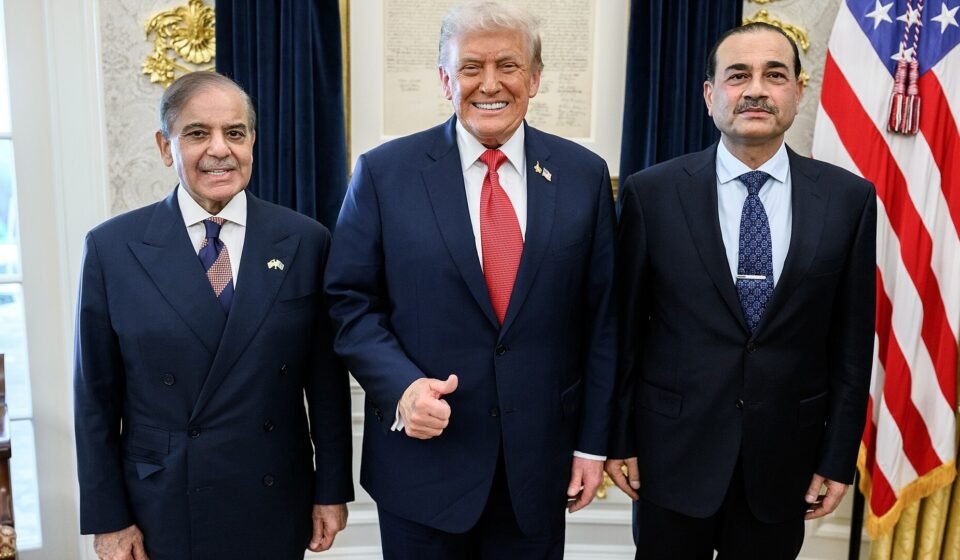
Pakistan’s leadership has spent considerable political and diplomatic effort developing a relationship with Trump since the beginning of his second presidential term. The country’s powerful military leadership played a prominent role in that engagement, with Army Chief Field Marshal Asim Munir emerging as an important channel of communication with the White House.
Trump has publicly described Munir as his favourite field marshal. Their high-profile meeting in Washington in June 2025, which took place without Pakistani civilian officials present, highlighted the importance of the military establishment in the relationship.
According to Pakistan’s military, discussions between the two sides extended beyond security cooperation to areas including mining, energy and cryptocurrency.
Islamabad also supported several of Trump’s diplomatic initiatives and nominated him for the Nobel Peace Prize, crediting him with helping end the May 2025 conflict between India and Pakistan. India has disputed the claim that US mediation was responsible for halting the hostilities.
Pakistan later gained a more prominent diplomatic role through its involvement in efforts to facilitate communication between Washington and Tehran during the Iran conflict. Islamabad hosted talks between the two sides in April 2026, although the subsequent agreement did not hold.
The Democratic victory could now bring greater congressional attention to the way Pakistan developed its relationship with the Trump administration.
Business arrangements could attract questions
One of the sensitive areas concerns agreements and commercial arrangements involving people or businesses linked to Trump and his associates.
Pakistan signed a memorandum to explore the use of USD1, a stablecoin issued by Trump-linked World Liberty Financial, for certain financial transactions. Another memorandum concerned the redevelopment of Manhattan’s Roosevelt Hotel, with US envoy Steve Witkoff involved in negotiations.
Pakistan also placed a limited drone order with Powerus, a company whose investors include Trump’s sons Donald Trump Jr. and Eric Trump.
These arrangements could attract questions from lawmakers seeking greater transparency about possible conflicts of interest and the relationship between private business interests and government decisions.
White House spokeswoman Anna Kelly previously told Reuters that there were no conflicts of interest when asked about Powerus.
Former Pakistani ambassador to Washington Husain Haqqani said Islamabad had developed a transactional relationship with Trump’s team and warned that some arrangements involving people close to the president might not survive closer examination.
Analysts have also cautioned that investigations into individual arrangements could affect the wider relationship if lawmakers believe private interests influenced government decisions.
However, scrutiny of these deals does not automatically mean that all cooperation between Washington and Islamabad will end.
Democrats may not abandon cooperation with Pakistan
Despite the political uncertainty, Pakistan retains areas of cooperation that could remain important to both sides. Counterterrorism coordination and diplomatic engagement over Iran are issues that have received support across party lines in Washington.
Analysts have suggested that Democratic lawmakers may focus their criticism on decisions made by Trump and his administration rather than treating every aspect of US-Pakistan cooperation as controversial.
Pakistan’s role in regional diplomacy could therefore continue to matter, even if its close relationship with the current White House comes under greater examination.
The challenge for Islamabad will be to maintain constructive relations with the US Congress and avoid relying too heavily on personal connections with a single administration.
Will the election result reduce Pakistan’s economic burden?
For ordinary Pakistanis, the most important question is whether the political change in Washington can translate into lower energy prices and improved economic conditions.
A reduction in regional tensions could potentially help stabilise international oil markets. That, in turn, could ease pressure on countries such as Pakistan that rely heavily on imported fuel.
But there is no direct or automatic link between a Democratic victory in Congress and an immediate fall in Pakistan’s petrol prices. Global crude prices are influenced by supply, demand, security conditions, shipping routes and decisions by oil-producing countries. US foreign policy is also shaped by the president, Congress and other institutions.
The Democratic-controlled Congress may seek investigations, hearings or policy reviews, but it cannot independently guarantee an end to the Iran conflict or a reduction in global energy costs.
For Pakistan, the election has therefore opened two separate political and economic conversations. Its leadership must consider how to protect diplomatic and commercial arrangements developed during Trump’s presidency, while citizens continue to look for relief from inflation and the rising cost of essential goods.
The outcome of the US vote may reshape the political environment in Washington, but whether that change delivers tangible benefits to Pakistani households will depend on future diplomatic decisions, regional developments and the direction of global energy markets.