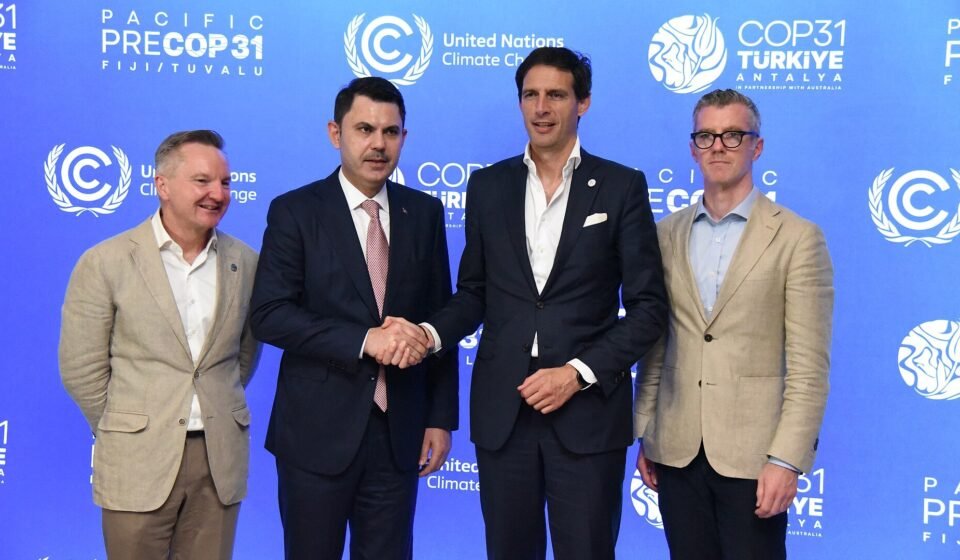

World leaders, climate negotiators, scientists and environmental campaigners are gathering in Antalya, Türkiye, as the 31st United Nations Climate Change Conference (COP31) begins on Monday. The summit arrives at a critical moment for international climate policy, with growing evidence that existing commitments are not enough to prevent dangerous levels of global warming.
The central challenge facing delegates is straightforward but difficult: can governments move beyond ambitious speeches and international promises to deliver measurable changes in energy production, industrial emissions, climate financing and environmental protection?
Scheduled from November 9 to 20, COP31 is being presented by its Turkish presidency as a conference focused on implementation. Its stated approach centres on dialogue, consensus and practical action, with an emphasis on turning existing climate commitments into results that can be measured.
The conference is being hosted by Türkiye, while Australia is leading the negotiations process, creating a shared leadership arrangement for this year’s climate discussions.
Climate projections increase pressure on governments
The summit opens against a troubling scientific assessment of the world’s climate trajectory.
According to the United Nations Environment Programme’s latest Emissions Gap Report, the planet could experience approximately 2.8 degrees Celsius of warming by the end of the century if current policies continue. Even if countries fully implement their existing national climate pledges, projected warming could remain around 2.6 degrees Celsius.
Both outcomes would be significantly above the Paris Agreement’s ambition of limiting global temperature increases to 1.5 degrees Celsius above pre-industrial levels.
The figures underline the difference between what governments have promised and what the world needs to achieve. Although renewable energy deployment and climate policies have expanded over the past decade, global emissions reductions remain insufficient to meet the most ambitious temperature goals.
The challenge is not limited to setting new targets. Countries must also demonstrate how existing commitments will be financed, implemented and monitored.
For delegates in Antalya, the scientific warning creates pressure to produce outcomes that can be translated into national policies rather than remaining part of conference declarations.
Climate finance remains a major point of disagreement
One of the most important issues expected to shape negotiations is climate finance.
Developing countries, particularly those facing severe floods, droughts, rising temperatures and coastal erosion, have repeatedly argued that they need greater financial support to respond to climate change.
Many vulnerable economies have contributed relatively little to historical greenhouse gas emissions but face substantial costs from climate-related disasters. They need resources not only to reduce emissions but also to protect communities, strengthen infrastructure, improve agricultural resilience and recover from environmental damage.
A major international financing goal agreed at COP29 calls for developed countries to take the lead in mobilising at least $300 billion annually for developing nations by 2035.
However, questions remain over how this funding will be delivered, how much will come through grants rather than loans, and how effectively vulnerable countries will be able to access it.
Adaptation finance is another important concern. Building flood-resistant infrastructure, improving early-warning systems, protecting water supplies and preparing healthcare facilities for extreme weather require long-term investment.
For many developing countries, the availability of affordable funding could determine whether climate plans become practical projects or remain policy documents.
Energy transition must move faster
The transition away from fossil fuels is another major subject at COP31.
Governments face the difficult task of reducing dependence on coal, oil and natural gas while maintaining affordable electricity, protecting employment and supporting economic development.
The expansion of solar and wind power has created new opportunities, but renewable energy growth alone cannot solve every problem. Countries also need modern electricity grids, energy storage, reliable transmission networks and policies that encourage cleaner industrial production.
The COP31 presidency has highlighted electrification as a major priority through its proposed ’35 by 35′ initiative. The pledge aims to increase electricity’s share of global final energy consumption to 35 percent by 2035.
Greater electrification could help reduce emissions in transport, buildings and industrial activities, particularly when electricity comes from low-carbon sources.
However, countries have different starting points. Wealthier economies may have greater financial and technological capacity to modernise their energy systems, while developing nations must balance climate objectives with expanding electricity access and meeting growing demand.
This makes international cooperation and technology transfer important parts of the transition.
Adaptation and protection for vulnerable communities
Climate adaptation is expected to receive significant attention during the Antalya conference.
Extreme heat, unpredictable rainfall, droughts, wildfires and flooding are affecting communities across different regions. These events can damage homes, disrupt food production, increase health risks and place additional pressure on public finances.
For countries with limited resources, recovering from repeated disasters can become a major obstacle to long-term development.
COP31 discussions are expected to address climate-resilient cities, water security, sustainable agriculture, disaster preparedness and coastal protection.
Pacific island nations and other vulnerable coastal communities have particular concerns about rising sea levels and increasingly severe weather conditions.
The question is whether international agreements can provide practical support to the people most exposed to these risks.
Better early-warning systems, stronger public infrastructure and improved disaster planning can reduce damage, but they require funding, technical expertise and effective implementation at local levels.
Can COP31 deliver something different?
International climate conferences have produced important agreements, including the 2015 Paris Agreement, which established a framework for countries to submit and strengthen their national climate commitments.
Yet repeated promises have not closed the gap between the pace of climate action and the scale of the environmental challenge.
This is why COP31’s emphasis on implementation will face close scrutiny.
The success of the conference will depend on whether governments can provide clear timelines, transparent progress reports, credible financing arrangements and practical mechanisms for holding commitments accountable.
Voluntary initiatives can encourage cooperation among governments, businesses and investors, but their impact will depend on participation and actual delivery.
There are also geopolitical obstacles. Differences over economic responsibilities, energy security, trade and financial contributions can complicate negotiations. Countries may agree on broad objectives while disagreeing over who should pay and how quickly changes should happen.
The absence of an official United States government delegation is another important feature of this year’s summit, although US businesses and members of Congress are expected to participate.
The real test begins after the conference
COP31 will bring together countries with different economic interests, energy requirements and levels of vulnerability. Reaching agreement among them is only one part of the challenge.
The more important test will come after delegates leave Antalya. Governments will need to convert negotiated outcomes into domestic legislation, public investment, clean-energy projects and stronger climate protection systems.
For developing countries, the availability of reliable financial assistance will remain essential. For major economies, the pressure will be to demonstrate that emissions commitments are reflected in actual energy and industrial policies.
The conference may produce new announcements, partnerships and voluntary initiatives. But the credibility of those commitments will ultimately depend on what happens outside the negotiating rooms.
As COP31 opens, the world is not short of climate promises. What remains uncertain is whether governments can turn those promises into action quickly enough to limit the damage of a warming planet.