
Nokia Agrees to Sell Enterprise Networking Unit to Investment Firm Aurelius

Finnish telecommunications equipment maker Nokia has agreed to sell its Enterprise Campus Edge (ECE) business to investment firm Aurelius as the company continues to reshape its portfolio and concentrate on its core networking operations.
The transaction, announced on October 13, marks another step in Nokia’s efforts to find new ownership for businesses that it no longer considers central to its long-term strategy. Financial details of the agreement were not disclosed in the initial announcement.
What Is Nokia’s Enterprise Campus Edge Business?
Enterprise Campus Edge focuses on network solutions designed for business and industrial environments. Such technology can help organisations connect devices, equipment and users across offices, campuses and operational sites.
Enterprise connectivity is becoming increasingly important as companies adopt automation, cloud services, connected equipment and data-intensive applications. However, Nokia has been reviewing parts of its portfolio to determine where its resources can deliver the greatest strategic value.
In its 2025 annual report, Nokia identified Enterprise Campus Edge as one of several businesses placed within its Portfolio Businesses segment while it assessed future options for those operations.
Why Is Nokia Selling the Business?
The sale fits into Nokia’s wider organisational strategy, under which the company has prioritised its principal network infrastructure and mobile infrastructure operations.
Nokia has been reviewing businesses that are not considered central to its future plans and seeking suitable ownership arrangements for them. The company has also emphasised continuity for customers and employees during the transition.
The move allows Nokia to focus its strategic attention on its core networking activities, including infrastructure supporting connectivity and the growing demand for AI-related network capacity. The long-term effect will depend on the transaction’s completion and how the business performs under its new ownership.
What Does Aurelius Bring to the Deal?
Aurelius is an investment firm that acquires and develops businesses through transactions involving corporate carve-outs, restructurings and other ownership changes.
The acquisition gives Aurelius an opportunity to take control of a specialised enterprise-networking business. The next phase will depend on the terms of the deal, the operational transition and the buyer’s plans for the unit.
The initial reporting did not disclose the purchase price or provide detailed information about future operating arrangements. Those details will be important for understanding the transaction’s financial implications and its impact on customers and employees.
Part of a Wider Nokia Portfolio Reshaping
The Enterprise Campus Edge agreement follows other portfolio changes at Nokia. In October 2026, Nokia announced that Inseego had completed its acquisition of Nokia’s Fixed Wireless Access customer-premises equipment business. Nokia had previously classified both businesses as discontinued operations in its financial reporting.
These moves reflect Nokia’s effort to streamline its business structure and concentrate on selected technology markets. The company continues to operate in major telecommunications infrastructure areas while reviewing the future of businesses outside its principal strategic focus.
What Happens Next?
Attention will turn to the transaction’s completion, any further details about the financial terms and plans for the Enterprise Campus Edge business under Aurelius.
Until more information is disclosed, the full financial impact on Nokia and the operational implications for customers and employees remain unclear.
The bottom line: Nokia’s agreement to sell Enterprise Campus Edge to Aurelius is part of a broader portfolio review aimed at sharpening the company’s strategic focus. The purchase price and detailed transition plans were not disclosed in the initial report.

IMF Warns Global Growth Depends on AI Boom as War, Oil Shocks and Debt Raise Risks
Investment in artificial intelligence is helping sustain the global economy despite geopolitical tensions and energy-market disruption, but rising public debt and uncertainty over the technology boom could threaten the outlook, the International Monetary Fund (IMF) has warned.
In its latest assessment, the IMF projects global economic growth at 3.1% in 2026, a slight improvement from its previous estimate. The expansion is being supported by strong spending on AI infrastructure, computing capacity and related technology supply chains, which is helping offset some of the economic damage caused by conflict and higher energy costs.
However, the Fund cautions that the apparent resilience of the world economy masks significant vulnerabilities. A prolonged war, persistent inflation, expensive borrowing and a reassessment of expected returns from AI investments could all weaken growth.
AI Spending Becomes a Major Growth Driver
The rapid expansion of AI has triggered substantial investment in data centres, advanced chips, computing equipment and electricity infrastructure. This spending supports business activity not only in the United States but also in economies that supply hardware and other components to the global technology industry.
Asian economies integrated into these supply chains are among those benefiting from the investment cycle. Companies involved in semiconductors, electronics and data-centre equipment have experienced increased demand as technology firms expand their AI capabilities.
The economic benefits, however, are not guaranteed to last at the same pace. Much depends on whether businesses can turn their spending into lasting productivity gains and profits.
If investors begin to doubt the commercial value of AI projects, technology companies could reduce capital expenditure. Such a shift could affect suppliers, financial markets and countries that have become increasingly dependent on AI-related investment.
War and Energy Prices Add to Inflation Pressure
Geopolitical conflict remains another major challenge for the global economy. Disruptions to energy supplies and uncertainty surrounding oil shipments can increase fuel prices, raise transport costs and put pressure on businesses and households.
Higher energy prices can also make it harder for central banks to bring inflation under control. If inflation stays elevated, interest rates may remain higher for longer, increasing borrowing costs for companies, consumers and governments.
Energy-importing economies are particularly exposed because they must spend more on fuel and other essential imports when global prices rise. Lower-income countries with limited financial reserves may have less room to protect households or support economic activity.
The IMF has warned that the combined effects of conflict, energy shocks and weaker financial flexibility could produce sharply different outcomes across countries.
Rising Government Debt Limits Policy Options
Public debt is adding another layer of risk. Governments that already carry large debt burdens may find it increasingly expensive to borrow as interest rates and bond yields rise.
Higher debt-servicing costs can leave less money available for infrastructure, healthcare, education and measures designed to cushion households against economic shocks.
The IMF has urged governments to strengthen public finances and rebuild fiscal buffers so they can respond more effectively to future crises. It has also highlighted the need for policies that preserve price stability while supporting sustainable growth.
The challenge is particularly difficult when governments face competing demands: protecting consumers from high energy prices, maintaining public services and investing in infrastructure that supports long-term productivity.
Global Growth Remains Uneven
The benefits of the AI investment boom are not being distributed evenly. Economies with strong technology industries and established positions in global supply chains may gain more than countries that depend heavily on imported energy or have limited access to capital.
The IMF's outlook therefore highlights a growing divide between economies benefiting from technology investment and those struggling with higher import costs, debt pressures and geopolitical disruption.
For investors and policymakers, the central question is whether AI-driven spending will generate sufficient productivity improvements to sustain growth if energy prices remain elevated or the conflict worsens.
What Happens Next?
The global outlook will depend on several factors: the duration of geopolitical conflicts, the path of oil prices, government borrowing costs and whether AI investments deliver the productivity gains businesses anticipate.
A sustained technology boom could continue to support economic activity. Conversely, a sharp decline in AI investment combined with prolonged energy disruption could weaken growth and trigger financial-market volatility.
The bottom line: The IMF sees AI investment as an important support for global growth, but warns that war, energy-price pressures and rising public debt leave the world economy vulnerable to fresh shocks.

US Dollar Near 18-Month High as Middle East Tensions and Ukraine Conflict Drive Safe-Haven Demand
The US dollar remained close to an 18-month high on Tuesday as escalating geopolitical tensions, higher energy prices and expectations surrounding US interest rates supported demand for the currency.
The US Dollar Index, which measures the greenback against a basket of six major currencies, stood at around 102.56 during early Asian trading, extending momentum after a 0.3% rise in the previous session, according to Reuters.
Investors have been seeking relatively safer assets amid renewed concerns over energy infrastructure attacks in the Middle East and Ukraine. The uncertainty has also contributed to volatility across currency, bond and equity markets.
Middle East and Ukraine Conflicts Support Dollar Demand
Geopolitical developments have become an important driver of currency trading. Attacks affecting energy infrastructure have raised concerns about potential supply disruptions, keeping investors alert to further increases in oil prices.
Higher energy costs can add to inflationary pressure across major economies. If inflation remains persistent, central banks may need to maintain tighter monetary policies for longer than previously expected.
The dollar can benefit during periods of market uncertainty because investors often increase their exposure to US assets and other liquid instruments. However, the extent of this demand depends on developments in the conflicts, energy markets and monetary policy.
US Interest Rates and Treasury Yields in Focus
Expectations about the Federal Reserve's next policy decisions are another factor influencing the dollar. Stronger US interest-rate expectations and higher Treasury yields can make dollar-denominated investments more attractive to international investors.
Markets are closely watching upcoming US inflation data for clues about the future path of interest rates. A higher-than-expected inflation reading could strengthen expectations that borrowing costs will remain elevated, while softer data could reduce that pressure.
The relationship is not automatic, however. Currency markets also respond to economic growth, employment figures, global risk appetite and monetary-policy decisions in other countries.
Euro Faces Pressure from European Bond-Market Concerns
The dollar's strength has also been supported by weakness in some competing currencies. Concerns surrounding French government bonds and wider European bond-market conditions have weighed on the euro.
Because the euro accounts for a substantial share of the Dollar Index, movements in the European currency can significantly influence the index even when the dollar's performance against other currencies is mixed.
The Japanese yen, meanwhile, showed some resilience following weaker-than-expected Japanese inflation data, while several other major currencies traded with limited changes during the Asian session.
What a Strong Dollar Means for Global Markets
A stronger dollar can have consequences well beyond foreign-exchange trading. Countries and companies that need to purchase dollar-priced commodities or repay dollar-denominated debt may face higher costs when their domestic currencies weaken.
Oil-importing economies can be particularly exposed when a firm dollar coincides with elevated crude prices. The combination can increase import bills and complicate efforts to control inflation.
For financial markets, the key factors to monitor are geopolitical developments, movements in energy prices, US inflation data and changes in Treasury yields. These forces could determine whether the dollar maintains its recent strength or gives back some of its gains.
Market outlook: The dollar remains supported by safe-haven demand and interest-rate expectations, but its next move will depend on incoming economic data and developments in geopolitical tensions.
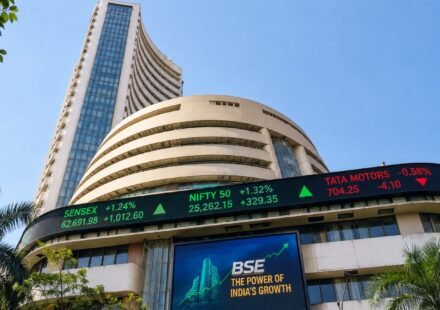
Stock Market Today: HCLTech, RBL Bank, UPL and ICICI Pru AMC in Focus as Brokerages Update Calls
Several Indian stocks are in focus on Tuesday, October 13, after leading brokerages issued fresh views, revised price targets and updated their outlooks on companies across the information technology, banking, asset management and agrochemical sectors.
HCL Technologies, RBL Bank, ICICI Prudential Asset Management Company and UPL are among the key stocks attracting attention. Gujarat Fluorochemicals and Azad Engineering have also featured in brokerage research.
The recommendations reflect different assessments of earnings growth, valuations, margins and future business opportunities. However, brokerage calls are opinions based on particular assumptions and should not be treated as guarantees of future share-price performance.
HCLTech: Brokerages Maintain Cautious Ratings
HCLTech is attracting attention following its latest quarterly results, with analysts focusing on the outlook for revenue growth and profitability.
Kotak Securities maintained its Reduce rating but raised its target price to ₹1,220 from ₹1,200. The brokerage highlighted healthy growth in services but pointed to weakness in the products business and concerns over valuation.
Citi maintained its Sell rating while increasing its target price to ₹1,050 from ₹1,030. It noted that operating margins were better than expected, although the software business disappointed and the services outlook suggested a slower second half.
The differing target prices underline the uncertainty surrounding HCLTech’s future performance. Investors will be watching revenue guidance, new deal bookings and the sustainability of operating margins.
RBL Bank: Citi Maintains Buy Rating
Citi maintained its Buy rating on RBL Bank and retained a target price of ₹505.
The brokerage highlighted a stronger net interest margin performance but also pointed to elevated provisioning, which can affect a bank’s profitability.
Other factors under observation include the pace of loan growth, the composition of deposits and the bank’s progress in integrating Emirates NBD’s investment.
For investors, future asset quality, credit costs and the bank’s ability to improve returns on assets will remain important indicators.
ICICI Prudential AMC: Jefferies Raises Target Price
Jefferies maintained its Buy rating on ICICI Prudential Asset Management Company and increased its target price to ₹3,760 from ₹3,600.
The brokerage cited better-than-expected second-quarter results, supported by improved revenue yields. Higher yields from alternative investments and equity-related products contributed to the improvement.
However, pressure on net flows due to redemptions remains a factor to monitor. The expansion of alternative investment products is another area that could influence future performance.
The outlook for asset management companies is closely linked to market conditions, investor participation, fund flows and the ability to generate fee income.
UPL: Kotak Upgrades Rating but Cuts Target
Kotak Securities upgraded UPL to Add from Reduce, while lowering its target price to ₹570 from ₹640.
The brokerage highlighted growth opportunities in Superform and UPL’s differentiated chemical portfolio. It also pointed to backward integration as a factor supporting the company’s competitiveness.
Despite the rating upgrade, the lower target price signals that the brokerage has adjusted its valuation expectations. The discount associated with UPL’s holding-company structure remains a concern.
Investors will continue to track demand for agrochemicals, agricultural conditions, global competition and the company’s financial performance.
Gujarat Fluorochemicals and Azad Engineering Also in Focus
ICICI Securities upgraded Gujarat Fluorochemicals to Buy from Add and raised its target price to ₹5,380 from ₹5,050.
The brokerage highlighted the company’s battery-materials portfolio and the potential for future commercial supplies. The timing of approvals, production ramp-up and customer demand will be important to watch.
Goldman Sachs maintained its Buy rating on Azad Engineering with a target price of ₹3,315. It viewed a contract involving Bharat Heavy Electricals Limited as a positive development, potentially increasing Azad Engineering’s exposure to domestically sourced heavy-duty gas-turbine components.
As with other brokerage calls, the expected benefits will depend on execution, order conversion and future financial results.
What Investors Should Watch
The latest research highlights several factors likely to influence these stocks:
• Earnings and guidance: Whether companies can sustain revenue growth and profitability.
• Valuations: Whether current share prices adequately reflect expected future earnings.
• Banking performance: Loan growth, deposit mix, asset quality and provisioning.
• Industrial demand: Orders, project execution and demand for specialised products.
• Market conditions: Broader equity-market volatility, interest rates and foreign investor flows.
Brokerage ratings and target prices can change as new information becomes available. Investors should review the original research, understand the risks and consider their own financial circumstances before making decisions.

France Faces Weak Economic Momentum as Services Offset Industrial and Agricultural Slowdown
France’s economy is expected to grow by just 0.1% in the third quarter of 2026, highlighting the continuing weakness facing the euro zone’s second-largest economy, according to estimates from the Bank of France.
The central bank’s assessment points to modest overall growth as activity in services helps offset weakness in manufacturing, construction and agriculture. The estimate suggests that France’s recovery remains fragile after economic output stagnated in the second quarter.
The forecast is based on business surveys and other economic indicators. It is an estimate rather than the final official GDP figure for the July–September period.
Services Provide Support to the Economy
The services sector is expected to remain an important source of support for French economic activity. Information and communication, trade and business services are among the areas identified by the central bank as contributors to growth.
However, the improvement is not broad-based. Manufacturing has faced pressure from subdued production, while construction activity has been affected by weakness in public works and other building-related activity.
Agriculture has also faced challenges associated with extreme summer heat. The Bank of France estimated that the heatwave would weigh on third-quarter economic output, with agricultural activity particularly exposed to adverse weather conditions.
France’s Economic Recovery Remains Fragile
France recorded no GDP growth in the second quarter of 2026, according to revised national accounts published by the country’s statistics agency, INSEE.
The central bank’s latest estimate of 0.1% growth for the third quarter indicates only a limited improvement. Weak production and cautious business activity continue to constrain the pace of expansion.
The Bank of France’s September interim projections put full-year economic growth at 0.4% in 2026, below its previous forecast. The outlook reflects subdued activity during the first half of the year and uncertainty surrounding the domestic and international economic environment.
Household Spending and Business Investment Under Pressure
The economic outlook also faces challenges from consumer purchasing power and investment.
When prices rise faster than household incomes, consumers have less money available for discretionary spending. Businesses facing uncertain demand and higher financing costs may also delay investment decisions.
France’s fiscal position has added another source of uncertainty. The government is attempting to reduce its budget deficit, while political disagreements over public finances have attracted attention from financial markets.
The combination of weak growth, fiscal pressures and uncertainty could make it more difficult for policymakers to support activity without further straining public finances.
What the Forecast Means for the Euro Zone
France plays a significant role in the euro-zone economy, so persistent weakness could affect the region’s overall growth outlook.
However, the impact will depend on developments in other member states, consumer demand, industrial production and international trade. A single quarterly estimate does not establish the direction of the entire European economy.
Investors and policymakers will be watching the final GDP data, inflation figures and subsequent business surveys to determine whether the modest third-quarter expansion is sustained.
What Happens Next?
The 0.1% figure remains a central-bank estimate, and the final assessment will depend on official national accounts data.
For now, the forecast underlines the difficulty France faces in generating stronger economic growth. Services are providing some support, but weaknesses in industry, construction and agriculture continue to limit momentum.

Wall Street Today: US Stock Futures Waver as Oil Surges Above $106; Bank Earnings in Focus
US stock market futures were mixed on Monday as investors assessed rising crude oil prices, geopolitical tensions and the start of a new corporate earnings season. The Dow Jones Industrial Average and S&P 500 futures showed modest gains at one point, while Nasdaq 100 futures came under pressure, reflecting uncertainty ahead of key reports from major American banks.
According to Reuters, Brent crude rose above $106 per barrel during the session, reaching its highest level in roughly two weeks. The jump in oil prices followed reported attacks on Riyadh’s international airport, raising concerns about energy supplies and the potential impact on inflation.
Dow Jones, S&P 500 and Nasdaq: What investors are watching
US stock futures offered a mixed signal rather than a clear direction for Wall Street.
• Dow Jones futures: Slightly higher in early trading.
• S&P 500 futures: Near flat to modestly positive.
• Nasdaq 100 futures: Weaker at one point as technology-related shares faced pressure.
These are futures-market indications, not the final closing performance of the three indexes. Actual market movements may change after regular trading begins.
The S&P 500 and Nasdaq had finished the previous week higher, supported by optimism around corporate profits and artificial intelligence-related businesses. However, concerns about expensive technology valuations and higher borrowing costs remain important risks.
Oil prices add to inflation concerns
Energy prices have become a key influence on investor sentiment. When crude oil rises sharply, transport, manufacturing and other business costs can increase. Companies may pass some of those costs to consumers, potentially making it harder for inflation to cool.
Higher inflation can also complicate the Federal Reserve’s decisions on interest rates. If borrowing costs remain elevated, companies may face more expensive financing and investors may reassess how much they are willing to pay for future corporate earnings.
Reuters reported that elevated Treasury yields had already been creating pressure for parts of the US stock market. The latest movement in oil prices could therefore add another source of uncertainty for investors.
Big US bank earnings take centre stage
Investors are also preparing for quarterly results from major financial institutions, including JPMorgan Chase, Wells Fargo, Goldman Sachs and Citigroup, with reports scheduled to begin on Tuesday.
The results will provide insight into consumer borrowing, credit quality, investment banking activity and the effects of higher interest rates on financial businesses.
Analysts are looking for strong third-quarter earnings growth across S&P 500 companies, but the extent of that growth—and whether companies can maintain their outlooks—will be closely watched.
Inflation and retail sales data ahead
Economic data due later this week could influence expectations for the Federal Reserve’s next policy decision. Investors are monitoring consumer inflation, producer prices and retail sales for clues about price pressures and the strength of household demand.
The US Treasury market was closed on Monday for Columbus Day, limiting bond-market trading activity during the session.
What it means for investors
The immediate direction of US equities will depend on how investors balance corporate earnings expectations against higher energy costs and interest-rate concerns. Technology companies may remain sensitive to changes in Treasury yields, while energy-related businesses could respond differently to movements in crude prices.
For now, mixed futures suggest caution rather than a decisive market trend. Investors should distinguish between premarket indications and confirmed closing prices as the trading session progresses.
Sensex, Nifty 50 Today: GIFT Nifty, Crude Oil and US-Russia Diesel Deal Among 5 Key Triggers
Indian stock markets are set for a closely watched session on Monday, October 12, as investors assess signals from GIFT Nifty, falling crude oil prices, the US-Russia diesel deal and the latest geopolitical developments.
Early market indicators pointed to a positive start for the Sensex and Nifty 50, following a recovery in the previous session. However, uncertainty surrounding global energy supplies, elevated bond yields and foreign investor selling could limit gains.
On Friday, October 9, the Nifty 50 closed at 22,520.45, gaining around 1.3%, while the BSE Sensex rose approximately 1.2% to 72,472.33. The rebound ended an eight-week losing streak for both benchmark indices.
Investors will now look for signs that the recovery can continue as the new trading week begins.
1. GIFT Nifty: A Positive Start in Focus
GIFT Nifty is an important early indicator of how Indian equity benchmarks may open. Its positive signal suggests that domestic shares could begin Monday’s session on a firm note.
However, GIFT Nifty movements do not guarantee the actual opening direction of the Sensex or Nifty 50. Global market swings, institutional trading and fresh geopolitical headlines can change sentiment before and during the session.
Traders will monitor whether early buying interest continues after the opening bell and whether the benchmarks can sustain their previous session’s gains.
2. US-Russia Diesel Deal and Energy Ceasefire
US President Donald Trump’s announcement of a Russian diesel supply arrangement has become an important factor for global energy markets.
Trump said Russia would supply more than 300,000 metric tonnes of diesel to the United States and global markets following discussions with Russian President Vladimir Putin. The US also temporarily eased sanctions on Russian fuel to facilitate supplies.
The announcement has drawn criticism from some US lawmakers, while Ukrainian President Volodymyr Zelenskyy has argued that the arrangement could benefit Moscow.
Trump subsequently claimed that Russia and Ukraine had agreed to stop attacks on each other’s energy infrastructure. However, the details and implementation of the proposed arrangement remained uncertain, with Ukraine seeking clarification and Russia yet to confirm the agreement in the reports available before Monday’s session.
For Indian markets, the potential impact will depend on whether these developments lead to a sustained improvement in energy supplies and lower prices.
3. Crude Oil Prices: A Key Risk for India
Oil prices eased on Monday amid expectations of additional Russian supplies. Brent crude was reported near $103.35 per barrel, while US West Texas Intermediate crude traded around $90.55 in early trading.
Despite the decline, crude remains expensive, and continuing tensions in the Middle East are keeping supply risks in focus.
India imports a substantial share of its crude oil requirements, making international oil prices an important influence on inflation, the rupee, corporate costs and the country’s import bill.
A sustained fall in crude could support market sentiment by easing cost pressures. Conversely, renewed disruptions to shipping routes or energy infrastructure could push prices higher and weigh on equities.
4. US Bond Yields, Inflation and the Rupee
Investors will also watch US Treasury yields, inflation expectations and movements in the Indian rupee against the US dollar.
Higher US bond yields can make American assets more attractive relative to emerging-market investments. This can put pressure on foreign portfolio investment flows into India and increase volatility in domestic equities.
Energy prices are another important consideration because a renewed increase in fuel costs could complicate efforts to control inflation.
A weaker rupee may also raise the cost of imported commodities, including crude oil. Investors will therefore assess whether global financial conditions become more supportive or remain a source of pressure for Indian shares.
5. IT Earnings, HCL Technologies and Institutional Flows
Corporate earnings will be another major driver as India’s September-quarter results season gathers pace.
HCL Technologies is among the companies in focus on Monday. Investors will look for updates on revenue growth, demand for technology services, margins and management commentary on spending by global clients.
The performance of major IT companies could influence sentiment across the technology sector after IT stocks helped support the previous session’s rebound.
Institutional activity will also matter. Foreign institutional investors have been selling Indian equities, while domestic institutional investors have helped provide support during periods of weakness.
A change in the balance between foreign selling and domestic buying could influence whether the latest recovery gains momentum.
What Should Investors Watch Today?
The Sensex and Nifty 50 enter Monday’s session with a positive opening signal, but the direction of the market will depend on how investors respond to global developments and domestic trading activity.
The main factors to monitor are GIFT Nifty, crude oil prices, the US-Russia diesel arrangement, global bond yields and the rupee, alongside corporate earnings and institutional flows.
A positive opening alone would not confirm a sustained rally. Investors will watch whether buying continues through the session and whether the benchmarks can hold on to their gains.
This article is for news and informational purposes only. It is not investment advice.
Wall Street Rebounds as Dow, S&P 500 and Nasdaq Gain After OpenAI Revenue Concerns
US stock markets moved higher on Friday as technology shares attempted to recover from the previous session’s sell-off, when concerns about OpenAI’s revenue outlook triggered renewed questions about the sustainability of the artificial intelligence boom.
The Dow Jones Industrial Average, S&P 500 and Nasdaq Composite opened higher, according to market reports. Technology and semiconductor stocks were in focus as investors reassessed the outlook for AI-related businesses and the companies supplying the infrastructure behind them.
The recovery followed a difficult session on Thursday, October 8, when the Nasdaq Composite fell about 1.24% and the S&P 500 declined approximately 0.46%. The Dow Jones Industrial Average, by contrast, finished slightly higher.
Why Did OpenAI Revenue Concerns Affect Wall Street?
Investor sentiment weakened after a Financial Times report raised concerns about OpenAI’s revenue outlook. The report indicated that the company’s annualised revenue was around $50 billion in September, below the approximately $70 billion level investors had previously expected.
The figures raised questions about whether the rapid expansion of artificial intelligence services would translate into revenue growth quickly enough to justify the substantial spending on computing infrastructure, data centres and advanced chips.
However, subsequent reporting offered a different perspective. Bloomberg reported that OpenAI expected to reach or exceed $70 billion in annualised revenue by the end of the year, helping ease some of the concerns surrounding its financial trajectory.
The differing figures highlight the importance of distinguishing between a reported revenue run rate at a particular point in time and a company’s future target. They do not, by themselves, establish that OpenAI’s business is weakening or that the broader AI market has reached its peak.
Technology and Semiconductor Stocks in Focus
AI-related companies have become an important influence on US stock-market performance as businesses invest heavily in data centres, processors and cloud computing.
Shares of major semiconductor and technology companies came under pressure during Thursday’s sell-off. Nvidia, Oracle, Micron Technology and Broadcom were among the companies affected by concerns about OpenAI’s revenue outlook and the financing of large-scale AI infrastructure.
The technology sector’s sensitivity to such developments reflects the expectations built into valuations across parts of the AI industry. Investors are weighing the possibility of continued strong demand against the cost of developing and operating advanced AI systems.
Friday’s recovery suggested that some investors were willing to return to technology shares after the previous session’s declines. Nevertheless, a rebound in one session does not necessarily mean that concerns about AI spending and profitability have disappeared.
What Happened to US Stock Futures?
US stock futures pointed to a stronger start before the market opened on Friday.
Market reports indicated that Nasdaq-100 futures gained around 0.8%, while S&P 500 futures advanced approximately 0.3% to 0.4%. Dow futures also edged higher, with reported gains ranging from roughly 0.1% to 0.2%, depending on the report and time of measurement.
These futures movements signalled improving sentiment ahead of the opening bell. Futures are not the same as the actual performance of the underlying indexes during the regular trading session, and prices can change throughout the day.
Investors were also monitoring oil prices, Treasury yields and developments in the wider economy for clues about inflation and the likely direction of interest rates.
Oil Prices and Inflation Remain Important Risks
Developments in the energy market have added another layer of uncertainty for investors. Higher crude oil prices can increase costs for businesses and consumers, potentially complicating the outlook for inflation and interest rates.
Technology shares can be particularly sensitive to changes in borrowing costs and investor expectations because valuations often depend heavily on anticipated future earnings.
Any sustained increase in inflation or bond yields could therefore create fresh pressure on growth-oriented stocks, even if demand for AI products remains strong.
At the same time, a decline in oil prices or easing concerns about financing costs could support broader market sentiment. Investors will continue to assess these factors alongside company-specific developments.
What Should Investors Watch Next?
The immediate focus remains on whether technology stocks can sustain their recovery and whether upcoming corporate earnings reports provide evidence of continued growth in AI-related demand.
Investors will also examine revenue forecasts, capital expenditure plans and profitability across major technology companies. Results from large US banks and other companies reporting in the coming week could provide additional insight into the strength of the wider economy.
For now, Friday’s rebound offers some relief following Thursday’s technology-led decline, but uncertainty around AI revenue expectations remains.
Market takeaway: Wall Street’s early recovery reflected renewed buying in technology shares after concerns about OpenAI’s revenue outlook. Investors should distinguish between futures movements, opening gains and final closing levels when assessing the market’s performance.
Indian Stock Market Today: GIFT Nifty Signals Recovery After Sell-Off; TCS Q2, Crude Oil and RBI Policy in Focus
India’s stock market is heading into Friday’s session after a sharp sell-off pushed the Sensex and Nifty 50 to their lowest closing levels in months. Early signals from GIFT Nifty pointed to a possible rebound, but investors remained cautious amid elevated crude oil prices, foreign fund outflows, a weaker rupee and uncertainty over global technology stocks.
The market’s direction on October 9 is likely to depend on five major factors: GIFT Nifty and Asian markets, the US technology sell-off, Tata Consultancy Services’ (TCS) September-quarter results, oil prices and the Reserve Bank of India’s tighter policy stance.
Sensex and Nifty 50: How the Market Closed on Thursday
Indian equities came under heavy selling pressure on Thursday, October 8. The BSE Sensex fell 1,045.46 points, or around 1.44%, to close at 71,593.24. The NSE Nifty 50 dropped 371.25 points, or 1.64%, to settle at 22,231.80.
The declines reflected broad-based weakness rather than pressure on just a handful of companies. Rising crude oil prices, concerns about inflation, higher global bond yields and continued selling by foreign investors weighed on sentiment. Smaller companies also faced pressure, with mid-cap and small-cap indices recording steeper declines than the benchmarks.
The Sensex’s close was reported as its lowest in about 32 months, while the Nifty 50 ended at an 18-month low. The sharp fall has put investors on alert for further volatility as the week’s final trading session begins.
1. GIFT Nifty Signals a Possible Positive Opening
GIFT Nifty was trading around 22,359–22,370 in early trade on Friday, indicating a potentially higher opening for the Sensex and Nifty 50 compared with Thursday’s close.
The signal offers some hope of a technical rebound after the previous session’s steep losses. Short-covering—when traders buy back shares to close bearish positions—can also contribute to a recovery after a sharp fall.
However, GIFT Nifty is an indicator, not a guarantee of how the cash market will perform. Investors will also monitor Asian markets, currency movements, crude oil and global bond yields after the opening bell.
A positive opening alone would not establish that the broader downtrend has ended. The market would need sustained buying and participation across sectors to demonstrate stronger recovery momentum.
2. US Technology Stocks and Global Markets
US markets delivered a mixed performance on Thursday. The Nasdaq Composite fell about 1.25%–1.3%, dragged down by technology shares, while the S&P 500 declined around 0.5%. The Dow Jones Industrial Average edged higher.
The weakness in technology stocks is important for Indian IT companies because their earnings depend heavily on spending by clients in the United States and other major international markets. Investors will look for signs that customers are continuing to approve technology projects, particularly traditional IT services and artificial-intelligence-related work.
Indian technology shares may therefore remain sensitive to movements in US-listed technology stocks and American Depositary Receipts (ADRs) of Indian IT companies. Any sustained weakness in overseas technology shares could weigh on domestic IT sentiment, although individual companies may move differently depending on their earnings and outlook.
Global bond yields are another factor. Higher yields can make equities less attractive and raise concerns about borrowing costs and future economic growth. Investors will track whether yields continue to ease or rise again during Friday’s session.
3. TCS Q2 Results: Revenue, Profit and AI Business in Focus
Tata Consultancy Services is among the most closely watched stocks on Friday after announcing its results for the quarter ended September 30, 2026.
TCS reported consolidated revenue of ₹73,188 crore, up approximately 11.2% year-on-year, while net profit increased 15% to ₹13,884 crore. Its operating margin stood at 24%, and annualised revenue from artificial intelligence crossed $3 billion.
The company also reported total contract value of $9.6 billion for the quarter and announced a dividend of ₹12 per share. The record date for the dividend is October 14, 2026, according to the company’s results announcement.
Despite the growth in reported revenue and profit, investors will examine the quality and pace of that growth. TCS’s sequential revenue growth in constant-currency terms was 0.5%, its weakest September-quarter performance on that measure in three years, according to Reuters. The company also said customers continued to scrutinise discretionary technology programmes.
This creates two competing considerations for the stock: growth in profit and AI-related business on one side, and subdued sequential growth in traditional services on the other.
The results could influence sentiment across the wider IT sector, including Infosys, HCLTech, Wipro and Tech Mahindra, which are due to report their own quarterly numbers in the coming weeks.
4. Crude Oil Prices, the Rupee and Foreign Investor Selling
Oil remains one of the biggest risks for Indian equities. Brent crude rose above $104 a barrel during Thursday’s trading amid concerns about geopolitical tensions and supply disruptions. Higher oil prices can increase India’s import bill, put pressure on the rupee and add to domestic inflation.
The rupee also weakened against the US dollar, increasing concerns about imported inflation and the cost of overseas purchases. A sustained rise in oil prices could make it harder for Indian companies to manage costs and could complicate the inflation outlook.
Foreign institutional investors have also been selling Indian equities heavily. Reuters reported net foreign selling of approximately ₹46,990 crore over nine sessions, taking year-to-date outflows to a record level.
Continued foreign selling can add pressure to benchmark indices, particularly when global investors are reducing exposure to emerging markets. Domestic institutional buying may cushion some of the impact, but investors will watch the latest institutional flow data for signs of stabilisation.
Oil prices, the rupee and foreign flows are closely connected: higher oil prices can weaken the currency and worsen inflation concerns, while global uncertainty can encourage investors to move money away from riskier assets.
5. RBI’s Rate Hike and Stocks to Watch
The Reserve Bank of India raised its benchmark repo rate by 25 basis points to 5.5% and shifted its policy stance to “calibrated tightening,” signalling concern about inflation.
Higher interest rates can increase borrowing costs for businesses and households. Rate-sensitive sectors such as real estate, automobiles and some financial companies may therefore remain in focus. Investors will also consider whether tighter policy could affect consumption, investment and corporate earnings.
Apart from TCS, several stocks may attract attention on Friday:
• JSW Steel: The company reported a 5% year-on-year rise in crude steel production for the September quarter.
• Dr. Reddy’s Laboratories: Investors may monitor developments after a US Food and Drug Administration inspection resulted in two
• observations at its Andhra Pradesh facility.
• NCC: The company secured a road construction contract worth approximately ₹1,286 crore from the Hyderabad Growth Corridor.
• SML Mahindra: September commercial vehicle sales rose 32% year-on-year, while exports declined sharply.
• Reliance Industries, HDFC Bank and ICICI Bank: Their price movements may influence the benchmark indices because of their significant index weights.
These are stocks to monitor, not assured gainers. Company-specific announcements and broader market sentiment may produce different outcomes for each share.
What Should Investors Watch During Friday’s Session?
The first signal will be whether the indices hold any early gains indicated by GIFT Nifty. After that, investors will look for participation beyond a small number of heavyweight stocks, along with movements in IT, banking, metals, real estate and automobile shares.
Crude oil and the rupee will remain important macroeconomic indicators. Fresh foreign and domestic institutional flow data could also help explain whether buying interest is returning after Thursday’s sell-off.
A rebound is possible after such a steep decline, but volatility may remain elevated. Investors should avoid treating a positive opening as confirmation that the market has reached a bottom.
Market outlook: Friday’s session is likely to be driven by the balance between a possible technical recovery and continuing concerns about oil prices, inflation, interest rates and foreign selling. TCS’s results may provide a separate trigger for IT stocks, while global technology shares and Asian markets will influence overall risk appetite.
This article is for news and information purposes only. It is not investment advice or a recommendation to buy or sell any security.

US Blocks Major Tech Firms From Green Card Route, Indian IT Workers Face Fresh Uncertainty
The United States has suspended Microsoft, Adobe and several major technology and IT services companies from a federal programme used by employers to sponsor skilled foreign workers for permanent residency, opening a new front in the Trump administration’s crackdown on employment-based immigration.
The companies named in the action include Microsoft, Adobe, Cognizant, Infosys, Tata, Wipro, HCL Technologies and Capgemini, according to US officials and Reuters reporting. The Department of Labor's action targets participation in the Permanent Labor Certification (PERM) programme, a key step for many employer-sponsored employment-based green card applications.
What the US government has done
US Vice President JD Vance and Labor Secretary Keith Sonderling announced the suspensions on Thursday, October 8.
Sonderling said the companies would be suspended from the PERM programme amid allegations of misuse and fraud involving employment-based immigration programmes. The administration said the policy is intended to ensure that American workers receive greater consideration for available jobs.
Vance specifically criticized Microsoft's use of foreign-worker programmes and argued that major US companies should increase hiring of American workers. The administration has also launched investigations into alleged misuse of international student visa programmes at several US universities.
This is not an H-1B suspension
Despite being described as part of a wider H-1B crackdown, Thursday's action does not itself cancel H-1B visas held by employees of the affected companies.
Instead, the immediate target is the PERM labour certification system. Employers generally use PERM as an important step when seeking employment-based permanent residency for foreign workers.
That distinction is significant for Indian technology professionals. A worker may legally hold an H-1B visa but still depend on an employer-sponsored green card process to remain in the United States permanently. Suspension from PERM could therefore make the long-term immigration process more difficult or uncertain for affected employees.
Why Indian IT companies are affected
Indian technology companies have historically relied heavily on US immigration programmes to deploy skilled professionals in the American market.
Infosys, Cognizant, Tata, Wipro and HCL are among the large IT services companies affected by the latest decision. Their US operations employ large numbers of technology professionals, including workers who use employment-based immigration pathways.
The development comes after other US policy changes have already increased pressure on companies that depend on foreign technology workers. The Trump administration has also maintained restrictions affecting H-1B workers entering the United States, including a $100,000 payment requirement for certain new H-1B petitions involving workers outside the country.
What it could mean for employees
The immediate impact will vary from worker to worker depending on the stage of their immigration case.
Employees with existing H-1B status are not automatically losing their visas because of the PERM suspension. However, workers who are relying on their employer to begin or continue the labour-certification stage of a green card application could face delays or uncertainty.
For Indian professionals, the issue is particularly sensitive because employment-based immigration to the US can involve lengthy waits, especially for applicants from countries with high demand for employment-based green cards.
The latest decision could also encourage affected companies to reconsider how they recruit and deploy workers in the United States, potentially increasing reliance on local hiring and overseas delivery centres.
Part of a broader immigration push
The PERM suspensions follow a series of actions by the Trump administration aimed at tightening the US employment-based immigration system.
In September, the White House extended restrictions on certain H-1B workers and maintained a $100,000 payment requirement for specified new petitions involving workers outside the United States. The administration has argued that the H-1B programme has been abused by some employers and that foreign labour can put pressure on American wages and employment opportunities.
The latest PERM action therefore adds another layer to the immigration challenge facing global technology companies and their foreign employees.
For Indian IT workers in the United States, the key question now is how long the suspensions will remain in place and whether the affected companies will be allowed to resume green card sponsorship after the federal investigations are completed.