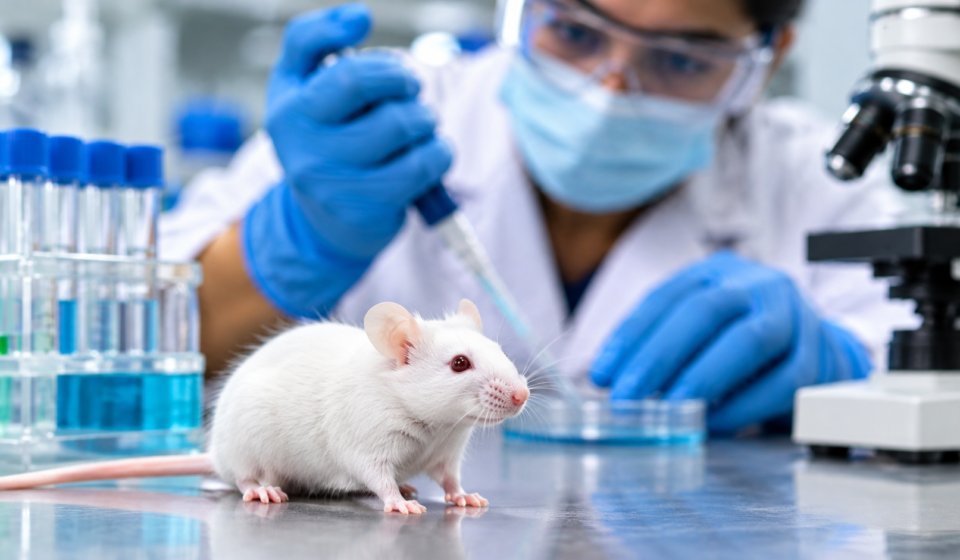

India’s proposed changes to laboratory animal testing regulations have triggered a growing debate over how the country can accelerate medical research without weakening protections for animals used in scientific experiments. The draft rules aim to simplify approval procedures, but animal welfare organisations and researchers have raised questions about oversight, the sourcing of animals and the treatment of animals during testing.
The government’s proposed Prevention of Cruelty to Animals (Control and Supervision of Experiment, Breeding and Trading of Laboratory Animals) Rules, 2026, would replace the existing framework established in 1998. The draft introduces a system that classifies experiments according to the level of pain or distress they are expected to cause.
The proposals have drawn criticism because they could give individual research institutions greater authority to approve certain experiments, while changing restrictions on where laboratory animals can be obtained. Animal welfare advocates argue that the changes could reduce independent scrutiny. Supporters of a more streamlined system, however, point to the need to avoid unnecessary administrative delays in pharmaceutical, medical and academic research.
The government has invited objections and suggestions on the draft, with the consultation deadline reported as November 5, 2026. The proposals are still under consideration and should not be treated as rules already in force.
What Would Change Under the Proposed Rules?
One of the most significant changes concerns how experiments are assessed and approved.
The draft divides experiments into four categories based on the expected level of pain or distress: mild, moderate, severe and non-recovery. This approach is intended to connect the approval process more directly to the anticipated impact on an animal rather than relying primarily on its size or species.
Under the proposed framework, an institution’s Institutional Animal Ethics Committee (IAEC) could approve experiments classified as mild or moderate across a wider range of animal species. The central Committee for Control and Supervision of Experiments on Animals (CCSEA) would retain approval responsibilities for severe and non-recovery procedures involving specified animals, particularly species beyond rodents and rabbits.
The distinction matters because institutional committees operate within the organisations conducting the research. Critics argue that transferring more approval authority to these committees could create conflicts of interest and reduce the independence of decisions.
The draft also contains provisions concerning the registration of research establishments, veterinary supervision, staff training, animal-care facilities and inspections. The effectiveness of these requirements will depend on how they are implemented and monitored.
Why Animal Welfare Groups Are Objecting
Animal rights organisations have argued that the proposed framework could weaken existing protections by allowing certain experiments to proceed without the same level of central oversight.
One major concern is the proposed sourcing of laboratory animals. Under the earlier framework, research facilities were required to obtain animals from registered breeders to support traceability. The draft would permit sourcing from open markets or unregistered sellers under specified circumstances when registered breeders are unavailable, according to reporting on the proposal.
Critics say that relaxing sourcing requirements could make it harder to establish where an animal came from, how it was handled and whether it was bred or obtained specifically for research.
Animal welfare groups have also raised concerns about provisions that could permit the use of certain stray or feral animals and protected wildlife in experiments when the required scientific justification and permissions are obtained.
These provisions have prompted questions about the protection of community dogs and cats, the handling of wild animals and the risk that animals not bred for laboratory use could enter research facilities.
PETA India has called for the proposed rules to be withdrawn, arguing that animal welfare safeguards and independent oversight should be strengthened rather than weakened. The organisation has also urged greater use of research methods that do not require live animals.
These objections reflect the position of animal welfare advocates. The precise effect of the draft will depend on its final wording, the applicable legal permissions and the safeguards adopted during implementation.
Could Faster Approvals Help Medical Research?
Animal experiments remain part of several areas of biomedical research, including drug development, vaccine research, disease studies and the assessment of potential safety risks.
Researchers may use laboratory animals to investigate how a substance affects a complex living system before proceeding to further stages of development. Such studies can provide useful information about biological processes and possible adverse effects.
Supporters of streamlined approvals argue that a clearer, severity-based system could help institutions process proposals more efficiently and reduce delays caused by administrative procedures.
However, faster approval is not necessarily better research. Scientific value depends on whether an experiment is properly designed, ethically justified, independently reviewed and capable of producing reliable results.
A system that reduces unnecessary bureaucracy while maintaining strong independent oversight could support research. A system that weakens scrutiny without adequate safeguards could create risks for animal welfare and the credibility of scientific findings.
The central challenge is therefore not simply how quickly experiments can be approved, but whether every experiment is necessary and whether the expected scientific benefits justify the potential harm.
Why Animal Sourcing and Scientific Reliability Matter
The debate over where laboratory animals come from is not limited to animal welfare.
Animals obtained from uncontrolled environments may have unknown medical histories, different living conditions or underlying infections. These factors can introduce variables into research and potentially make experimental results harder to interpret.
Animals bred and maintained under controlled laboratory conditions can offer greater consistency in some types of studies. However, laboratory breeding alone does not guarantee reliable results, and different animal models have different limitations.
The wider scientific issue is whether researchers can demonstrate that their chosen model is suitable for the question being investigated.
Critics of the proposed sourcing changes argue that traceability, health screening and clear records should remain essential requirements. They also want regulators to ensure that any exception allowing animals to be sourced outside registered breeding systems is narrowly defined and independently monitored.
For pharmaceutical research, reliable testing is important not only for the welfare of laboratory animals but also for assessing the safety and effectiveness of products intended for people.
Animal Testing Cannot Always Predict Human Outcomes
A further complication is that animal studies do not always predict how a medicine or treatment will behave in humans.
Animals and people can differ in their immune responses, metabolism, genetics and physiology. A substance that appears safe in an animal model may still cause serious side effects during human testing. Conversely, a treatment that performs poorly in one animal model may still warrant further investigation through other methods.
This does not mean animal research has no value. It means that animal studies should be interpreted alongside other evidence and should not be treated as a guarantee of human safety.
Improving the scientific quality of research requires appropriate study design, transparent reporting, careful evaluation of results and a willingness to use different methods where they are more informative.
These considerations strengthen the argument for a regulatory framework that evaluates both animal welfare and the scientific justification for each experiment.
Non-Animal Testing Methods Offer Another Path
Advances in science are creating alternatives that can reduce reliance on live animals in some areas of research.
These approaches, often described as New Approach Methodologies (NAMs), include human-cell-based testing, three-dimensional tissue models, organoids, organ-on-chip systems and computer-based modelling.
Organoids are small, cell-grown structures that reproduce selected features of human organs. Organ-on-chip technologies simulate certain functions of human tissues in controlled systems, while computational models can help researchers predict how substances may behave.
Such methods can provide human-relevant information and may be more suitable than animal models for particular research questions. They can also help researchers identify promising candidates before proceeding to more complex testing.
However, these technologies cannot yet reproduce every interaction occurring across a complete human body. Their suitability depends on the purpose of the study, the method’s scientific validation and the regulatory requirements involved.
India has already taken steps towards recognising alternative testing technologies. The New Drugs and Clinical Trials (Amendment) Rules, 2023, recognised methods including cell-based assays, organ chips and computer modelling for relevant regulatory purposes. A wider transition will require investment in infrastructure, specialist training and validation.
What the Debate Means for India’s Research Sector
The outcome of the consultation could influence universities, pharmaceutical companies, biotechnology firms, contract research organisations and government laboratories.
A clear and predictable regulatory system could help research institutions understand their obligations and plan studies more efficiently. Strong safeguards could also support public confidence that experiments are necessary, properly supervised and scientifically justified.
On the other hand, unclear sourcing rules, inadequate independent review or inconsistent enforcement could create uncertainty for researchers and raise concerns among international partners that commission or rely on studies conducted in India.
The country therefore has an opportunity to establish a framework that supports scientific progress while preserving accountability.
Possible improvements include requiring researchers to document whether validated alternatives are available, maintaining traceable records of animal sourcing, strengthening independent participation in ethics committees, clarifying humane endpoints and publishing more comprehensive information about animal use and welfare complaints.
These are potential policy measures rather than confirmed provisions of the draft.
What Happens Next?
The immediate next step is the completion of the public consultation process. The government will need to consider objections and suggestions before deciding how to proceed with the proposed framework.
The most important questions are whether institutional approvals will retain sufficient independence, how exceptions for animal sourcing will be controlled, and what safeguards will apply when experiments involve significant pain or distress.
The final rules will also need to provide clarity about inspections, veterinary oversight, accountability and the use of scientifically validated alternatives.
Analysis: India does not have to choose between medical research and animal protection as if the two goals are incompatible. A carefully designed regulatory system can support necessary experiments while requiring stronger justification, independent review and the use of alternatives wherever scientifically appropriate.
The success of the proposed rules will ultimately depend on whether they reduce unnecessary delays without creating gaps in animal welfare or scientific oversight. The consultation provides an opportunity to address those concerns before the final framework is settled.