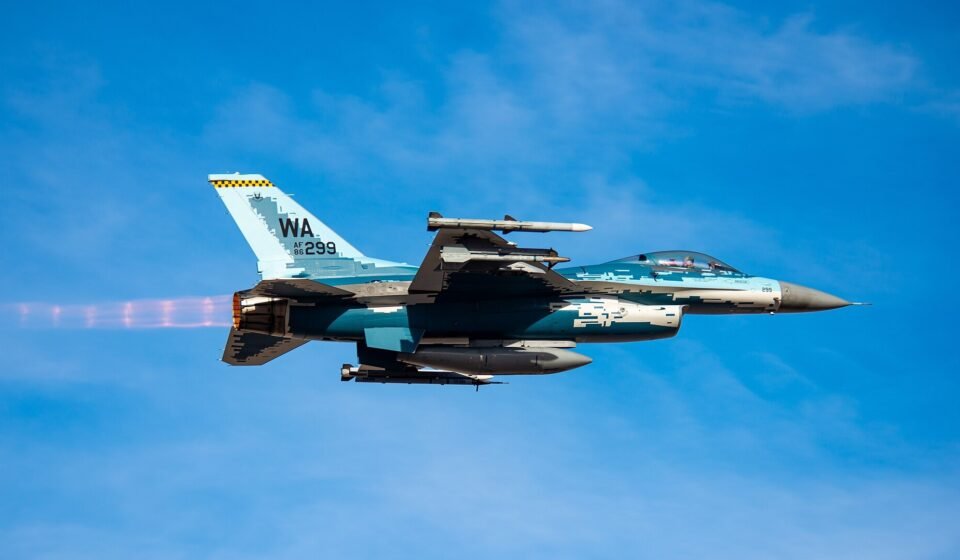

A new dispute has emerged between Iran and the United States after Tehran claimed that its air-defence systems had damaged an American F-16 fighter jet over the Gulf. Iran’s military said the aircraft was struck by a missile on Friday evening, November 20, and was forced to abandon its mission before making an emergency landing at a nearby airport.
However, the United States quickly rejected the account. US Central Command (CENTCOM) said Iran had not attacked an American F-16 and confirmed that all US military fighter aircraft operating in the Middle East were safe and accounted for.
The conflicting statements have raised questions about what actually happened over the Gulf. While Iran presented the incident as a successful air-defence engagement, the US military described the allegation as false. As of November 21, no independently verified evidence had established that an American F-16 was hit or forced to make an emergency landing.
Key Highlights
• Iran claimed its air-defence forces damaged a US F-16 over the Gulf on November 20.
• Tehran said the aircraft aborted its mission and made an emergency landing.
• CENTCOM categorically rejected the allegation, saying Iran did not attack an F-16.
• The United States said all its fighter jets in the Middle East were safe and accounted for.
What Did Iran Claim About the US F-16?
The allegation came from Iran’s Army, which said its air-defence units had detected and tracked an American F-16 operating over the Persian Gulf.
According to the Iranian military account, air-defence personnel in southern Iran identified the aircraft through the country’s integrated air-defence network. The military said a missile was subsequently launched towards the fighter jet.
Iran claimed that the missile exploded close to the aircraft, causing damage that forced the pilot to abandon the mission. The aircraft allegedly headed towards a nearby airport and made an emergency landing.
Iranian state media carried the announcement on Saturday, November 21, a day after the alleged engagement.
However, the Iranian statement did not identify the precise location of the incident or name the airport where the aircraft supposedly landed. It also did not provide independently verified details about the extent of the alleged damage or the condition of the pilot.
These missing details are important because they make it difficult to establish the sequence of events independently.
CENTCOM Rejects Iran’s Version of Events
The US military responded with a direct denial.
CENTCOM stated that Iran had not attacked a US F-16 fighter aircraft on Friday. The command also said that every American military fighter jet operating in the Middle East was safe and accounted for.
The response directly contradicted the central elements of Iran’s announcement.
If an aircraft had been damaged badly enough to abort its mission and make an emergency landing, investigators would normally look for supporting information such as aircraft identification, photographs, maintenance records or confirmation from the operating military unit.
CENTCOM’s statement did not provide a detailed account of every American aircraft movement over the Gulf. However, its categorical denial made clear that Washington was not accepting Tehran’s version of the incident.
The disagreement also demonstrates how quickly competing military claims can emerge during an ongoing confrontation, particularly when both sides are closely monitoring each other’s air operations.
What Does the Fact-Check Actually Establish?
The most important question is whether Iran provided convincing evidence that an American fighter jet was damaged.
The available reporting establishes that Iran made the allegation and that the United States rejected it. But those two statements alone do not independently establish what happened in the air.
Iran’s account described a missile launch, a damaged aircraft and an emergency landing. Yet the initial reports did not provide independently authenticated imagery of a damaged US F-16, its serial number, or verifiable information identifying the airport where it supposedly landed.
The US response provides a clear official denial, but a military statement from either side is not the same as an independent technical investigation.
Therefore, the responsible fact-check conclusion is that Iran’s claim has not been independently substantiated, and CENTCOM has explicitly denied it.
It would be inaccurate to report that Iran successfully struck an American fighter jet as an established fact. It would also be premature to claim that every detail of the alleged encounter has been independently disproved through publicly available technical evidence.
This distinction matters because unverified military claims can quickly become headlines, social media posts and propaganda material.
Why Claims About Fighter Jets Matter in the Gulf
The Persian Gulf is one of the most sensitive military and strategic regions in the world. It is surrounded by countries with important energy infrastructure, shipping routes and military installations.
American forces maintain a significant military presence across the wider Middle East, including air assets used for surveillance, patrols and combat operations.
Iran, meanwhile, has invested heavily in missile systems, radar networks and air-defence capabilities. Its military strategy places considerable importance on defending its territory and challenging the military presence of outside powers.
An alleged missile engagement involving an American F-16 therefore carries significance beyond the fate of a single aircraft.
If confirmed, an attack that damaged a US military jet could create pressure for a response from Washington and increase the risk of further escalation. It could also raise questions about the effectiveness of American aircraft protection and the ability of Iranian air defences to track military targets.
But without reliable confirmation, the allegation should not be treated as evidence that Iran has successfully penetrated American air operations.
A Wider Information Battle During the Conflict
The dispute is also part of a wider information battle between Washington and Tehran.
During military confrontations, governments often release statements describing battlefield successes, enemy losses and the effectiveness of their weapons. Such announcements can serve military, political and domestic communication objectives.
The difficulty for the public is that reliable information may emerge slowly. Military locations, aircraft movements and operational details are often classified, while images and videos circulating online may lack clear dates, locations or original sources.
The Associated Press has previously documented misleading images and videos circulated during the wider Iran conflict. In one earlier fact-check, footage presented as showing an American fighter jet being shot down was traced to a military-themed video game rather than a real combat incident.
That earlier example does not establish that Iran’s latest F-16 allegation is false. It does, however, demonstrate why visual material connected to military claims must be checked carefully before being treated as evidence.
For the latest incident, the available reports do not establish that the alleged aircraft damage actually occurred.
What Happens Next?
Further information could clarify the dispute if either side releases additional material.
For Iran, the key question is whether it can provide verifiable evidence supporting its claim, including identifiable aircraft footage, reliable location information or other material that can be independently examined.
For the United States, additional operational details could help explain the circumstances behind CENTCOM’s denial. However, Washington may not disclose sensitive information about aircraft movements or military operations.
Independent verification would be particularly important if images of an allegedly damaged aircraft or an emergency landing begin circulating online.
Until then, the incident should be understood as a disputed military claim rather than a confirmed strike.
Strategic & Future Implications
The latest disagreement highlights how air-defence claims can become part of the broader confrontation between Iran and the United States. Tehran’s announcement presents its military systems as capable of challenging American aircraft, while CENTCOM’s response seeks to prevent the allegation from being accepted as a confirmed battlefield success. The credibility of both accounts will ultimately depend on verifiable evidence, not simply the strength of official statements.
The bigger concern is the possibility that an unverified incident could influence decisions during an already tense military confrontation. A genuine attack on an American fighter jet could carry serious consequences, while an exaggerated or misleading claim could deepen mistrust and increase the risk of miscalculation. For now, the central fact remains clear: Iran claimed that it damaged a US F-16, but Washington denied the attack, and independent confirmation has not been established.