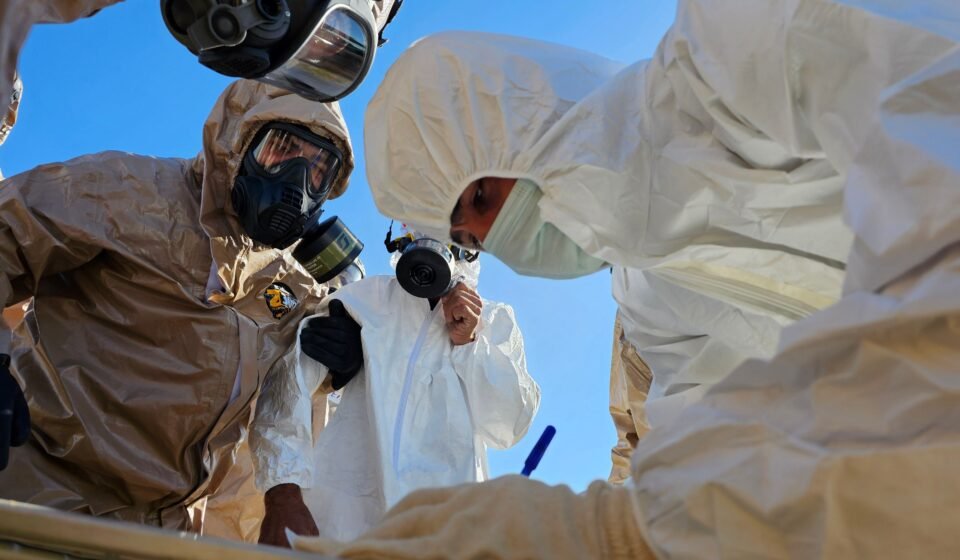

Kenya has confirmed its first imported case of Ebola after a Kenyan citizen who had been living in the Democratic Republic of Congo (DRC) died while receiving treatment in Nairobi, Kenyan Health Minister Aden Duale said on Tuesday.
The case has triggered heightened surveillance in Kenya as health authorities work to identify and monitor people who may have been exposed to the patient. Officials have so far identified 28 contacts, including family members and healthcare workers, according to Reuters.
Patient arrived in Kenya through Uganda
The patient arrived in Nairobi on Saturday after travelling from the DRC through Uganda. After developing symptoms associated with Ebola, the individual was isolated and treated at Nairobi Hospital.
Health authorities subsequently confirmed the Ebola infection. The patient died late Monday while receiving treatment.
The case is particularly significant because Kenya had previously been preparing for the possibility of Ebola arriving from neighbouring countries but had not recorded a confirmed case linked to the current outbreak.
As recently as September, the World Health Organization’s Africa office said Kenya had recorded no case of Ebola disease caused by the Bundibugyo virus. Kenya had nevertheless strengthened surveillance and preparedness at major border crossings because of the outbreak in the DRC and Uganda
Health authorities launch contact tracing
Kenyan authorities have placed health facilities and surveillance systems on heightened alert following the confirmed case.
The immediate priority is to identify everyone who had close contact with the infected person during the period when transmission could have occurred. Those identified as contacts are being monitored for symptoms, while health officials are also reviewing the patient’s movements and possible exposure history.
Contact tracing is a critical part of Ebola control because the virus can spread through direct contact with the blood or other bodily fluids of an infected person. Transmission can also occur through contaminated materials and during unsafe handling of the bodies of people who have died from the disease.
Congo outbreak remains a major regional concern
The Kenyan case comes as the DRC continues to battle a major outbreak of Ebola disease caused by the Bundibugyo virus.
The World Health Organization reported in September that the outbreak had spread across 63 health zones in seven provinces, with thousands of confirmed cases and deaths. WHO assessed the risk as very high inside the DRC and high for countries sharing land borders with the country, while assessing the broader global risk as low at the time of its September assessment.
More recent figures from the U.S. Centers for Disease Control and Prevention showed 8,463 confirmed cases and 4,082 confirmed deaths across the DRC, Uganda and France as of October 2, including 8,442 cases and 4,080 deaths in the DRC.
Reuters reported on October 2 that the DRC outbreak had already surpassed 4,000 deaths and 8,300 confirmed cases, making it the country’s largest and deadliest Ebola outbreak.
Why the Kenya case matters
Kenya is an important regional transport and travel hub, with frequent movement of people between East and Central Africa. The confirmed imported case therefore highlights the continuing risk of cross-border transmission while the DRC outbreak remains active.
However, the identification of an imported case does not by itself mean that Ebola is spreading widely inside Kenya. The key indicators will be whether additional cases are detected among the patient’s contacts and whether any transmission occurs outside the known exposure network.
Kenyan health authorities have previously strengthened screening at airports and land borders in anticipation of cases arriving from affected countries.
Ebola requires rapid detection and isolation
The Bundibugyo virus causes a severe form of Ebola disease. WHO says symptoms can initially include fever, fatigue, muscle pain, headache and sore throat before progressing in some patients to gastrointestinal symptoms, organ dysfunction and haemorrhagic manifestations.
People infected with the virus are generally not infectious until symptoms begin, making rapid recognition, isolation, testing and contact tracing central to outbreak control.
The current outbreak has also placed significant pressure on health systems in affected parts of the DRC, where insecurity, displacement and limited access to healthcare have complicated surveillance and containment efforts.
Kenyan officials are now monitoring the 28 identified contacts and assessing whether any additional people may have been exposed.
The coming days will be important in determining whether the Nairobi case remains an isolated imported infection or leads to further transmission in Kenya.