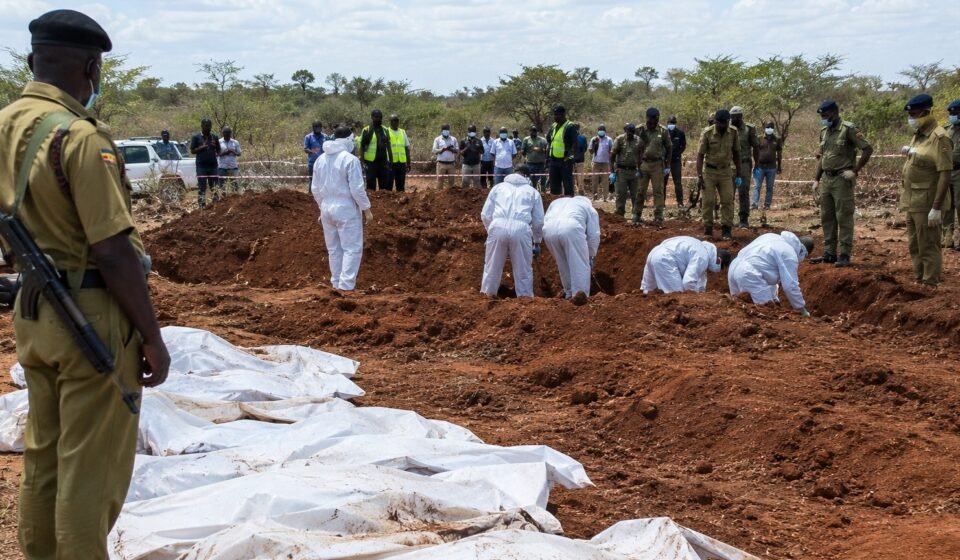

A Kenyan court has convicted self-proclaimed preacher Paul Nthenge Mackenzie and 28 co-accused in a murder case involving 191 people, including 190 children, whose deaths were linked to a starvation cult operating in the country’s coastal region. The verdict, delivered on October 19, marks a major development in the Shakahola Forest massacre, one of Kenya’s most disturbing cases of religious extremism and alleged criminal exploitation. More than 400 bodies have been recovered in the wider investigation since 2023.
The court found that Mackenzie and his associates used religious teachings and an organised system to persuade or compel followers to fast until death, allegedly promising that they would reach heaven and meet Jesus. Mackenzie denied the murder allegations, but the court rejected his defence. Sentencing in this case is scheduled for November 6, 2026.
Who Is Paul Mackenzie?
Paul Nthenge Mackenzie was a former taxi driver who became a preacher and established the Good News International Church in Malindi, a coastal town in southeastern Kenya, in 2003. Over the years, his religious activities attracted followers, some of whom listened to his sermons through a church television station.
Mackenzie promoted apocalyptic beliefs about the end of the world. According to reporting on the case, his teachings included opposition to formal education and some forms of modern medicine. Followers were reportedly encouraged to reject practices and institutions he considered incompatible with his religious beliefs.
These teachings later became central to investigations into the Shakahola deaths. Prosecutors alleged that Mackenzie’s influence over his followers extended beyond religious instruction and developed into a system in which people were pressured to follow extreme fasting practices.
2019: Church Closure and the Move to the Forest
Authorities began scrutinising Mackenzie’s activities years before the mass graves were discovered. In 2019, his church premises and television operation were shut down, following growing official concern over his activities and teachings.
Mackenzie and some of his followers subsequently moved to the remote Shakahola Forest area in Kilifi County. There, members reportedly established isolated settlements and lived in basic mud houses, away from ordinary community life and close public scrutiny.
Investigators later examined how this isolation affected followers’ ability to seek help, leave the group or challenge its leadership. The forest settlement became the centre of the case that would eventually shock Kenya and attract international attention.
2021–2023: Fasting and the Growing Humanitarian Tragedy
According to evidence discussed in court, the system of extreme fasting began in January 2021 and continued for more than two years. Prosecutors alleged that followers were told that starvation would help them reach heaven before the end of the world.
Children were among the most vulnerable victims. The prosecution’s case was that the group’s hierarchy enforced fasting and that parents were encouraged or pressured to withhold food from their children. Survivors also described violence and restrictions on those who resisted the group’s rules or attempted to leave.
The allegations went far beyond voluntary religious fasting. The court heard evidence that the practices were part of an organised system that contributed to the deaths. Some victims were reported to have died from causes other than starvation, including suffocation, strangulation and physical injuries.
April 2023: Discovery of Mass Graves in Shakahola
The case came to public attention in April 2023, after authorities received information that people had disappeared or were in danger in the forest settlement. Police investigations led to the discovery of shallow graves and severely weakened survivors.
As the investigation expanded, forensic teams began exhuming bodies. The number of victims rose rapidly, and the site became known internationally as the Shakahola Forest massacre.
More than 400 bodies were ultimately recovered in the wider investigation, although the precise number of deaths and the circumstances of every victim have required separate investigation. Many bodies were badly decomposed, complicating identification and the determination of cause of death.
The discovery raised urgent questions about how such a large-scale tragedy could have continued for so long and whether earlier warnings could have prevented it.
2023–2024: Arrests and Criminal Charges
Mackenzie was arrested in 2023 as investigators pursued the case. Authorities also detained other people alleged to have helped operate the group or enforce its practices.
In January 2024, Mackenzie was charged with 191 counts of murder in connection with the deaths covered by this case. He and his co-accused denied the allegations. The proceedings were part of a wider set of legal actions connected to the deaths, alleged radicalisation and other offences.
Investigators also faced the difficult task of identifying victims, collecting forensic evidence and hearing testimony from survivors and witnesses. The investigation extended beyond the 191 deaths addressed in the murder judgment, as authorities continued examining other deaths associated with the wider tragedy.
The Court Case: How the Prosecution Built Its Argument
The prosecution argued that the deaths were not simply the result of individual religious choices. It presented the group as an organised system in which leadership, strict rules and pressure on followers helped enforce deadly fasting.
The court considered witness testimony and other evidence concerning the treatment of children, the isolation of followers and the role of people who allegedly helped enforce the group’s practices. Some survivors described an environment in which resistance could bring punishment or violence.
Mackenzie maintained that he had not forced victims to starve. However, on October 19, 2026, the court found him and 28 co-accused guilty in the murder case involving 191 deaths.
The ruling is a major legal milestone, although it does not mean every death discovered during the wider investigation has been fully accounted for or that all related proceedings have concluded.
October 19, 2026: Mackenzie Convicted of 191 Murders
The Mombasa court’s verdict established criminal responsibility in the case involving 190 children and one adult. The judgment described an organised system in which religious teachings were used to enforce fasting that resulted in deaths.
The scale of the tragedy has made the case one of Kenya’s most closely watched criminal proceedings. For families who lost children and other relatives, the verdict represents an important step towards accountability. However, the recovery and identification of victims, investigations into other deaths and the sentencing process remain significant parts of the wider case.
Mackenzie and his co-accused face sentencing on November 6, 2026, in this murder case.
Why the Shakahola Case Matters for Kenya
The massacre has prompted serious questions about religious oversight, the protection of children and the responsibility of authorities to respond to warning signs before a crisis escalates.
The case also highlights the risks posed when a leader’s influence becomes absolute, followers are isolated from outside support, and vulnerable people are discouraged from accessing education, healthcare or help from authorities.
Religious freedom is a fundamental right, but it does not place criminal acts beyond the law. The Shakahola proceedings have focused attention on the distinction between voluntary religious practice and alleged coercion, abuse and the exploitation of followers.
What Happens Next?
The next major step in this case is sentencing, scheduled for November 6, 2026. Other investigations and proceedings related to deaths beyond the 191 covered by the verdict may continue separately.
Authorities still face the challenge of accounting for victims, identifying remains where possible and establishing the circumstances surrounding other deaths linked to the wider investigation.
The bottom line: The Shakahola massacre developed over several years, from the growth of Paul Mackenzie’s religious movement and its relocation to a remote forest settlement to the discovery of mass graves in 2023. The October 2026 convictions mark a significant judicial turning point, but the full human toll and wider accountability questions remain central to the case.
Disclaimer: This article summarises publicly reported information available as of October 21, 2026. Allegations, court findings and developments in related cases are distinguished where possible. The sentencing outcome and the status of other investigations may change as proceedings continue.