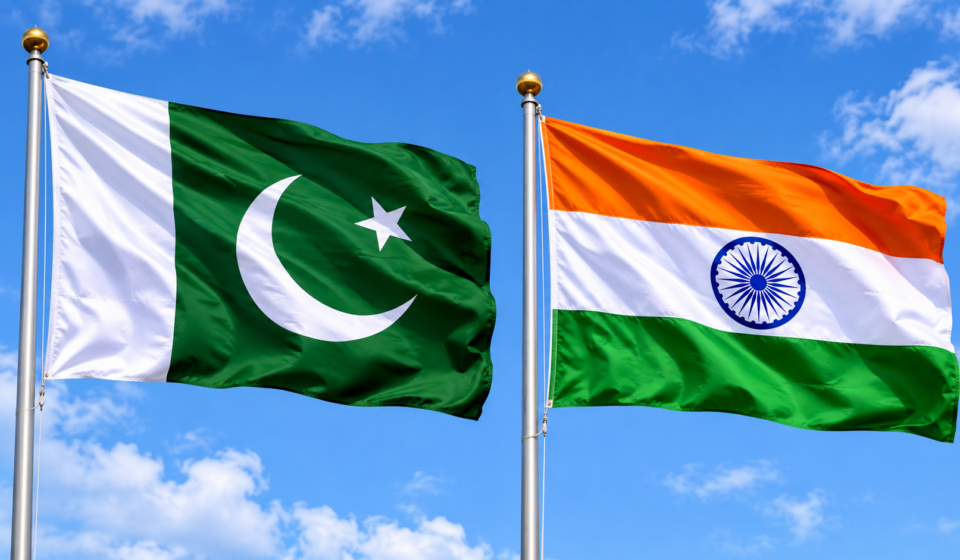

Pakistan has nominated Federal Minister for Climate Change and Environmental Coordination Dr Musadik Masood Malik to represent the country at the Shanghai Cooperation Organisation (SCO) Civilisational Dialogue in New Delhi, scheduled for November 20 to 22. The decision sets up a notable visit between two neighbours whose political and security relations have remained strained since their military confrontation in May 2025.
The three-day gathering is designed around cultural understanding, shared heritage and people-to-people engagement among countries connected through the SCO. Malik’s nomination is significant because it would bring a Pakistani federal minister to India for the first time since former foreign minister Bilawal Bhutto Zardari attended an SCO meeting in Goa in May 2023.
Key Highlights
• Pakistan has nominated Climate Minister Musadik Masood Malik for the November 20–22 forum in New Delhi.
• The visit would be the first by a Pakistani federal minister to India since May 2023.
• The forum will focus on culture, art, architecture, languages, literature and philosophical traditions.
• The nomination signals participation in an SCO event, but does not confirm a bilateral meeting or a wider diplomatic breakthrough.
Pakistan Confirms Its Representative for the New Delhi Forum
Pakistan’s Foreign Ministry announced on November 14 that the government had nominated Malik to represent the country at the Civilisational Dialogue. The ministry said the event would bring together representatives from SCO member states to exchange views on civilisational dialogue and cultural understanding.
Islamabad also reiterated its commitment to encouraging dialogue between civilisations and strengthening people-to-people contacts within the SCO framework. The statement described mutual respect as the basis for this engagement.
The announcement followed days of uncertainty over Pakistan’s participation. Earlier, Pakistan’s Foreign Office had said that its leadership would make a final decision after consultations with relevant institutions and stakeholders. India had extended invitations to SCO members, including Pakistan, for the inaugural forum.
The nomination now provides clarity on Pakistan’s representation. It also places the focus on the practical purpose of the visit: participation in a multilateral cultural event rather than an announced round of negotiations between the two governments.
Why This Visit Matters for India-Pakistan Relations
Ministerial travel between India and Pakistan has become uncommon as political dialogue has stalled and security concerns have dominated the relationship. The last visit by a Pakistani federal minister to India was in May 2023, when Bilawal Bhutto Zardari travelled to Goa for an SCO Council of Foreign Ministers meeting.
Relations deteriorated sharply after the deadly 2025 attack in Jammu and Kashmir and the military confrontation that followed in May. India and Pakistan exchanged military strikes during the four-day escalation, deepening an already serious diplomatic crisis.
Against that background, Malik’s planned arrival in New Delhi carries significance beyond the forum’s cultural agenda. It creates an opportunity for Pakistani and Indian representatives to be present at the same international gathering and interact within an established multilateral framework.
However, attendance should not be confused with reconciliation. Neither government has announced a bilateral meeting between Malik and Indian officials. There is also no confirmed agreement to restart broader political dialogue as part of the visit.
The distinction is important: multilateral participation can keep channels of contact open even when direct relations remain difficult, but it cannot by itself resolve the disputes separating the two countries.
What Is the SCO Civilisational Dialogue?
The Civilisational Dialogue Forum is an initiative intended to expand the SCO’s role beyond its established discussions on security, regional cooperation and economic connectivity. It seeks to create a platform where participating countries can explore cultural links, historical exchanges and shared traditions.
The forum is scheduled to take place at New Delhi’s historic Purana Qila from November 20 to 22. India has invited 25 countries, including all ten SCO member states, along with observer countries and dialogue partners.
Indian Culture Minister Gajendra Singh Shekhawat said on November 13 that 15 countries had confirmed their participation at that stage. China, Iran and Kazakhstan were among the countries identified as having confirmed their presence. Pakistan’s nomination came after those earlier announcements.
The gathering is being jointly organised by India’s Ministry of Culture and Ministry of External Affairs. Prime Minister Narendra Modi is expected to attend the inaugural session on November 20.
Four Themes Will Shape the Discussions
The programme is expected to examine cultural connections through four broad areas.
• Civilisational and cultural expressions: Traditions involving clothing, food, music, traditional games and other forms of everyday cultural life.
• Art and architecture: Monuments, sculpture, frescoes, coins and building traditions that reflect the development and exchange of artistic ideas.
• Language, literature and manuscripts: Languages, scripts, written traditions and historic centres of learning, including Nalanda, Takshashila and Vallabhi.
• Religious and philosophical traditions: The development and interaction of traditions such as Buddhism, Islam, Confucianism, Taoism, Zoroastrianism and Sikhism.
The proposed discussions are intended to explore how communities influenced one another over centuries. The programme also includes consideration of multinational nominations for UNESCO heritage recognition.
These subjects give the forum a different emphasis from conventional diplomatic meetings. Instead of focusing primarily on immediate political disagreements, participants are being invited to discuss historical connections and cultural influences that cross modern national borders.
The SCO Framework Provides a Separate Diplomatic Channel
The Shanghai Cooperation Organisation was established in 2001 and has developed into a regional grouping covering a large part of Eurasia. Its ten full members are Belarus, China, India, Iran, Kazakhstan, Kyrgyzstan, Pakistan, Russia, Tajikistan and Uzbekistan.
India and Pakistan became full members in 2017. Their participation in the same organisation has continued despite periods of serious bilateral tension. The SCO therefore provides a framework in which both countries can take part in regional engagements without requiring their bilateral disputes to be settled first.
Pakistan assumed the rotating chairmanship of the SCO Council of Heads of State for the 2026–27 term on September 1, 2026, taking over from Kyrgyzstan. Islamabad is also scheduled to host the organisation’s leaders’ summit in 2027.
This wider institutional role gives Pakistan an additional reason to remain engaged in SCO activities. Participation in the New Delhi forum also allows Islamabad to maintain its presence in a regional platform where China, Russia, Central Asian states and other partners take part.
Strategic & Future Implications
Malik’s nomination is a limited but meaningful diplomatic development. It demonstrates that India and Pakistan can still participate in the same multilateral initiative despite the absence of a broader improvement in their relationship. Cultural engagement may provide opportunities for informal contact, reduce the isolation of official channels and keep regional cooperation on the agenda. Yet the value of such contact will depend on whether both sides use the opportunity constructively and avoid presenting attendance as evidence of progress that has not been agreed.
The visit will also be watched for any signs of interaction beyond the formal programme. A meeting between officials, if arranged, could attract attention, but no such bilateral engagement has been confirmed. For now, the established fact is Pakistan’s nomination of its climate minister to attend an SCO cultural forum. The larger test will be whether this participation remains a one-off multilateral engagement or helps create space for more regular communication between the two neighbours.