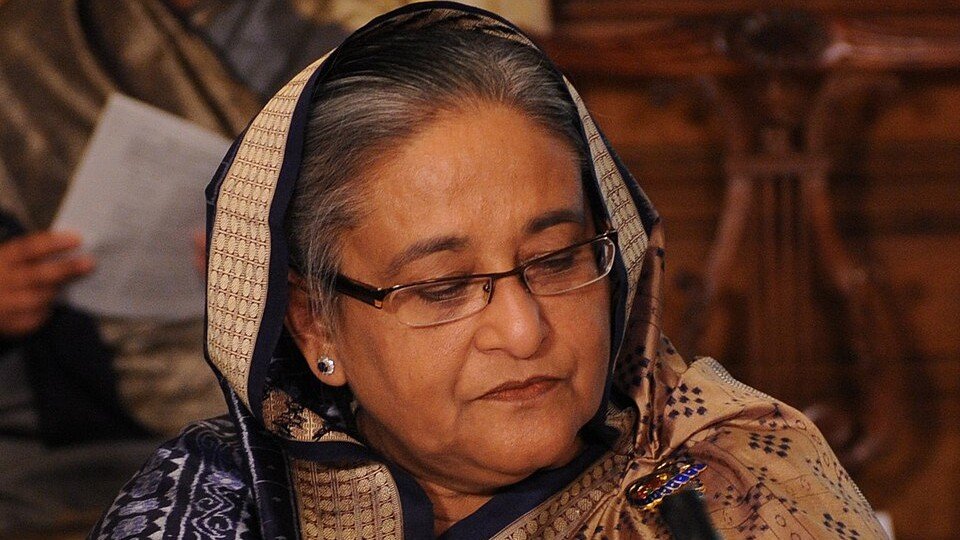
Sheikh Hasina Seeks Fresh Passport as Bangladesh Return Plan Raises Political and Legal Questions

Former Bangladesh Prime Minister Sheikh Hasina has taken a significant step towards her proposed return to Bangladesh by requesting a new passport and national identity card. Living in India since leaving office in August 2024, Hasina is seeking fresh travel documents as she prepares for a possible return to her home country in December.
The request comes at a politically sensitive moment for Bangladesh. Hasina’s departure followed a student-led mass uprising that brought an end to her long political rule. Since then, the country has undergone major political changes, while her legal position and the future of her Awami League party have become central issues in national politics.
The passport request is being viewed as a practical step towards fulfilling her stated intention to return. However, it remains uncertain whether Bangladesh’s authorities will issue the documents, particularly because the government has repeatedly demanded her return through the extradition process.
Fresh Passport and Identity Card Requested
Hasina’s legal representatives have written to Bangladeshi diplomatic authorities requesting a new passport and national identity card. The application reportedly states that her previous documents were revoked by the authorities following the political change in Bangladesh.
Her legal team has asked officials to process the request quickly, arguing that Hasina remains a Bangladeshi citizen and should be able to access the necessary identity and travel documents.
An aide to Hasina described the request as an important step towards her homecoming. He indicated that she remains determined to return to Bangladesh by December and expects the necessary formalities to move forward.
The development is particularly significant because this is the first major attempt by Hasina to obtain fresh Bangladeshi travel and identity documents since leaving the country in 2024.
A passport would normally help her travel through regular international procedures. However, the situation is complicated by the legal proceedings against her and Bangladesh’s demand that India hand her over.
Hasina Wants to Return in December
Hasina has previously expressed her intention to return to Bangladesh in December, despite the possibility of facing arrest and further legal proceedings.
She has indicated that she is prepared to surrender before a court after returning. Her position suggests that she wants to address the legal cases against her within Bangladesh rather than remain indefinitely outside the country.
Her proposed return could become one of the most consequential political developments in Bangladesh since the 2024 uprising.
However, the exact date of her return has not been announced. Her aides have indicated that further details will depend on the completion of necessary formalities.
It is also unclear whether the passport application will receive approval or whether the government will insist on using the extradition mechanism instead.
Bangladesh Government Insists on Extradition
The government in Dhaka has maintained that Hasina should be brought back from India under the existing extradition treaty between the two countries.
Bangladesh’s State Minister for Foreign Affairs, Humaiun Kobir, recently rejected the suggestion that a new passport or travel document was necessary for her return. He argued that the government could pursue her handover through established legal and diplomatic procedures.
His position reflects the government’s preference for extradition rather than allowing Hasina to return through ordinary travel arrangements.
Dhaka has repeatedly sought her return from India. However, New Delhi has not handed her over, leaving the issue as a continuing source of diplomatic tension between the neighbouring countries.
The latest passport request therefore creates an additional question: whether Hasina’s return will be handled as a normal journey by a Bangladeshi citizen or through the formal extradition process demanded by Dhaka.
Legal Challenges Await Her in Bangladesh
Hasina’s possible return is complicated by the serious legal cases against her.
In November 2025, Bangladesh’s International Crimes Tribunal sentenced her to death in absentia for crimes against humanity connected to the crackdown on protesters during the 2024 uprising.
The tribunal found her responsible for the violent response to the demonstrations, which resulted in a large number of deaths and injuries. The United Nations has estimated that nearly 1,400 people were killed during the period of unrest.
Hasina has denied wrongdoing and rejected the tribunal’s verdict. She has also challenged the legitimacy of the proceedings conducted in her absence.
Her return would therefore bring immediate attention to the country’s judicial process, including the question of how authorities would handle her arrest and legal challenges.
The possibility of her appearing before a court could also draw international attention to the fairness of the proceedings, due process and the treatment of political leaders facing serious criminal charges.
Political Landscape Has Changed Since Her Departure
Bangladesh’s political environment has changed considerably since Hasina left office on August 5, 2024.
Her Awami League, which had been one of the country’s dominant political forces, was barred from participating in the February 2026 election and subsequently remained outside the formal electoral process.
Tarique Rahman, whose family has been a longstanding political rival of Hasina, came to power after winning the election by a decisive margin.
The change in leadership has reshaped the country’s political direction. Many Awami League leaders and supporters have faced legal action, while others have left Bangladesh or remained outside the country.
Hasina’s return could therefore reopen political divisions that have continued since the uprising. Her supporters may view her homecoming as an opportunity to re-enter the political debate, while opponents are likely to focus on accountability for the violence during her government’s final days.
India-Bangladesh Relations Also in Focus
Hasina’s presence in India has remained a sensitive issue in relations between New Delhi and Dhaka.
India provided her refuge after she left Bangladesh in 2024. Since then, the Bangladeshi government’s requests for her extradition have placed pressure on bilateral relations.
The passport application adds another diplomatic dimension to the situation. If the documents are issued, questions could arise over the arrangements for her departure and the legal implications of her return.
If Bangladesh refuses to issue them, Hasina’s proposed homecoming could become more dependent on negotiations between the two governments.
A resolution of the issue could potentially reduce one of the major sources of friction between India and Bangladesh. However, disagreements over extradition, legal proceedings and political accountability may continue to affect relations.
Analysis: A Passport Request With Wider Political Consequences
Hasina’s application for a new passport and national identity card is more than an administrative matter. It is connected to her stated intention to return, the legal cases awaiting her and the diplomatic disagreement between India and Bangladesh.
The request also exposes the difference between Hasina’s preferred route and Dhaka’s position. She is seeking documents that would facilitate her return as a Bangladeshi citizen, while the government wants her transferred through extradition arrangements.
The coming weeks could be important in determining whether her December return plan moves forward. The response to her application, India’s position and the legal arrangements in Bangladesh will all influence what happens next.
For now, Hasina has made her intention clear, but obtaining a passport does not guarantee that she will be able to return without legal obstacles. Her possible homecoming could test Bangladesh’s political stability, its judicial institutions and its relationship with India at the same time.