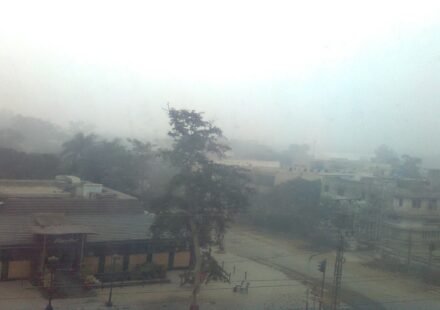
Pakistan Points Finger at India Over Diwali Smoke as Lahore Struggles With Toxic Air

A fresh cross-border pollution dispute has emerged between Pakistan and India after Punjab's senior minister Marriyum Aurangzeb blamed smoke from Diwali fireworks in neighbouring Indian regions for worsening air quality in Lahore.
The Pakistani minister alleged that polluted air travelled from Indian Punjab towards Lahore through the eastern corridor, adding to the city's already serious smog problem. Her statement has brought renewed attention to the challenge of controlling air pollution across an international border, where weather conditions can carry smoke and other pollutants from one region to another.
The allegation comes as Lahore experienced extremely poor air quality around the Diwali period, prompting concerns about the health of residents and the effectiveness of pollution-control measures.
Pakistan's minister accuses India of adding to Lahore's pollution
Marriyum Aurangzeb, Punjab's senior minister responsible for environmental matters, said smoke from Diwali fireworks in Indian cities had contributed to the deterioration in Lahore's air quality.
She identified areas including Amritsar, Ludhiana, Jalandhar, Patiala, Bathinda and Ferozepur as possible sources of polluted air moving towards Pakistan.
According to her statement, easterly winds carried pollution across the border, while low wind speeds and unfavourable weather conditions made it harder for pollutants to disperse.
The minister also referred to pollution readings from several Indian locations near the Pakistan border. She said the situation required continuous monitoring and urged residents to follow health and safety advisories issued by Punjab's Environmental Protection Agency.
Her comments have placed the spotlight on the environmental connection between the two neighbouring countries, particularly during the winter months when smoke and fine particles can remain trapped close to the ground.
Lahore records extremely high pollution levels
Lahore experienced a sharp rise in air pollution on November 9. The city's Air Quality Index reached around 590 during the morning hours on one monitoring platform, placing it in the hazardous category.
Some individual monitoring stations reported even higher readings. The situation improved later in the day as weather conditions and wind movement changed.
Punjab's senior minister subsequently said the city's overall AQI had fallen to 208. Later readings also showed further improvement, although the air remained unhealthy.
On November 10, Lahore continued to rank among the world's most polluted major cities. A separate reading placed its AQI at 263, illustrating that the pollution problem had not disappeared.
Different readings can vary according to the monitoring station, measurement period and calculation method. They should therefore not be treated as identical measurements.
Why Indian Punjab has become part of the dispute
The geographical distance between Lahore and several Indian Punjab cities makes cross-border movement of air pollution a serious environmental concern.
Amritsar is approximately 50 kilometres from Lahore, while other cities such as Ferozepur, Jalandhar and Ludhiana are also located within the wider region.
When winds blow from the east towards Pakistan, smoke and fine particles generated in Indian territory can potentially travel across the border. Fireworks release particulate matter and other pollutants, while agricultural residue burning can produce large amounts of smoke.
Pakistan's Punjab government had issued a special assessment on November 8 warning that smoke from Diwali fireworks could reach Lahore within five to 13 hours, depending on wind conditions.
The assessment also highlighted crop-residue burning in Indian Punjab as a possible contributor to pollution in border areas.
However, identifying the exact share of Lahore's pollution coming from India requires detailed scientific measurements, including wind direction, atmospheric conditions and the chemical composition of airborne particles.
Pakistan also faces pollution from local sources
Although the minister has blamed cross-border pollution, Lahore's air quality problem is not limited to smoke arriving from India.
Vehicle exhaust, industrial emissions, construction dust, waste burning and agricultural fires within Pakistan also contribute to the city's poor air quality.
A separate assessment of Lahore's pollution found that the city's nighttime particulate matter concentration was already high before Diwali. This indicates that the city was facing substantial pollution pressure even before the festival's fireworks.
Pakistan's own Punjab province has also reported agricultural fire incidents. Authorities have been carrying out enforcement operations against crop-residue burning, using surveillance teams, drones and firefighting units.
The presence of pollution sources on both sides of the border makes the issue more complicated. Even if smoke travels from one country to another, local emissions can continue to worsen the situation.
Pakistan intensifies anti-smog operations
The Punjab government has said that it is taking several steps to control pollution and improve air quality in Lahore.
These measures include deploying anti-smog guns, inspecting industrial facilities, monitoring brick kilns and taking action against agricultural residue burning.
Authorities have also used field teams and satellite-based fire detection systems to identify possible burning incidents.
The government has urged residents to avoid unnecessary outdoor activities during periods of severe pollution. Children, older people, pregnant women and those with heart or respiratory conditions have been advised to take extra precautions.
Residents have also been encouraged to avoid burning rubbish and dry leaves, keep windows closed when outdoor pollution is high and follow official health advisories.
Aurangzeb credited improved weather conditions, stronger winds and government operations for the reduction in Lahore's pollution readings later on November 9.
Scientific evidence needed to settle the blame
The latest dispute highlights a difficult question: how much of Lahore's toxic air came from Indian fireworks, and how much was generated by pollution sources inside Pakistan?
The movement of air across national borders is a well-established atmospheric process. However, proving the contribution of a particular event requires more than observing that pollution increased after it happened.
Scientists need to compare pollution measurements before and after the fireworks, study wind patterns and examine the chemical signatures of particles in the air. Such analysis can help distinguish fireworks-related pollution from smoke produced by agricultural fires, vehicles and industrial activity.
Without this evidence, assigning responsibility entirely to one country would be premature.
The issue also points to the need for cooperation between India and Pakistan on air-quality monitoring. Sharing pollution data, satellite observations and weather information could help both sides identify pollution sources more accurately.
For residents of Lahore, the immediate concern remains the quality of the air they breathe. The latest allegations may intensify the political debate between the neighbours, but lasting improvement will require action against pollution sources on both sides of the border.

Delhi Wakes Up to Toxic Smog After Diwali as Firecrackers Add to Pollution Crisis
New Delhi woke up under a thick blanket of smog on Monday, a day after Diwali celebrations, as firecracker smoke added to the capital's already serious air pollution problem. Several parts of the city recorded unhealthy air quality, raising concerns about breathing difficulties, poor visibility and the health risks faced by residents.
According to available air quality readings, Delhi's average Air Quality Index (AQI) stood at 368 at around 7 am on November 9, placing it in the 'Very Poor' category. Some monitoring stations recorded even higher levels. The ITO monitoring station registered an AQI of 406 during the early morning, entering the 'Severe' category.
The pollution came after a night of fireworks across different neighbourhoods, despite restrictions on the use of firecrackers. Smoke from fireworks added to the pollution already present in the atmosphere due to vehicle emissions, industrial activity, construction dust and seasonal weather conditions.
The situation once again highlighted the difficulty of controlling Delhi's air pollution, particularly during the winter months when weather conditions often prevent polluted air from dispersing quickly.
Firecracker Smoke Adds to Delhi's Pollution
Firecrackers release smoke, gases and fine particles into the atmosphere. Among the most concerning pollutants are PM2.5 and PM10. These tiny particles can enter the respiratory system and affect human health.
PM2.5 is particularly dangerous because its particles are small enough to travel deep into the lungs. Prolonged exposure can worsen respiratory conditions and increase health risks, especially for children, older people and individuals with existing heart or lung problems.
When fireworks are used on a large scale, the resulting smoke can increase the concentration of pollutants in the air. If wind speeds remain low, these particles may stay suspended near the ground for longer periods.
Delhi's average AQI had already reached 376 on Diwali Sunday, November 8. The reading stood at 368 on Monday morning. Although the average showed a slight decline, several monitoring locations continued to record severe pollution levels.
This difference between the citywide average and individual monitoring stations is important because air quality can vary significantly from one neighbourhood to another.
Firecracker Restrictions Were in Place During Diwali
The use of firecrackers in Delhi-NCR was subject to restrictions during the festival.
The Supreme Court had allowed certified green firecrackers during limited time windows on November 7 and 8. The permitted timings were 6 am to 7 am and 8 pm to 10 pm. A complete restriction on firecrackers was scheduled to return from November 9.
Green firecrackers are designed to produce lower emissions than conventional fireworks. However, they do not eliminate pollution completely. Their use can still release particulate matter and other pollutants into the atmosphere.
The post-Diwali pollution has once again raised questions about how effectively restrictions are followed and monitored across the national capital.
Why Does Delhi Face Severe Pollution Every Winter?
Diwali fireworks are only one part of Delhi's larger pollution problem. Every year, air quality across the capital and neighbouring areas tends to deteriorate during the colder months.
Several factors contribute to the situation.
Vehicle emissions: A large number of cars, buses, trucks and two-wheelers operate across Delhi every day. Exhaust emissions from these vehicles contribute to harmful pollutants in the atmosphere.
Construction and road dust: Construction sites, demolition activities, uncovered materials and dust from roads add particulate matter to the air.
Industrial emissions: Factories and other industrial units release pollutants that contribute to the city's overall pollution burden.
Crop-residue burning: Smoke from agricultural fires in neighbouring states, including Punjab and Haryana, can travel towards Delhi depending on wind direction and weather conditions.
Weather conditions: During winter, low wind speeds and atmospheric conditions can prevent pollutants from dispersing. As a result, polluted air can remain concentrated close to the ground.
When these factors combine with firecracker smoke, air quality can deteriorate further.
GRAP Restrictions and Government Measures
Delhi-NCR was already under Stage III of the Graded Response Action Plan (GRAP), which was introduced as pollution levels worsened.
The measures include restrictions on certain non-essential construction and demolition activities, along with additional controls on specific categories of polluting vehicles and industrial operations.
Authorities also use measures such as road cleaning, water sprinkling and dust-control operations to reduce the amount of particulate matter entering the air.
Public transport and other pollution-control measures are also important parts of the wider strategy.
However, the continued presence of hazardous air quality shows that emergency restrictions alone cannot solve the problem. Delhi needs consistent pollution-control measures throughout the year.
Health Risks for Delhi Residents
Very Poor and Severe air quality can affect people across different age groups. Exposure to fine particles such as PM2.5 can irritate the respiratory system and aggravate existing health conditions.
Children, older people and individuals suffering from asthma or heart and lung diseases are particularly vulnerable.
Even healthy people may experience coughing, throat irritation, eye irritation and breathing discomfort during periods of heavy pollution.
Residents are advised to reduce prolonged outdoor activity when air quality is poor and avoid strenuous exercise in polluted outdoor environments. People with existing respiratory conditions should follow medical advice and local health advisories. Anyone experiencing serious breathing difficulties should seek medical attention.
The pollution crisis also affects daily life, as residents may need to change outdoor exercise routines, travel plans and other activities during periods of hazardous air quality.
Long-Term Action Needed to Improve Delhi's Air
Delhi's post-Diwali smog highlights the need for a broader and more consistent approach to pollution control.
Reducing vehicle emissions, controlling construction dust, monitoring industrial pollution and preventing crop-residue burning are all important parts of the solution.
Improving public transport, increasing the use of cleaner energy and strengthening enforcement of pollution-control rules can also help reduce the city's pollution burden.
The challenge is not limited to a few days after Diwali. Delhi faces a recurring seasonal problem that requires coordination between the governments of Delhi and neighbouring states.
Unless pollution sources are controlled throughout the year, the capital may continue to experience similar episodes of toxic smog every winter.
Analysis
Delhi's post-Diwali pollution shows why the capital cannot depend only on temporary restrictions to improve air quality. Firecrackers can increase pollution over a short period, but vehicle emissions, industrial activity, construction dust and seasonal weather conditions continue to contribute to the problem.
The most important challenge is to reduce these sources consistently throughout the year. Better public transport, stronger dust-control measures and effective monitoring of industrial emissions are essential. Without long-term action, Delhi is likely to face similar pollution emergencies every winter.

Delhi’s Winter Pollution Mystery: Evening Farm Fires May Be Escaping Satellite Detection
Delhi’s annual battle against air pollution is becoming more complicated as new observations raise concerns about agricultural fires taking place after satellites have completed their daily monitoring passes. Smoke from crop-residue burning in Punjab and Haryana may be travelling towards the national capital during evening and nighttime hours, adding to the pollution already produced by vehicles, industries, construction activities and other urban sources.
The issue highlights a possible weakness in the way agricultural fires are monitored. When satellites pass over a particular region during the daytime, they may record only the fires that are active at that moment. Fields where farmers begin burning crop residue later in the evening may not appear in those observations. As a result, the actual scale of burning could be higher than the figures suggested by certain satellite-based reports.
Why the Timing of Farm Fires Matters
Satellite technology has become an important instrument for monitoring stubble burning across northern India. It helps authorities identify agricultural fires, estimate their locations and understand how crop-residue burning changes during the harvesting season.
However, satellites do not all observe the Earth continuously. Some monitoring systems pass over the same agricultural region at particular times rather than recording every activity throughout the day. If a farmer starts burning leftover straw after a satellite has passed, that fire may remain undetected by that observation.
This creates a significant challenge for pollution monitoring. A reduction in the number of recorded fires does not necessarily prove that agricultural burning has declined by the same amount. The monitoring schedule itself can influence the final figures.
Recent observations during the November 2026 pollution episode have brought attention to this problem. Data reported from India's INSAT-3DS satellite showed an increase in detected evening fire activity between October 29 and November 1. The reported count increased from 17 to 90 during this period.
These figures represent fires identified by the particular monitoring system and should not be interpreted as a complete count of every agricultural field where burning occurred.
How Agricultural Smoke Reaches Delhi
Punjab and Haryana are important agricultural regions where farmers harvest rice before preparing their fields for the next crop. After harvesting, considerable quantities of straw and other plant material remain on the ground.
Some farmers burn this residue to clear their fields quickly. The resulting smoke contains fine particles, including PM2.5, which can remain suspended in the atmosphere and travel beyond the areas where the fires originated.
When winds blow from the northwestern agricultural belt towards Delhi, smoke can move into the capital and surrounding districts. The distance travelled and the amount of pollution reaching the city depend on wind speed, direction, atmospheric conditions and the intensity of the fires.
Winter weather can make the situation more dangerous. During colder months, weaker winds and limited vertical movement of air can prevent pollutants from dispersing efficiently. Smoke and other emissions may consequently remain concentrated closer to the ground.
This combination of regional emissions and unfavourable weather can contribute to sudden deterioration in air quality across Delhi-NCR.
However, agricultural burning is not the only explanation for the capital's pollution. Traffic emissions, industrial activity, construction dust, road dust, waste burning and other sources also contribute to the problem.
Delhi's Air Quality Shows a Sharp Deterioration
The pollution situation became particularly concerning on November 2, 2026, when Delhi's Air Quality Index reached 324 in the 4 pm reading, placing the city in the very poor category.
The deterioration followed a substantial increase in pollution over the preceding days. The reported AQI figures rose from 117 on Saturday to 261 on Sunday before reaching 324 on Monday.
An analysis of overnight pollution also highlighted the seriousness of the episode. Average PM2.5 concentration between 10 pm and 6 am reportedly reached 194 micrograms per cubic metre during the night leading into November 2.
The timing is important because agricultural fires occurring during evening hours could continue producing smoke after some daytime satellite observations have ended. If winds carry that smoke towards Delhi, it may contribute to higher pollution levels during nighttime and early morning hours.
Nevertheless, these measurements alone cannot establish exactly how much pollution came from agricultural fires. Detailed source-apportionment studies are needed to separate the contributions of different emission sources.
Why Farmers Continue Burning Crop Residue
Stopping stubble burning requires more than monitoring and penalties. Farmers face practical and financial difficulties when managing large quantities of leftover crop residue.
After harvesting rice, many farmers have limited time to prepare their fields for wheat cultivation. Delays can affect the next planting cycle and potentially influence agricultural productivity.
Burning provides a quick way to clear fields, while alternative methods may require machinery, additional labour, transportation and money. Even when agricultural equipment is available through government-supported programmes, access and operating costs can remain obstacles.
A long-term solution must therefore make residue management affordable and convenient. Machinery for collecting, managing and incorporating straw into the soil needs to be accessible at the village level.
Agricultural waste can also be used in biomass-based energy production, industrial applications and other commercial activities. However, these alternatives require reliable collection networks, storage facilities and sufficient demand.
Better Monitoring Could Help Authorities Respond Faster
The latest developments underline the importance of combining different monitoring technologies rather than depending on a single satellite observation.
Polar-orbiting satellites can provide detailed information about active fires, while geostationary satellites can observe the same region repeatedly. Ground inspections and drone-based monitoring can provide additional information about fires that might otherwise escape detection.
Weather forecasting is equally important. By studying wind direction and atmospheric conditions, authorities can estimate whether smoke from agricultural areas is likely to move towards densely populated regions.
Such information could help pollution-control agencies identify emerging problems earlier and coordinate action across state boundaries.
What It Means for Delhi Residents
For people living in Delhi-NCR, prolonged exposure to polluted air can increase the risk of respiratory and cardiovascular problems. Children, elderly people and individuals with existing health conditions are particularly vulnerable.
When pollution levels become very poor, residents should follow official health advisories, reduce prolonged outdoor exertion and take appropriate precautions. People with existing respiratory or heart conditions should follow medical advice.
The larger challenge is that Delhi's pollution cannot be controlled by one state or one department alone. Agricultural burning, transport emissions, industrial pollution and construction dust require coordinated action.
The latest observations offer an important warning: counting the fires that satellites can see is not enough. Authorities must also understand when fires are starting, where their smoke is travelling and how to provide farmers with practical alternatives.
Unless monitoring improves and the reasons behind crop burning are addressed, Delhi could continue facing similar pollution episodes during future harvesting seasons.