Obama Takes Midterm Fight to Trump, Challenging Republicans on Iran War and Cost of Living

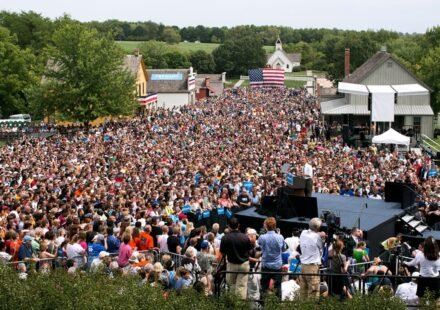
Former U.S. President Barack Obama has returned to the campaign trail to support Democratic candidates ahead of the November 3 midterm elections, using rallies in Ohio and Michigan to challenge President Donald Trump’s record on the economy, the war with Iran and standards of political conduct.
Speaking to supporters in Cleveland on Saturday, October 24, Obama portrayed the election as an opportunity for voters to respond to what he described as two years of disorder, poor governance and political division. He urged voters to support Democratic candidates in closely contested races, arguing that the administration had not adequately addressed the financial pressures facing American households.
Obama Questions Trump’s Economic Priorities
A central theme of Obama’s speech was the gap between the administration’s political priorities and the everyday concerns of voters. He criticised Trump over consumer prices and the economic consequences of the conflict with Iran, arguing that Americans were facing higher costs while Washington remained focused on other battles.
Obama also mocked Trump’s extensive White House renovation plans, including gold decorations and a proposed ballroom. The remarks were intended to contrast the president’s highly visible building projects with the financial concerns of households dealing with everyday expenses.
The criticism comes as voters prepare to decide which party will control Congress for the remainder of Trump’s presidency. The House of Representatives and Senate contests will determine how much room the administration has to advance legislation and how closely Congress scrutinises its decisions.
Economic concerns, including prices, energy costs and the wider effects of the Iran conflict, could therefore become important factors in how voters assess candidates. The precise effect of these issues on individual races, however, will depend on local conditions and voter priorities.
Iran War Becomes a Campaign Issue
Obama also challenged the administration’s handling of the war with Iran, describing the conflict as unnecessary and questioning the decisions that had brought the United States into it. His argument linked foreign policy to domestic concerns, particularly the cost of living and the consequences of uncertainty in energy markets.
The issue gives Democrats an opportunity to press the administration on the objectives, costs and expected duration of the conflict. For Republicans, the debate raises questions about how to explain the government’s strategy and its consequences to voters.
The campaign speeches do not, by themselves, establish how the conflict will develop or what effect it will ultimately have on fuel prices. Those outcomes will depend on military developments, diplomatic decisions and changes in global energy supply.
Controversial Ohio Advertisement Draws Sharp Rebuke
Obama also criticised Republican Ohio gubernatorial candidate Vivek Ramaswamy over an advertisement featuring the estranged mother of his Democratic opponent, Amy Acton.
Acton has spoken publicly about a difficult childhood that included abuse, neglect and homelessness. She accused Ramaswamy’s campaign of using painful personal history for political advantage. Obama condemned the advertisement as an example of campaign tactics that, in his view, crossed basic standards of decency.
The advertisement has also drawn criticism from prominent Ohio Republicans, including Governor Mike DeWine, while Trump and Vice President JD Vance have defended it. The dispute has expanded beyond policy disagreements into a wider argument about the use of personal experiences in political advertising.
The controversy could keep the Ohio governor’s race focused on candidates’ conduct as well as their policy proposals. Its electoral effect remains uncertain, and voters may weigh the issue differently.
Michigan Rally Expands Democratic Outreach
After his Ohio appearance, Obama campaigned in Detroit for Michigan Democrats, including Senate candidate Abdul El-Sayed. He defended El-Sayed against criticism directed at his political positions and Muslim faith, while encouraging supporters to participate in the election.
Obama’s appearances in two competitive states reflect the Democratic Party’s effort to mobilise voters and support candidates whose races could affect control of Congress. His profile gives the party a prominent campaign messenger, although rallies alone cannot determine turnout or election results.
The former president is also expected to campaign in Georgia as the final stretch of the midterm contest continues. Meanwhile, Trump has been campaigning for Republican candidates, turning the election into a broader public test of his administration’s record.
What the Midterms Could Mean
The November 3 elections will decide congressional representation and influence the balance of power in Washington. If Democrats gain control of one or both chambers, the administration could face greater legislative resistance and more intensive congressional oversight. If Republicans retain control, Trump would have a stronger opportunity to pursue his legislative agenda.
Obama’s intervention highlights the issues Democrats want to place before voters: living costs, the Iran war, government accountability and the tone of political debate. Republicans, meanwhile, have defended the administration and their candidates’ campaign strategies.
The rallies mark a more visible role for Obama in the closing phase of the campaign. Whether his appearances translate into additional votes will become clearer only when ballots are counted. Until then, the contest remains centred on competing claims about the administration’s performance and the direction voters want the country to take.
Trump Casts Florida Ballot as Iran War and Campaign Ad Controversy Dominate Midterm Debate
US President Donald Trump voted early in Florida’s midterm elections on Saturday, publicly backing Republican candidates while defending a disputed campaign advertisement and maintaining a hard-line position on the war involving Iran.
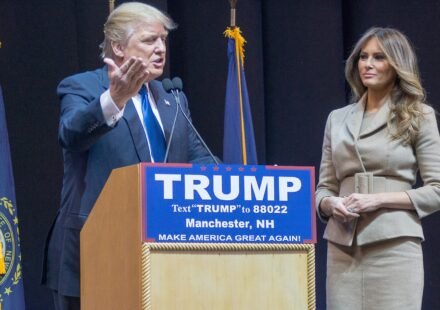
Trump and First Lady Melania Trump cast their ballots at the Palm Beach County Supervisor of Elections office in West Palm Beach. The president said he had voted along party lines, supporting Republicans on the ballot, before travelling to Georgia for a campaign rally.
His appearance brought together three issues increasingly shaping the political debate ahead of the November 3 midterm elections: Republican efforts to retain control of Congress, criticism of campaign tactics in Ohio and uncertainty over how the United States intends to end its conflict with Iran.
Trump’s remarks also highlighted the overlap between domestic politics and foreign policy as candidates face questions about the cost of the conflict, military strategy and the administration’s broader priorities.
Trump Backs Republicans in Florida
Trump’s vote came as Republicans campaign to preserve their congressional majorities and compete in important state-level contests.
In Florida, Trump has endorsed Republican Representative Byron Donalds in the race to succeed Governor Ron DeSantis, who cannot seek another consecutive term under the state’s term-limit rules. Donalds is facing David Jolly, a former Republican who later became an independent and then a Democrat.
Trump has also campaigned for Republican Senator Ashley Moody, who is seeking election to serve the remaining two years of the Senate term previously held by Marco Rubio. Moody faces Angie Nixon, a Democratic state lawmaker.
The president’s public endorsement of Republican candidates reflects his effort to make the midterms a referendum on his party’s political programme. However, the result will depend on voters across numerous states and districts, rather than on the president’s participation in Florida alone.
The November 3 elections will determine control of the House of Representatives and Senate, as well as the outcome of several gubernatorial contests and state legislative races. The balance of power in Congress will influence the administration’s ability to advance legislation and could shape congressional oversight of the White House.
Controversial Ohio Advertisement Draws Fresh Scrutiny
After voting, Trump defended an advertisement associated with Vivek Ramaswamy, the Republican candidate for governor of Ohio. The advertisement features the estranged mother of Democratic candidate Amy Acton and has drawn criticism over its use of deeply personal details about Acton’s childhood.
Acton has spoken publicly about experiencing abuse, neglect and homelessness during her early life. The advertisement has become a contentious issue because it uses her family history in a political contest.
Ramaswamy has defended the advertisement, while Trump has also argued that the Republican candidate should continue running it. Critics, including prominent Republicans in Ohio, have called for the advertisement to be withdrawn.
The controversy has generated a broader debate about the limits of negative campaigning and whether candidates should use a political opponent’s traumatic personal experiences to challenge their suitability for public office.
Supporters of aggressive campaign advertising may argue that a candidate’s personal history is relevant when it forms part of a political dispute. Opponents contend that using painful family experiences in campaign material risks turning deeply personal matters into political weapons.
The disagreement could have consequences for the Ohio gubernatorial race, where the advertisement may influence public discussion of both candidates. Its wider political effect will depend on how voters respond and whether the controversy remains prominent during the final days of campaigning.
Trump Leaves Further Action Against Iran on the Table
The conflict involving Iran remained another central subject when Trump spoke to reporters.
Asked about the possibility of further military action, the president said he might have to “finish it off,” while also leaving open the possibility of a negotiated agreement with Tehran. He suggested that the United States would emerge successfully under either outcome.
The remarks offered no detailed timetable for ending the conflict and did not establish that a new attack had been ordered. Instead, they indicated that the administration continues to present military pressure and diplomacy as possible paths forward.
Trump has previously said he does not regret the decision to go to war against Iran. In September, he argued that he would make the same decision again and linked the conflict to his administration’s objective of preventing Iran from acquiring nuclear weapons.
The war has created wider consequences for the region, including attacks involving Iran, Israel and Gulf states. Disruption to energy supplies and higher oil and fuel prices have also raised concerns about the effect on households and businesses.
For American voters, those consequences may become part of the midterm debate. Higher energy costs can increase pressure on household budgets, while continued military operations may raise questions about spending, strategic objectives and the conditions required for a lasting settlement.
These effects do not determine how voters will respond, but they illustrate why developments in the Middle East could influence domestic political discussions during the campaign.
Election Dispute in Alaska Adds to Political Tensions
Trump also defended his administration’s plan to challenge the certification of Alaska’s US Senate election under a particular scenario: if Republican Senator Dan Sullivan loses.
The dispute concerns the presence of another candidate on the ballot with a similar name, Daniel Sullivan. The administration’s proposed legal action has raised questions about election procedures and the authority of the federal government to intervene in the certification process.
The legal argument and its eventual outcome will depend on the relevant election rules and decisions by the courts. A proposed lawsuit should not be treated as evidence that an election result is invalid or that wrongdoing has occurred.
The issue is politically significant because election administration and certification have remained subjects of national debate in the United States. Any attempt to delay or challenge certification could trigger further legal scrutiny, particularly if the result determines which party controls the Senate.
The Alaska dispute therefore adds another legal and electoral dimension to an already crowded campaign season.
Midterms Could Shape the Next Phase of Trump’s Presidency
The November elections will provide a measure of public opinion on the administration’s policies, although individual races will also be influenced by local issues, candidate profiles and state-specific concerns.
If the balance of power in Congress changes, the implications could extend to legislation, government spending, foreign policy oversight and investigations into executive decisions. If Republicans retain their majorities, the administration may have greater scope to pursue its legislative priorities, subject to the usual congressional and legal constraints.
Trump’s Florida appearance demonstrated how closely the administration’s domestic and international agendas are intertwined. His support for Republican candidates, defence of a controversial Ohio advertisement and comments on Iran all came as the election campaign entered its final stretch.
For voters, the central questions extend beyond campaign rhetoric: the economy, the cost of living, the direction of US foreign policy and the standards expected of political candidates are all part of the wider debate.
The outcome remains uncertain. What is clear is that the final days before November 3 will test how voters assess the administration’s record and the competing arguments presented by Republicans and Democrats.