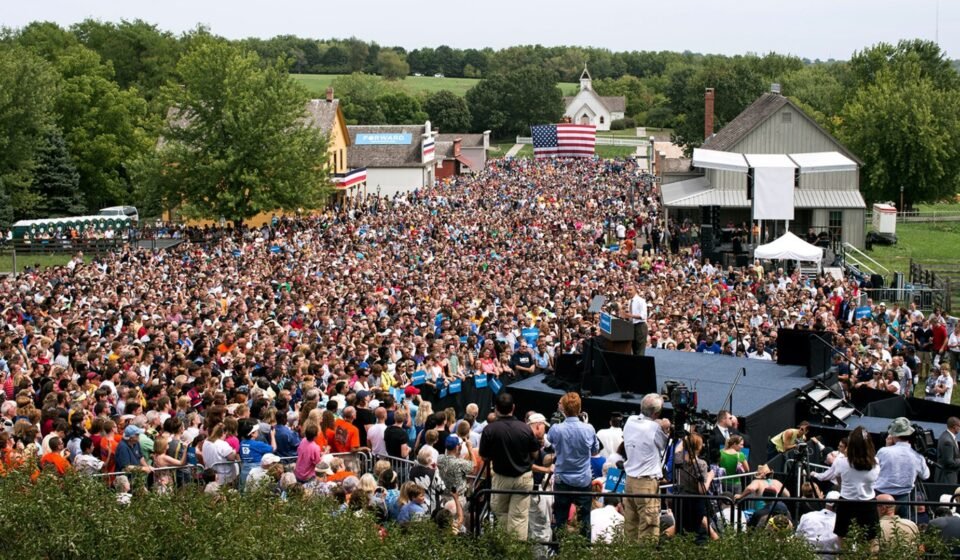

Former U.S. President Barack Obama has returned to the campaign trail to support Democratic candidates ahead of the November 3 midterm elections, using rallies in Ohio and Michigan to challenge President Donald Trump’s record on the economy, the war with Iran and standards of political conduct.
Speaking to supporters in Cleveland on Saturday, October 24, Obama portrayed the election as an opportunity for voters to respond to what he described as two years of disorder, poor governance and political division. He urged voters to support Democratic candidates in closely contested races, arguing that the administration had not adequately addressed the financial pressures facing American households.
Obama Questions Trump’s Economic Priorities
A central theme of Obama’s speech was the gap between the administration’s political priorities and the everyday concerns of voters. He criticised Trump over consumer prices and the economic consequences of the conflict with Iran, arguing that Americans were facing higher costs while Washington remained focused on other battles.
Obama also mocked Trump’s extensive White House renovation plans, including gold decorations and a proposed ballroom. The remarks were intended to contrast the president’s highly visible building projects with the financial concerns of households dealing with everyday expenses.
The criticism comes as voters prepare to decide which party will control Congress for the remainder of Trump’s presidency. The House of Representatives and Senate contests will determine how much room the administration has to advance legislation and how closely Congress scrutinises its decisions.
Economic concerns, including prices, energy costs and the wider effects of the Iran conflict, could therefore become important factors in how voters assess candidates. The precise effect of these issues on individual races, however, will depend on local conditions and voter priorities.
Iran War Becomes a Campaign Issue
Obama also challenged the administration’s handling of the war with Iran, describing the conflict as unnecessary and questioning the decisions that had brought the United States into it. His argument linked foreign policy to domestic concerns, particularly the cost of living and the consequences of uncertainty in energy markets.
The issue gives Democrats an opportunity to press the administration on the objectives, costs and expected duration of the conflict. For Republicans, the debate raises questions about how to explain the government’s strategy and its consequences to voters.
The campaign speeches do not, by themselves, establish how the conflict will develop or what effect it will ultimately have on fuel prices. Those outcomes will depend on military developments, diplomatic decisions and changes in global energy supply.
Controversial Ohio Advertisement Draws Sharp Rebuke
Obama also criticised Republican Ohio gubernatorial candidate Vivek Ramaswamy over an advertisement featuring the estranged mother of his Democratic opponent, Amy Acton.
Acton has spoken publicly about a difficult childhood that included abuse, neglect and homelessness. She accused Ramaswamy’s campaign of using painful personal history for political advantage. Obama condemned the advertisement as an example of campaign tactics that, in his view, crossed basic standards of decency.
The advertisement has also drawn criticism from prominent Ohio Republicans, including Governor Mike DeWine, while Trump and Vice President JD Vance have defended it. The dispute has expanded beyond policy disagreements into a wider argument about the use of personal experiences in political advertising.
The controversy could keep the Ohio governor’s race focused on candidates’ conduct as well as their policy proposals. Its electoral effect remains uncertain, and voters may weigh the issue differently.
Michigan Rally Expands Democratic Outreach
After his Ohio appearance, Obama campaigned in Detroit for Michigan Democrats, including Senate candidate Abdul El-Sayed. He defended El-Sayed against criticism directed at his political positions and Muslim faith, while encouraging supporters to participate in the election.
Obama’s appearances in two competitive states reflect the Democratic Party’s effort to mobilise voters and support candidates whose races could affect control of Congress. His profile gives the party a prominent campaign messenger, although rallies alone cannot determine turnout or election results.
The former president is also expected to campaign in Georgia as the final stretch of the midterm contest continues. Meanwhile, Trump has been campaigning for Republican candidates, turning the election into a broader public test of his administration’s record.
What the Midterms Could Mean
The November 3 elections will decide congressional representation and influence the balance of power in Washington. If Democrats gain control of one or both chambers, the administration could face greater legislative resistance and more intensive congressional oversight. If Republicans retain control, Trump would have a stronger opportunity to pursue his legislative agenda.
Obama’s intervention highlights the issues Democrats want to place before voters: living costs, the Iran war, government accountability and the tone of political debate. Republicans, meanwhile, have defended the administration and their candidates’ campaign strategies.
The rallies mark a more visible role for Obama in the closing phase of the campaign. Whether his appearances translate into additional votes will become clearer only when ballots are counted. Until then, the contest remains centred on competing claims about the administration’s performance and the direction voters want the country to take.