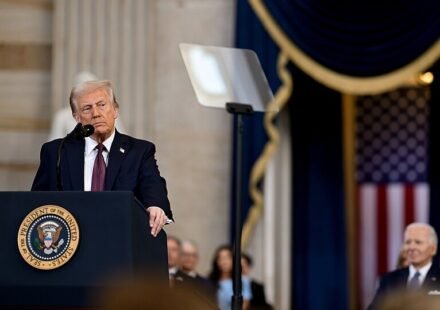
Trump Renews Nobel Peace Prize Bid, Says He Has “Settled 8 Wars” Ahead of Friday Announcement

U.S. President Donald Trump has renewed his public campaign for the Nobel Peace Prize, claiming that he has helped settle eight wars and arguing that his record deserves recognition from the Norwegian Nobel Committee.
Trump made the remarks at the White House on Wednesday, just two days before the 2026 Nobel Peace Prize is scheduled to be announced on Friday, October 9. He said he was not bragging about his record but was simply describing what he considered to be his achievements.
Trump says he settled eight wars
Speaking to reporters in the Oval Office, Trump said no previous U.S. president had probably settled wars on the scale he claimed to have done.
He said he had “settled eight wars” and had also helped secure the release of hostages and prevent other conflicts from escalating. The remarks were also reported in a transcript of Trump's comments released by Roll Call.
Trump has repeatedly pointed to his diplomatic involvement in several international disputes as evidence supporting his Nobel bid. However, the extent of the U.S. president's role in some of those conflicts has been disputed by governments and parties involved, according to Reuters.
Nobel announcement due Friday
The Norwegian Nobel Committee is scheduled to announce the 2026 Nobel Peace Prize winner on October 9 in Oslo.
The committee's secretary, Kristian Berg Harpviken, said recently that the body was closely watching changes in the international order and efforts to build cooperation and peace. He did not identify individual candidates or comment on Trump's chances.
Trump acknowledged that he did not know whether he would receive the award. He suggested that the committee had a reputation for not awarding the prize to people like him.
Trump has repeatedly sought the prize
Trump's latest remarks are part of a long-running public effort to make the case for the Nobel Peace Prize.
He has previously cited his involvement in conflicts involving India and Pakistan, Cambodia and Thailand, Israel and Hamas, and the Democratic Republic of Congo, among others. Some parties to those conflicts have disputed the extent of Trump's role, while fighting has subsequently resumed in some areas.
Trump has also said that his administration's use of economic pressure and tariffs helped prevent some conflicts from escalating.
India, however, has rejected Trump's repeated suggestion that Washington mediated the May 2025 India-Pakistan ceasefire, maintaining that the cessation of military action was agreed directly between the two countries' militaries through established channels.
Ukraine and Iran remain unresolved
Trump's Nobel campaign comes as major conflicts involving the United States remain unresolved.
The Russia-Ukraine war continues despite Trump's earlier promises to bring the conflict to an end. At the same time, the United States and Israel remain involved in a prolonged confrontation with Iran. Reuters has noted that these unresolved conflicts complicate Trump's broader claims about his peace-making record.
Trump nevertheless argued that his administration had accomplished more in international diplomacy than previous presidents and said his efforts were continuing.
Trump compares himself with Obama
During his latest comments, Trump also criticized former President Barack Obama, who received the 2009 Nobel Peace Prize.
Trump questioned why Obama had received the award early in his presidency and argued that his own record was more deserving. Those remarks were part of Trump's broader argument that the Nobel Committee should recognize his claimed diplomatic achievements.
Trump also referred to Maria Corina Machado, who won the 2025 Nobel Peace Prize. Machado later gave Trump her Nobel medal during a meeting with him, a gesture Trump has described as receiving the prize indirectly.
Nobel decision will come without a public prediction
The Nobel Committee's decision will be announced Friday, and the committee does not publicly disclose its deliberations before the award.
Trump's latest comments therefore amount to a renewed public argument for his candidacy rather than confirmation that he is receiving the prize.
The final decision rests with the Norwegian Nobel Committee, which will announce the 2026 laureate in Oslo.
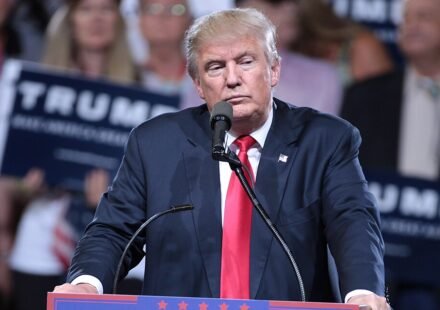
Trump Urges Supporters to Vote by Mail Despite Past Fraud Claims
US President Donald Trump has urged his supporters to vote by mail or cast their ballots early in person ahead of the November 3 midterm elections, marking a notable change from his long-standing criticism of mail-in voting.
Trump said on Monday that supporters could use mail voting if they wanted, although he said he personally preferred voting in person. He also encouraged Republicans in a campaign message to vote early, by mail or in person on Election Day.
Trump Changes His Message on Mail Voting
Trump has spent years questioning the reliability of mail-in ballots and has repeatedly claimed that voting by mail can lead to fraud. His latest comments represent a significant change in emphasis as Republicans prepare for a closely watched congressional election.
In a campaign video posted over the weekend, Trump urged Republicans to use every available voting option, including early voting, absentee ballots, mail voting and voting in person on November 3.
His comments suggest that the priority for the Republican Party is now maximizing turnout, regardless of how supporters cast their ballots.
Republicans Seek Maximum Turnout
Mail voting can be particularly useful for voters who cannot easily reach polling stations on Election Day or who prefer to cast their ballots before November 3.
Republican officials and strategists have previously warned that discouraging mail voting could hurt conservative turnout, particularly among rural voters who may live farther from polling locations.
Trump's latest appeal therefore comes as Republicans enter the final weeks of the midterm campaign and seek to mobilize voters across the country.
Supreme Court Rejected Trump’s Mail-Ballot Restrictions
The shift comes after the US Supreme Court declined in September to allow the Postal Service to enforce new restrictions targeting mail-in ballots before the midterm elections.
Trump's administration had sought tighter federal rules for mail voting, arguing that they were necessary to protect election integrity. The Supreme Court's decision left existing state procedures in place while the legal fight continues.
The ruling was a setback for Trump's effort to impose nationwide changes to mail-ballot procedures ahead of the election.
Trump Has Also Used Mail Voting
Trump's position has drawn attention because he has himself used mail voting.
The president has continued to criticize the method while using it when politically or practically convenient. His latest appeal to Republican voters reflects the tension between his previous rhetoric and the campaign's current need to encourage as many supporters as possible to participate.
Evidence of widespread voter fraud in US elections remains extremely limited, despite Trump's repeated claims about election fraud.
Midterm Elections Approach
The US congressional midterm elections will take place on November 3, 2026, with control of Congress at stake.
A Reuters/Ipsos poll released this week showed a difficult political environment for Republicans. Trump's approval rating stood at 32%, while registered voters preferred Democratic candidates over Republicans by 44% to 37% when asked which party they would support in the midterms.
With the election approaching, turnout is likely to be crucial. Trump's decision to openly encourage mail voting could help Republicans reach supporters who might otherwise struggle to vote on Election Day.
The change also highlights how political parties can adjust their voting strategies when election turnout becomes the central priority.
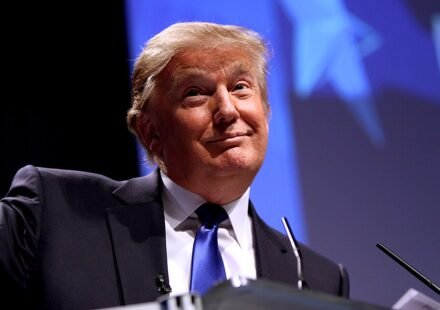
Trump Mistakes Brazil for India, Claims 125 Million Voted in India’s Presidential Election
US President Donald Trump has mistakenly referred to Brazil's presidential election as India's presidential election, claiming that 125 million people had voted in the first round of an “India's Presidential Election.”
Trump made the claim in a post on Truth Social on Monday, a day after Brazil held its first-round presidential vote.
Trump Appears to Confuse Brazil With India
Trump wrote that 125 million people had voted in the first round of India's presidential election and praised the speed with which the results were announced.
He then compared the process with elections in the United States, saying results in places such as Detroit, Philadelphia and California can take weeks to calculate. He also criticised the integrity of the US voting system.
However, the figure Trump cited closely matches the number of valid votes recorded in Brazil's election, strongly indicating that he was referring to Brazil rather than India. About 125.3 million valid votes were recorded in Brazil.
India Does Not Hold a Direct Presidential Vote
Trump's reference to an Indian presidential election was inaccurate on another important point.
India does not elect its President through a nationwide popular vote. The President is elected by an Electoral College consisting of elected members of both Houses of Parliament and elected members of state legislative assemblies, along with the elected assemblies of Delhi and Puducherry.
India therefore does not conduct a presidential election in which millions of citizens directly vote for the head of state.
Brazil Held the Election on October 4
Brazil held the first round of its presidential election on Sunday, October 4.
The contest produced a runoff between incumbent President Luiz Inácio Lula da Silva and Senator Flávio Bolsonaro, son of former President Jair Bolsonaro.
With almost all votes counted, Flávio Bolsonaro received about 47% of the vote, while Lula secured about 45%. Neither candidate crossed the 50% threshold required for an outright victory. The two are scheduled to face each other again on October 25.
Trump Uses Vote Counting to Criticise US System
Trump's post was primarily aimed at the US electoral system.
He argued that American election results can take much longer to be announced despite smaller numbers of votes in individual cities and states.
He ended the post by declaring that voting in America is “corrupt.”
Trump did not provide evidence in the post to support that allegation. The comparison came as the United States prepares for its November midterm elections.
Why the Error Drew Attention
The mistake quickly attracted attention because India and Brazil have very different presidential systems.
Brazil uses a direct popular vote to elect its president, while India's President is chosen indirectly by elected representatives.
The number cited by Trump also corresponded closely to Brazil's election turnout, further highlighting the apparent mix-up.
The episode has therefore become a notable diplomatic and political gaffe rather than an issue concerning India's electoral process.
Source attribution: Reuters, Associated Press, The Indian Express, Hindustan Times, Times of India and Moneycontrol.
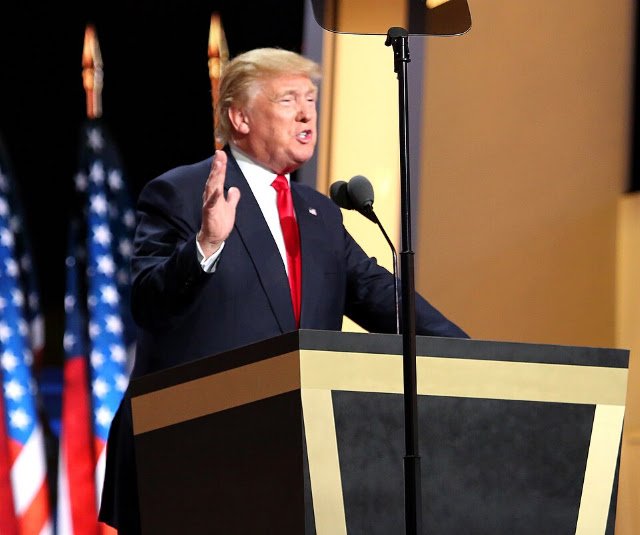
Yemen Strikes Houthi Targets in Sanaa as Trump Warns Iran of ‘Easy or Hard Way’
Yemen's internationally recognised government forces have launched strikes against Houthi-controlled areas in the capital Sanaa and the northern province of Saada, adding to growing tensions across the region as US President Donald Trump warned Iran that it could face the “easy way or the hard way.”
The latest escalation comes as the wider conflict involving Iran, the United States, Saudi Arabia and Yemen's Iran-aligned Houthi movement continues to put pressure on key Middle Eastern security and energy routes.
Yemeni forces target Houthi areas
Yemen's armed forces, which are aligned with the internationally recognised government, said early Sunday that they were carrying out strikes against Houthi positions in Sanaa and Saada.
A military spokesperson said the forces were targeting what he described as “vital targets” belonging to the Houthis, but did not provide further details about the locations hit or report casualty figures.
The Houthi-run Al Masirah television network had earlier reported an attack on Sanaa that it attributed to Saudi Arabia. There was no immediate confirmation from Riyadh regarding that report.
The strikes represent another escalation in fighting between Houthi forces and forces backed by Saudi Arabia and Yemen's internationally recognised government.
Houthi attacks raise regional tensions
The latest strikes followed claims by the Houthis that they had attacked an Aramco facility in Riyadh using missiles and drones.
Reuters reported that a large plume of smoke and fire was seen near a Saudi Aramco facility in the Saudi capital. The Houthis said the operation was carried out in response to Saudi-led strikes in Yemen, although Saudi authorities and Aramco had not immediately confirmed the reported damage.
The exchange has raised concerns about a wider confrontation in the region, particularly because the conflict is unfolding alongside the continuing US-Iran confrontation.
The Houthis have previously targeted Saudi territory and shipping as their conflict with Saudi-backed Yemeni forces has intensified.
Trump warns Tehran
At the same time, President Donald Trump signalled that Washington was approaching a decision on its next steps toward Iran.
Speaking to reporters on Saturday, Trump said Iran had been severely damaged and warned that Tehran would face a choice between what he called the “easy way” and the “hard way.”
Trump did not specify what decision he was considering. His remarks came after senior US national security officials held a private meeting at Camp David to discuss Iran and the escalating Saudi-Houthi conflict in Yemen.
Trump also claimed that Iran was moving away from plans to develop a nuclear weapon, although tensions between Washington and Tehran remain high.
Yemen conflict becomes part of wider regional crisis
The renewed fighting in Yemen is taking place against the backdrop of a much broader regional confrontation.
The Houthis are aligned with Iran, while Yemen's internationally recognised government receives support from Saudi Arabia and other regional partners. The conflict had largely remained under a fragile truce after 2022, but hostilities intensified again this year as the wider US-Iran confrontation spread across the region.
The fighting has also raised concerns over the Red Sea and Bab el-Mandeb, major routes for international shipping and energy transportation.
Any prolonged disruption in the region could put additional pressure on shipping costs, energy markets and supply chains.
Civilians caught in escalating fighting
The renewed military operations are also worsening the humanitarian situation in Yemen.
Al Jazeera reported that fighting has displaced more civilians, with families seeking shelter in expanding tent camps as violence intensifies.
The latest developments underline the growing difficulty of containing the Yemen conflict as military operations involving the Houthis, Saudi-backed forces and the wider US-Iran confrontation increasingly overlap.
For now, the scale of damage from the latest strikes remains unclear, and there has been no independently verified assessment of casualties from the attacks on Sanaa and Saada.
Source attribution: This report is based on current reporting from Reuters, Al Jazeera and other contemporary sources. Claims made by the conflicting sides have been identified as such where independent confirmation was not immediately available.