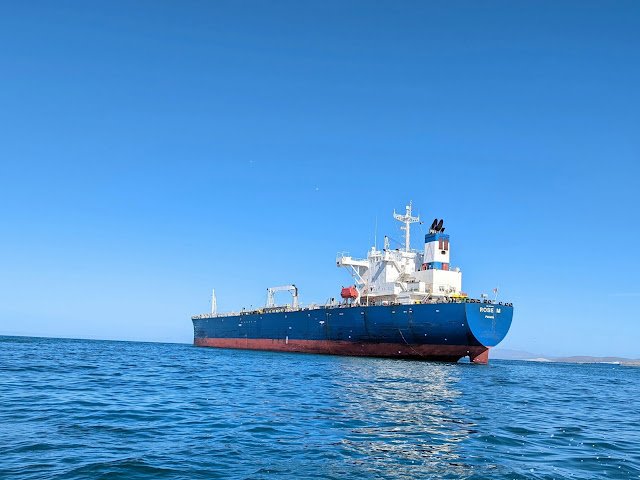

The first tanker carrying Russian diesel fuel to the United States has set sail under a new supply agreement between Moscow and Washington, the Kremlin said on Friday. The shipment marks a significant shift in US policy toward Russian energy imports following President Donald Trump’s agreement with Russian President Vladimir Putin.
Kremlin spokesman Dmitry Peskov confirmed that the tanker had departed and said regular supplies would follow. Russian Deputy Prime Minister Alexander Novak had earlier said the initial shipment would amount to approximately 40,000 metric tons of diesel. Maritime intelligence firm Kpler indicated that the vessel was heading toward New York, with arrival expected on November 7. If completed as expected, it would be the first Russian diesel delivery to the United States since July 2023.
A New Chapter in US-Russia Energy Trade
The shipment follows an agreement intended to increase the availability of fuel on international markets as energy costs remain a concern for consumers and policymakers. Trump has said that additional Russian diesel could reach the United States in the coming months.
The decision represents a reversal in the direction of US policy introduced after Russia launched its full-scale invasion of Ukraine in February 2022. Washington had imposed restrictions on Russian energy imports as part of its broader effort to pressure Moscow over the war.
The latest arrangement has prompted questions about how the United States will balance energy affordability with its sanctions policy and support for Ukraine.
How Much Fuel Is Being Shipped?
The initial cargo of 40,000 metric tons is equivalent to roughly 300,000 barrels of diesel. According to the Associated Press, that is about 7% of the approximately four million barrels of diesel consumed by the US economy in a single day.
Energy policy experts have cautioned that the shipment alone is unlikely to bring down US fuel prices substantially. Although additional deliveries could increase supply, the effect on prices will depend on the volume of future shipments, global demand, refining capacity, transportation costs and wider market conditions.
Trump has discussed the prospect of larger volumes arriving in the coming months. However, announced targets should not be confused with confirmed deliveries: the scale and timing of future shipments will depend on commercial arrangements and Russia’s ability to supply the fuel.
Ukraine Objects to the Decision
The agreement has caused concern in Kyiv, where officials have urged international partners to tighten restrictions on Moscow rather than reopen trade in Russian energy products.
Ukrainian President Volodymyr Zelenskyy criticised Trump’s decision, describing it as “a weak decision by strong partners,” according to the Associated Press. Ukraine’s concern is that revenue from energy exports could help Russia sustain its war effort.
The dispute highlights a difference in priorities between Washington and Kyiv. The Trump administration has presented additional fuel supplies as a way to address market pressures, while Ukraine has emphasised the strategic and financial consequences of allowing Russian energy trade to expand.
Russian Refineries Face Pressure
Russia’s ability to supply additional diesel has also been affected by repeated Ukrainian drone strikes on oil-refining facilities. The attacks disrupted production and contributed to fuel shortages inside Russia, although those shortages have eased.
Moscow has taken steps to relax restrictions on diesel exports as it seeks to resume deliveries while meeting domestic requirements. Russian officials have said that exports will increase according to the capacity of the country’s refineries.
The situation illustrates the connection between the war, energy infrastructure and international fuel markets. Damage to refineries can limit export capacity, while changes in sanctions and trade arrangements can alter where available supplies are sent.
What the Shipment Means for Global Markets
The first tanker is a visible sign that the new US-Russia arrangement is moving into implementation. But its broader economic impact remains uncertain.
For now, the tanker’s departure confirms the start of the new supply arrangement, while the scale of future imports and their effect on fuel prices remain to be seen.