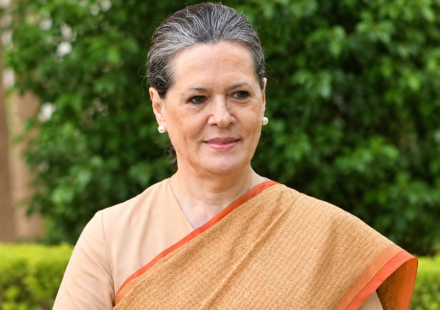
Sonia Gandhi Revisits Emergency Era, Says Indira Later Realised the Decision Was Wrong

Congress Parliamentary Party chairperson Sonia Gandhi has described the decision to impose the Emergency in India in 1975 as a mistake, saying she believes former Prime Minister Indira Gandhi eventually came to recognise the consequences of her decision.
In interviews ahead of the release of her memoir, Belonging: A Journey of Love, Sonia Gandhi reflected on one of the most controversial periods in India's political history. She discussed the circumstances surrounding the Emergency, differences within the Gandhi family and the role played by senior political figures in influencing the decision.
Her remarks offer a personal account of events that continue to shape political debates in India decades after the Emergency ended in 1977.
Sonia Gandhi said she believed Indira Gandhi was fundamentally democratic but had become uncomfortable with the course taken during the Emergency. According to her, the experience eventually weighed heavily on the former prime minister.
Sonia Gandhi calls Emergency a mistake
In an interview with British newspaper The Guardian, Sonia Gandhi said she believed imposing the Emergency had been a mistake. She also expressed the view that her mother-in-law eventually came to share that understanding.
She described Indira Gandhi as a democrat at heart and suggested that the former prime minister had not been entirely comfortable with the restrictions imposed during the period.
Sonia's comments are significant because the Emergency remains a sensitive subject for the Congress party. The decision was taken by an elected government led by Indira Gandhi, but its implementation resulted in restrictions on fundamental freedoms and widespread political controversy.
Sonia also discussed the political circumstances that surrounded the decision. She recalled that Indira Gandhi was facing mounting opposition, protests and pressure from different sections of the political establishment.
In another interview with The Hindu, Sonia said that looking back allowed her to understand the circumstances more clearly. She also noted that Indira Gandhi later publicly acknowledged the excesses committed during the Emergency and expressed regret.
Rajiv and Sanjay Gandhi had different views
One of the notable aspects of Sonia Gandhi's account concerns the disagreement between Indira Gandhi's two sons, Rajiv Gandhi and Sanjay Gandhi, over the decision to impose the Emergency.
According to Sonia's recollection, her husband Rajiv Gandhi opposed the move and advised his mother to wait for the next election rather than suspend normal democratic processes.
Sanjay Gandhi, however, reportedly supported a tougher approach. Sonia said he believed the opposition posed a serious threat to his mother's government and argued that it needed to be stopped.
The disagreement reportedly created tension within the family. Sonia recalled that Rajiv attempted to challenge his mother's decision, but Indira did not accept his advice at the time.
In her memoir, Sonia suggests that keeping Sanjay Gandhi's influence under control could have prevented much of the damage that followed the Emergency.
However, she also cautioned against attributing the entire episode to one individual. In her interview with The Hindu, she pointed out that several senior colleagues placed pressure on Indira Gandhi and that only a limited number of people, including Rajiv, offered a different perspective.
Her account therefore presents the Emergency as a decision influenced by a wider political environment, rather than solely by one family member.
What happened during the 1975 Emergency?
The Emergency was imposed shortly before midnight on June 25, 1975, when Indira Gandhi was serving as India's prime minister.
President Fakhruddin Ali Ahmed issued the proclamation under Article 352 of the Constitution, following the recommendation of the prime minister. The government cited internal disturbances as the basis for the declaration.
The decision came amid growing political unrest, opposition protests and a major legal setback for Indira Gandhi. The Allahabad High Court had set aside her election from Rae Bareli, intensifying the political crisis surrounding her leadership.
During the Emergency, civil liberties were severely restricted, press censorship was introduced and opposition leaders were detained. The suspension of habeas corpus also became one of the most controversial legal consequences of the period.
Sanjay Gandhi became a prominent and controversial figure during these years. His involvement in population-control campaigns and urban clearance programmes attracted widespread criticism, particularly over allegations of forced sterilisation and coercive demolitions.
The Emergency lasted for nearly 21 months. On January 18, 1977, Indira Gandhi announced fresh parliamentary elections and released political prisoners. Her party subsequently suffered a major defeat, and the Emergency officially ended on March 21, 1977.
Indira Gandhi's later response
Sonia Gandhi also referred to the steps Indira Gandhi took towards restoring the democratic process.
She noted that Indira eventually called elections and allowed political competition to resume. According to Sonia, the former prime minister later publicly expressed regret and apologised for excesses committed during the Emergency.
Sonia said she only understood the full extent of what had happened after the Emergency ended. She acknowledged that democratic rights had been curtailed and that habeas corpus protections had been suspended, while also explaining the political circumstances as she understood them.
These remarks reflect Sonia's personal interpretation of Indira Gandhi's thinking and should be distinguished from the documented historical record of the period.
Memoir brings family and political history into focus
Sonia Gandhi's upcoming memoir, Belonging: A Journey of Love, is scheduled for release on November 10, 2026. The book discusses her personal journey, marriage to Rajiv Gandhi, life within the Nehru-Gandhi family and her eventual involvement in Indian politics.
Her recent interviews have also touched on other significant events, including the demolition of the Babri Masjid in December 1992 and the Congress party's political challenges in subsequent decades.
She acknowledged that her own party had, in some ways, been complacent, contributing to the political circumstances in which the BJP expanded its influence.
The Emergency, meanwhile, remains an important subject in contemporary political debates. The BJP frequently invokes the period to criticise the Congress over democratic rights and constitutional institutions. Congress leaders have acknowledged the excesses while also discussing the circumstances that led to the decision.
Sonia Gandhi's latest remarks add another personal account to this continuing discussion. Her assessment does not change the historical record, but it provides insight into how a member of the Gandhi family remembers the political and personal divisions surrounding the Emergency.
As the memoir approaches publication, her reflections are likely to bring renewed attention to the decisions, personalities and consequences associated with one of the most consequential chapters in India's democratic history.
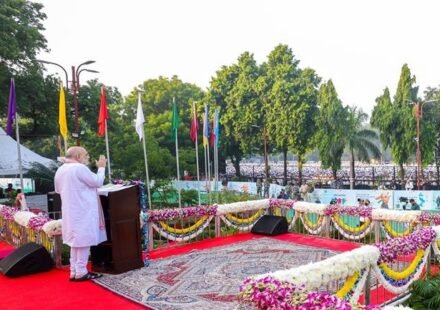
Amit Shah Turns Congress Rally into a Political Flashpoint Over the 1984 Anti-Sikh Violence
Union Home Minister Amit Shah on Sunday sharply criticised the Congress for holding a political rally in Delhi on the anniversary of the 1984 anti-Sikh violence, arguing that the timing could deepen the pain of families who lost loved ones during one of the darkest periods in the country’s recent history.
Speaking at an event in Chandigarh, Shah targeted Congress leader Rahul Gandhi and the opposition INDIA bloc over their gathering at Ramlila Maidan. He said organising a major political event on November 1 was insensitive to the victims and their families, describing the decision as an act that would reopen painful memories.
The controversy has added another layer to the political confrontation between the ruling Bharatiya Janata Party (BJP) and the opposition. While the Congress-led rally was organised to protest alleged irregularities in electoral rolls and demand accountability from the Election Commission, BJP leaders focused on the historical significance of the date.
Why Amit Shah Objected to the Rally
Shah argued that November 1 carries a deeply painful meaning for Sikh families affected by the violence that followed the assassination of former Prime Minister Indira Gandhi in October 1984.
Anti-Sikh attacks broke out in several places, including Delhi, in the days after her assassination. Sikh men, women and children were killed, homes were attacked and property was destroyed. Survivors and families of victims have continued to seek justice, accountability and recognition of their suffering over the decades.
In his remarks, Shah questioned why the Congress had chosen the anniversary for its rally when the date is associated with the deaths and suffering of thousands of Sikhs. He also referred to remarks made by former Prime Minister Rajiv Gandhi in the aftermath of the violence, an episode that continues to form part of the political debate surrounding the tragedy.
The Home Minister’s criticism was directed at the Congress leadership, particularly Rahul Gandhi, and the decision to proceed with the event despite objections raised by BJP leaders.
The Congress-led opposition, however, had a different stated reason for assembling in the capital: challenging the conduct of electoral-roll revisions and demanding action over what it describes as irregularities in the electoral process.
What Was the INDIA Bloc Rally About?
The opposition gathering at Ramlila Maidan was part of the INDIA bloc’s campaign against alleged problems in the revision of voter lists. Opposition parties have questioned the handling of electoral-roll changes and called for accountability from Chief Election Commissioner Gyanesh Kumar.
Congress leaders and their allies have argued that the integrity of voter registration is essential to a fair democratic process. They have sought to make electoral transparency a central political issue, with Rahul Gandhi and other opposition leaders mobilising supporters around the campaign.
The Election Commission has rejected allegations of political bias in the voter-list process. The dispute has nevertheless triggered protests and a broader political confrontation between opposition parties and the BJP.
The choice of November 1 created a separate controversy because of its association with the 1984 violence. BJP leaders argued that the opposition could have selected another date, while Congress and INDIA bloc supporters presented their gathering as a protest focused on electoral democracy.
The two issues—electoral accountability and the legacy of the anti-Sikh violence—therefore became intertwined in the day’s political debate.
The Historical Weight of November 1
The violence of 1984 remains a deeply sensitive issue in India, particularly among Sikh families who lost relatives or were displaced during the attacks. The events followed Indira Gandhi’s assassination by two Sikh bodyguards on October 31, 1984.
In the days that followed, mobs targeted Sikh communities in Delhi and other locations. The scale of the violence, allegations concerning the role of political figures and the long struggle for justice have made the episode a lasting subject of public debate.
For survivors, the anniversary is not simply a date on the political calendar. It is a time of remembrance and mourning, with continuing demands for accountability and support for affected families.
That history explains why the scheduling of a large political rally on the anniversary has attracted criticism. At the same time, determining the responsibility of individuals in specific crimes requires evidence and legal findings rather than broad political accusations.
The debate also illustrates how historical tragedies continue to shape contemporary party politics. For many families, justice and recognition remain central concerns regardless of which party holds power.
BJP Uses the Timing to Intensify Its Attack
Shah’s remarks gave the BJP another opportunity to challenge the Congress over its historical record and its relationship with the Sikh community. The party has repeatedly raised the 1984 violence in political arguments, demanding that Congress address questions surrounding the tragedy and the accountability of leaders accused in connection with it.
By focusing on the date, BJP leaders sought to frame the opposition rally not only as a protest against electoral procedures but also as a question of political sensitivity and respect for victims.
The criticism may carry particular importance in Punjab, where memories of the violence remain significant and the Sikh community is an important part of the political landscape. The issue could influence public debate ahead of future electoral contests, although the extent of any electoral effect cannot be determined from the controversy alone.
For the BJP, the argument provides a way to challenge the Congress on both its historical record and its current political decisions. For the Congress-led opposition, the challenge is to keep attention on its stated concerns about electoral rolls while responding to criticism over the rally’s timing.
Political Impact: A Dispute With Two Competing Narratives
The controversy presents voters with two competing political narratives.
The BJP is emphasising the emotional and historical significance of the 1984 violence, arguing that a political gathering on the anniversary was inappropriate. Shah’s criticism places the suffering of victims and their families at the centre of the debate.
The INDIA bloc, meanwhile, has positioned its rally as part of a campaign for electoral accountability. Opposition parties argue that questions about voter registration and the functioning of democratic institutions deserve public attention.
Both narratives are likely to remain part of the wider political argument. The immediate dispute may also intensify scrutiny of how political parties choose dates for public events, particularly when those dates coincide with national tragedies or community commemorations.
The most significant test for political leaders will be whether they can address public concerns without diminishing the suffering of victims or allowing historical pain to become merely a tool for partisan exchanges.
Justice for Victims Remains a Central Concern
Beyond the political confrontation, the legacy of 1984 continues to affect survivors and families seeking justice. The passage of more than four decades has not erased the memories of the violence or the questions raised about accountability.
For those families, recognition of their suffering, fair legal processes and the implementation of court decisions remain more consequential than the latest exchange between political parties.
The rally controversy has again brought the tragedy into public discussion. Whether it leads to a more substantive conversation about justice for survivors—or remains confined to party-political accusations—will depend on what political leaders do after the immediate dispute fades.
What is confirmed: Shah publicly criticised the Congress-led rally because it was being held on the anniversary of the 1984 anti-Sikh violence. The INDIA bloc’s stated purpose was to protest alleged electoral-roll irregularities and seek accountability from the Election Commission.
What remains analysis: The political consequences of the controversy, including any impact on voter sentiment, are uncertain and will depend on public response and subsequent developments.
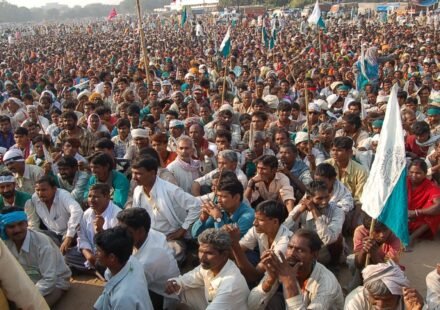
Delhi Prepares for Major Opposition Rally With 4,000 Police Personnel and 200 CCTV Cameras
New Delhi is preparing for a major political gathering at Ramlila Maidan on Sunday as the INDIA bloc holds a rally against alleged electoral irregularities and demands the resignation of Chief Election Commissioner Gyanesh Kumar. Opposition leaders have projected a turnout of up to 10 lakh people, prompting extensive security and traffic arrangements across parts of the capital.
Delhi Police expects around 50,000 participants and has deployed more than 4,000 personnel, supported by Central Armed Police Forces (CAPF). More than 200 CCTV cameras, drones and body-worn cameras will help monitor the crowd and surrounding areas. The venue has also been divided into 14 security zones to improve coordination and crowd management.
Rally to Focus on Electoral Transparency
The gathering is part of the opposition alliance’s campaign against what it calls “vote chori”. Opposition parties have raised concerns about alleged irregularities during the Special Intensive Revision (SIR) of electoral rolls, including claims that eligible voters’ names have been removed.
The INDIA bloc is demanding accountability from the Election Commission and the resignation of Chief Election Commissioner Gyanesh Kumar. These allegations remain the opposition’s claims and should not be treated as established findings.
The rally follows a symbolic “public impeachment” event organised by opposition leaders on Saturday at Congress president Mallikarjun Kharge’s residence. Leaders adopted a resolution criticising the CEC, but the exercise was political and symbolic rather than a formal constitutional impeachment process.
March Planned Before the Main Gathering
The programme includes a “Chalo Dilli” march scheduled to begin around noon from the Minto Road–Connaught Place junction and proceed towards Ramlila Maidan. Opposition leaders, party workers and supporters from different states are expected to participate, alongside student groups and civil society representatives.
Although the organisers have projected a turnout of up to 10 lakh, police estimates are considerably lower. Officials have said the ground can accommodate approximately 45,000 to 50,000 people when empty, with the effective capacity falling to around 30,000–40,000 once seating arrangements, barricades and designated passageways are in place.
Traffic Restrictions Across Central Delhi
The rally is expected to affect traffic in several parts of the capital. Restrictions and diversions are planned between 10 am and 5 pm, depending on the situation.
Roads likely to experience disruption include Minto Road, Jawaharlal Nehru Marg, Bahadur Shah Zafar Marg and Desh Bandhu Gupta Road. Diversions may also affect key junctions around ITO, Delhi Gate, Rajghat, Ajmeri Gate and Turkman Gate.
Commuters have been advised to plan journeys in advance and avoid roads near the rally venue where possible. Railway passengers travelling to New Delhi Railway Station should allow extra time, particularly if using the Ajmeri Gate entrance. Authorities have also planned arrangements to maintain access for ambulances and other emergency vehicles.
Political and Public Impact
The rally is expected to provide the INDIA bloc with an opportunity to demonstrate unity and keep electoral transparency at the centre of the political debate. A large turnout could increase pressure on the Election Commission to respond publicly to opposition concerns. However, the event’s political impact will depend on participation, the response from election authorities and whether the protest leads to further formal action.
The gathering may also create temporary inconvenience for commuters, businesses and people travelling through central Delhi. The extensive deployment is intended to manage security risks and prevent overcrowding.
For residents, the immediate priority will be navigating traffic restrictions safely. For political parties, the rally represents another stage in the wider dispute over electoral rolls and the functioning of democratic institutions.
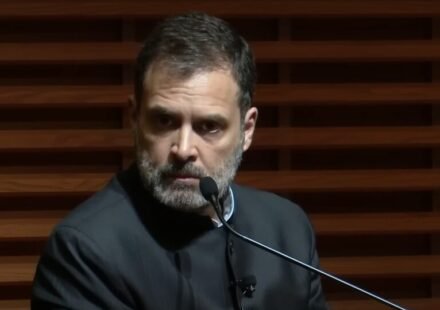
Sultanpur Court Clears Rahul Gandhi in Long-Running Defamation Case Linked to 2018 Remarks
Congress leader and Leader of Opposition in the Lok Sabha Rahul Gandhi has been acquitted in a criminal defamation case connected to remarks he made about Amit Shah during the 2018 Karnataka Assembly election campaign. A special MP/MLA court in Sultanpur, Uttar Pradesh, delivered the verdict on Monday, bringing a legal dispute that had continued for more than eight years to a close at the trial-court level.
The complaint was filed by Vijay Mishra, a local Bharatiya Janata Party leader who alleged that Gandhi’s comments about Shah, then the BJP’s national president, were defamatory. The court ruled in Gandhi’s favour, with reports indicating that it found the remarks did not amount to defamation.
What the Case Was About
The dispute originated in comments Gandhi made in Bengaluru during the 2018 election campaign in Karnataka. He criticised the BJP’s claims about clean politics while referring to Shah in connection with a criminal case.
Mishra argued that the remarks damaged Shah’s reputation and filed a criminal defamation complaint in Sultanpur on August 4, 2018. The case was brought under provisions of the Indian Penal Code dealing with defamation. At the time, Shah was leading the BJP nationally; he is now India’s Union Home Minister.
Gandhi rejected the allegations during the proceedings. His side argued that the complaint was without merit and that his remarks had been presented outside their broader political context. The case subsequently moved through several stages of court proceedings before the trial court scheduled its verdict for October 26.
Court Proceedings and Verdict
Gandhi appeared before the Sultanpur court during earlier proceedings and secured bail in 2024. The court had initially scheduled the verdict for October 13, 2026, before moving the date to October 26. Gandhi attended the court in person for the final decision, according to published reports.
The acquittal means Gandhi has been found not guilty in this particular criminal defamation case. It should not be interpreted as a ruling on every other legal matter involving him, nor does it automatically determine the outcome of unrelated proceedings.
Political and Legal Significance
The verdict removes one legal challenge arising from Gandhi’s remarks during a major election campaign. As a senior opposition leader, he frequently criticises the ruling party and its leadership, while BJP figures have challenged some of his statements in public and through legal channels.
The decision may give Congress supporters a political boost and provide Gandhi with an opportunity to highlight the outcome as vindication of his position. However, the wider political consequences will depend on how the parties respond and whether any further legal steps are pursued.
The case also illustrates how public statements by political figures can lead to lengthy litigation. Defamation proceedings require courts to consider the specific words used, their context, the allegations made by the complainant and the applicable legal standards. The outcome in this case is specific to the complaint and evidence considered by the Sultanpur court.
As of October 26, reports confirmed Gandhi’s acquittal. Any subsequent appeal or additional legal development should be assessed separately once officially confirmed.
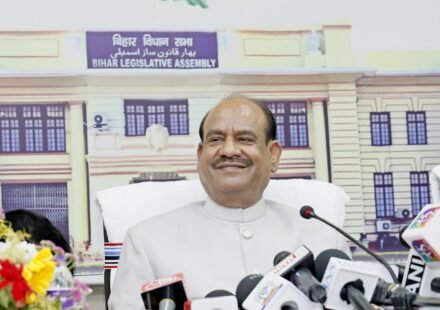
Om Birla Says Any Fresh Move to Remove Election Chief Will Follow Parliamentary Rules
Lok Sabha Speaker Om Birla has said that any fresh notice seeking the removal of Chief Election Commissioner Gyanesh Kumar will be examined under established parliamentary rules and procedures, as opposition parties continue to raise concerns over the Election Commission’s handling of electoral roll revisions.
Speaking to reporters in New Delhi on Thursday, Birla indicated that the matter would be considered if a fresh notice were formally submitted. He said the process for removing the head of the Election Commission was laid down in law and would be followed accordingly.
His remarks come amid an intensifying political dispute over the Special Intensive Revision (SIR) of electoral rolls, an exercise that has drawn criticism from opposition parties and prompted demands for the chief election commissioner’s resignation or removal.
Opposition concerns over electoral roll revision
Opposition parties have questioned aspects of the SIR process and alleged irregularities in the way electoral roll revision decisions have been handled. They have argued that the Election Commission must ensure transparency, fairness and accountability in the preparation of voter lists.
The controversy has become a wider political issue, with opposition leaders seeking action against Kumar and raising concerns about the functioning of the country’s electoral machinery.
The allegations remain contested. The demand for removal does not itself establish wrongdoing, and any formal proceedings would have to be assessed under the constitutional standards governing the office.
The dispute has also drawn attention to the role of the Election Commission, the independent constitutional body responsible for overseeing elections and administering the electoral process in India.
Earlier removal attempts
The opposition has already made two attempts to initiate proceedings against Kumar.
Notices submitted during the first attempt were rejected by the presiding authorities in both the Lok Sabha and the Rajya Sabha. Notices submitted during the second attempt remain pending in the Upper House, according to reports published on October 22.
Birla’s latest statement concerns the possibility of another notice. It does not mean that a fresh motion has been admitted or that proceedings to remove Kumar have begun.
Whether a new notice advances will depend on the applicable rules, the grounds presented and the formal decision on its admissibility.
What does the law say about removing a CEC?
The Chief Election Commissioner has constitutional protection against removal similar to that afforded to a Supreme Court judge. This safeguard is intended to protect the independence of the office and prevent removal through an ordinary political decision.
Under the constitutional framework, removal requires a special parliamentary process on grounds of proved misbehaviour or incapacity. The process is substantially more demanding than a routine parliamentary motion.
The Judges (Inquiry) Act, 1968, provides a framework for investigating allegations once a removal motion is admitted. A three-member committee is constituted to examine the charges. Its members include the Chief Justice of India or a Supreme Court judge, a chief justice of a high court and a distinguished jurist.
The committee examines the allegations and reports its findings. If the charges are not established, the removal process does not proceed on that basis. If the committee finds the allegations established, the motion can be considered by Parliament in accordance with the prescribed procedure.
For removal to take effect, both Houses must adopt the required address during the same session, with support from a majority of the total membership of each House and at least two-thirds of members present and voting. The President then issues the removal order in accordance with the constitutional process.
These requirements make clear that a demand for removal and the actual removal of a chief election commissioner are two distinct matters.
Speaker’s role and parliamentary procedure
Birla’s comments underline the importance of following formal procedures rather than making a decision before a notice is received and examined.
As Lok Sabha Speaker, he is responsible for applying the relevant rules to matters placed before the House. His statement did not indicate whether a future notice would be accepted or rejected; it addressed how such a notice would be handled if submitted.
The issue also highlights the balance between parliamentary oversight and the independence of constitutional institutions. Political parties have the right to raise concerns, while any removal process must satisfy the legal requirements established for the office.
What happens next?
The immediate question is whether opposition parties will submit another notice and, if they do, whether it meets the required conditions for consideration.
Until a fresh notice is formally submitted and examined, no conclusion can be drawn about the next procedural step. The notices from earlier attempts also have to be distinguished from any possible future motion.
The controversy over the electoral roll revision is likely to remain part of the political debate, but the outcome of any removal effort will depend on the constitutional process rather than public demands alone.
Birla’s statement therefore offers a procedural assurance, not a decision on Kumar’s future. Any new move will have to pass through the prescribed legal and parliamentary stages before it can lead to further action.