Amit Shah Turns Congress Rally into a Political Flashpoint Over the 1984 Anti-Sikh Violence

Union Home Minister Amit Shah on Sunday sharply criticised the Congress for holding a political rally in Delhi on the anniversary of the 1984 anti-Sikh violence, arguing that the timing could deepen the pain of families who lost loved ones during one of the darkest periods in the country’s recent history.
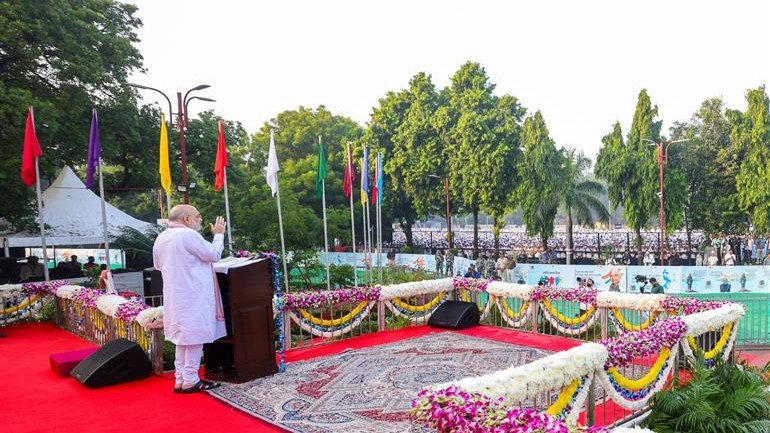
Speaking at an event in Chandigarh, Shah targeted Congress leader Rahul Gandhi and the opposition INDIA bloc over their gathering at Ramlila Maidan. He said organising a major political event on November 1 was insensitive to the victims and their families, describing the decision as an act that would reopen painful memories.
The controversy has added another layer to the political confrontation between the ruling Bharatiya Janata Party (BJP) and the opposition. While the Congress-led rally was organised to protest alleged irregularities in electoral rolls and demand accountability from the Election Commission, BJP leaders focused on the historical significance of the date.
Why Amit Shah Objected to the Rally
Shah argued that November 1 carries a deeply painful meaning for Sikh families affected by the violence that followed the assassination of former Prime Minister Indira Gandhi in October 1984.
Anti-Sikh attacks broke out in several places, including Delhi, in the days after her assassination. Sikh men, women and children were killed, homes were attacked and property was destroyed. Survivors and families of victims have continued to seek justice, accountability and recognition of their suffering over the decades.
In his remarks, Shah questioned why the Congress had chosen the anniversary for its rally when the date is associated with the deaths and suffering of thousands of Sikhs. He also referred to remarks made by former Prime Minister Rajiv Gandhi in the aftermath of the violence, an episode that continues to form part of the political debate surrounding the tragedy.
The Home Minister’s criticism was directed at the Congress leadership, particularly Rahul Gandhi, and the decision to proceed with the event despite objections raised by BJP leaders.
The Congress-led opposition, however, had a different stated reason for assembling in the capital: challenging the conduct of electoral-roll revisions and demanding action over what it describes as irregularities in the electoral process.
What Was the INDIA Bloc Rally About?
The opposition gathering at Ramlila Maidan was part of the INDIA bloc’s campaign against alleged problems in the revision of voter lists. Opposition parties have questioned the handling of electoral-roll changes and called for accountability from Chief Election Commissioner Gyanesh Kumar.
Congress leaders and their allies have argued that the integrity of voter registration is essential to a fair democratic process. They have sought to make electoral transparency a central political issue, with Rahul Gandhi and other opposition leaders mobilising supporters around the campaign.
The Election Commission has rejected allegations of political bias in the voter-list process. The dispute has nevertheless triggered protests and a broader political confrontation between opposition parties and the BJP.
The choice of November 1 created a separate controversy because of its association with the 1984 violence. BJP leaders argued that the opposition could have selected another date, while Congress and INDIA bloc supporters presented their gathering as a protest focused on electoral democracy.
The two issues—electoral accountability and the legacy of the anti-Sikh violence—therefore became intertwined in the day’s political debate.
The Historical Weight of November 1
The violence of 1984 remains a deeply sensitive issue in India, particularly among Sikh families who lost relatives or were displaced during the attacks. The events followed Indira Gandhi’s assassination by two Sikh bodyguards on October 31, 1984.
In the days that followed, mobs targeted Sikh communities in Delhi and other locations. The scale of the violence, allegations concerning the role of political figures and the long struggle for justice have made the episode a lasting subject of public debate.
For survivors, the anniversary is not simply a date on the political calendar. It is a time of remembrance and mourning, with continuing demands for accountability and support for affected families.
That history explains why the scheduling of a large political rally on the anniversary has attracted criticism. At the same time, determining the responsibility of individuals in specific crimes requires evidence and legal findings rather than broad political accusations.
The debate also illustrates how historical tragedies continue to shape contemporary party politics. For many families, justice and recognition remain central concerns regardless of which party holds power.
BJP Uses the Timing to Intensify Its Attack
Shah’s remarks gave the BJP another opportunity to challenge the Congress over its historical record and its relationship with the Sikh community. The party has repeatedly raised the 1984 violence in political arguments, demanding that Congress address questions surrounding the tragedy and the accountability of leaders accused in connection with it.
By focusing on the date, BJP leaders sought to frame the opposition rally not only as a protest against electoral procedures but also as a question of political sensitivity and respect for victims.
The criticism may carry particular importance in Punjab, where memories of the violence remain significant and the Sikh community is an important part of the political landscape. The issue could influence public debate ahead of future electoral contests, although the extent of any electoral effect cannot be determined from the controversy alone.
For the BJP, the argument provides a way to challenge the Congress on both its historical record and its current political decisions. For the Congress-led opposition, the challenge is to keep attention on its stated concerns about electoral rolls while responding to criticism over the rally’s timing.
Political Impact: A Dispute With Two Competing Narratives
The controversy presents voters with two competing political narratives.
The BJP is emphasising the emotional and historical significance of the 1984 violence, arguing that a political gathering on the anniversary was inappropriate. Shah’s criticism places the suffering of victims and their families at the centre of the debate.
The INDIA bloc, meanwhile, has positioned its rally as part of a campaign for electoral accountability. Opposition parties argue that questions about voter registration and the functioning of democratic institutions deserve public attention.
Both narratives are likely to remain part of the wider political argument. The immediate dispute may also intensify scrutiny of how political parties choose dates for public events, particularly when those dates coincide with national tragedies or community commemorations.
The most significant test for political leaders will be whether they can address public concerns without diminishing the suffering of victims or allowing historical pain to become merely a tool for partisan exchanges.
Justice for Victims Remains a Central Concern
Beyond the political confrontation, the legacy of 1984 continues to affect survivors and families seeking justice. The passage of more than four decades has not erased the memories of the violence or the questions raised about accountability.
For those families, recognition of their suffering, fair legal processes and the implementation of court decisions remain more consequential than the latest exchange between political parties.
The rally controversy has again brought the tragedy into public discussion. Whether it leads to a more substantive conversation about justice for survivors—or remains confined to party-political accusations—will depend on what political leaders do after the immediate dispute fades.
What is confirmed: Shah publicly criticised the Congress-led rally because it was being held on the anniversary of the 1984 anti-Sikh violence. The INDIA bloc’s stated purpose was to protest alleged electoral-roll irregularities and seek accountability from the Election Commission.
What remains analysis: The political consequences of the controversy, including any impact on voter sentiment, are uncertain and will depend on public response and subsequent developments.