Germany on Alert: Russia’s ‘Shadow War’ Raises Fears of a Wider Conflict

Germany is warning that its security confrontation with Russia is entering a more dangerous phase, as officials raise concerns about alleged espionage, sabotage, cyberattacks and other covert activities targeting European countries.
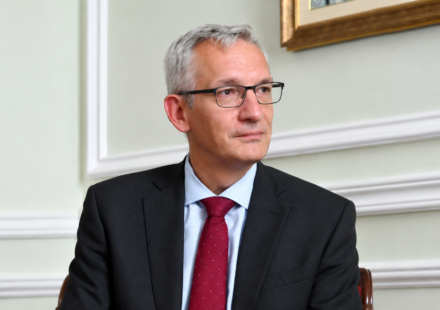
Martin Jäger, head of Germany’s foreign intelligence service, the Federal Intelligence Service (BND), told lawmakers on October 5 that Russia’s so-called “shadow war” had taken on a new and more dangerous dimension. He warned that Germany risked being drawn into a violent conflict with Moscow.
The warning comes as Berlin reviews its security arrangements and considers strengthening intelligence capabilities to counter threats that fall short of conventional military warfare but could still damage critical infrastructure and undermine public confidence.
German officials have repeatedly expressed concern about suspected Russian activities, particularly as Germany remains a major European supporter of Ukraine.
What Does ‘Shadow War’ Mean?
The term “shadow war” describes hostile activities conducted below the threshold of an openly declared military conflict. These operations can include intelligence gathering, cyber intrusions, sabotage, disinformation campaigns and covert attempts to disrupt essential services.
Such activities can be difficult to investigate because responsibility may be concealed, evidence can take time to establish and the incidents may not resemble conventional military attacks.
German intelligence officials say these methods can be used to weaken public trust, create uncertainty and discourage European governments from supporting Ukraine.
Jäger told parliament that Germany was facing an increasingly aggressive intelligence threat. He also warned that Russia could test NATO’s resolve through limited military or other hostile actions, including in the Baltic region.
However, the intelligence assessment did not indicate that a large-scale Russian attack on NATO territory was imminent.
Leipzig Airport Incident Adds to Concerns
One incident cited in Germany’s security debate was an attempted drone attack at Leipzig Airport. German authorities have linked the alleged operation to Russia, making it a prominent example in discussions about possible sabotage and covert activity.
Incidents involving drones, cyber systems and infrastructure have heightened concerns among European governments about how hostile operations could affect airports, transport networks, energy supplies and defence-related facilities.
Attribution remains important in such cases. An allegation that a foreign state was responsible must be distinguished from independently established evidence or a court finding.
Russia has denied intending to attack other countries. President Vladimir Putin has said Moscow has no intention of attacking anyone, while warning that Russia would respond if it came under aggression.
The competing positions underline the continuing tensions between Moscow and European governments over the war in Ukraine and wider European security.
Germany Considers Stronger Security Measures
Germany’s government is considering ways to improve its ability to detect and respond to covert threats. Interior Minister Alexander Dobrindt has been associated with plans to strengthen protections against drone incidents, sabotage, cyberattacks and espionage.
Debate has also focused on whether Germany’s intelligence services should receive additional legal powers. Any expansion would raise questions about oversight, civil liberties and the balance between national security and individual rights.
Germany’s intelligence agencies operate within a legal framework shaped in part by the country’s experience under Nazi rule and the East German surveillance state. Proposals to broaden their authority therefore carry significant political and constitutional implications.
Supporters of stronger powers argue that security agencies need modern tools to respond to changing threats. Critics are likely to focus on safeguards, accountability and the risk of excessive surveillance.
Wider Implications for Europe and NATO
Germany’s warning reflects broader European concerns about covert operations and the possibility that incidents below the threshold of open warfare could escalate into a wider confrontation.
As one of Ukraine’s key European supporters, Germany has become an important part of the strategic dispute between Russia and Western governments. Officials fear that attempts to undermine public support for Kyiv could accompany military pressure on Ukraine.
For NATO, the challenge is to deter hostile activity while avoiding unnecessary escalation. Governments must also distinguish between criminal incidents, cyber operations, intelligence activity and actions that could trigger a collective security response.
The warning does not mean that a direct war between Germany and Russia is inevitable. Instead, it highlights the concern among German intelligence officials that covert operations are becoming more aggressive and could increase the risk of miscalculation.
Berlin’s next steps are likely to focus on improving protection for critical infrastructure, strengthening counterintelligence and determining whether existing laws are sufficient to address emerging security threats.

Trump Says Energy Ceasefire Is Effective Immediately
US President Donald Trump has announced an immediate energy ceasefire between Russia and Ukraine, saying both sides have agreed to stop attacks on energy infrastructure. The announcement, however, surprised Ukrainian President Volodymyr Zelenskyy, who said he was waiting for details and stressed that Russia must also honour the proposed truce.
Trump made the announcement on his Truth Social platform on Sunday, October 11, without explaining the agreement’s terms or describing how compliance would be monitored.
“Both parties have agreed,” Trump said in his post, urging Russia and Ukraine not to violate the ceasefire.
Neither Moscow nor Kyiv had publicly confirmed a mutually agreed arrangement at the time of the initial announcement. Zelenskyy subsequently said Ukraine supported the ceasefire but was awaiting further information from the US side.
Zelenskyy Says Russia Must Stop Its Attacks
Zelenskyy’s response highlighted uncertainty over whether the announcement had translated into an operational agreement. He said Ukraine was prepared to support a halt to attacks on energy facilities, provided Russia also stopped targeting Ukrainian infrastructure.
The Ukrainian president discussed the announcement with NATO Secretary-General Mark Rutte, Canadian Prime Minister Mark Carney and Finnish President Alexander Stubb, according to reports.
In his nightly address, Zelenskyy said Russian attacks were continuing after Trump’s announcement. Ukrainian officials reported strikes affecting energy infrastructure, including a heating and power facility in the Kharkiv region.
The reports raised questions about whether the proposed ceasefire was being observed and whether both governments had agreed on its scope.
An energy ceasefire would be narrower than a comprehensive truce. It would focus on attacks against facilities such as power plants, electricity networks, oil refineries and other infrastructure essential to civilian life and energy supplies. It would not necessarily end fighting elsewhere along the front line.
Trump’s Pressure on Kyiv and Moscow
The announcement came after days of tension between Trump and Zelenskyy over Ukraine’s attacks on Russian oil refineries.
Trump had urged Kyiv to stop targeting Russian refineries, linking the issue to rising fuel prices. His administration has faced domestic pressure over energy costs ahead of the US midterm elections scheduled for November.
Zelenskyy, meanwhile, has maintained that Ukraine should not be expected to stop its attacks unilaterally while Russian forces continue striking Ukrainian energy facilities. Kyiv has argued that any arrangement must apply to both sides.
The disagreement has added another layer of strain to relations between Washington and Kyiv as diplomatic efforts to end the war continue.
Russia’s Response Remains Crucial
Moscow’s position is central to whether the announced ceasefire can take effect in practice. Without a clear confirmation from Russia and an agreed mechanism for monitoring attacks, it remains uncertain how the arrangement would be implemented.
The episode also follows an earlier Trump announcement in September about an energy ceasefire that was not confirmed by both sides. Continued attacks after the latest declaration have therefore intensified doubts about whether the new initiative will produce a lasting pause.
For Ukraine, protecting energy infrastructure is particularly important as the country continues to face Russian strikes during the war. For international energy markets, any reduction in attacks on oil and power facilities could ease some supply concerns, although the effect would depend on the scale and duration of the truce.
For now, the key test is whether Russia and Ukraine can establish clear, reciprocal commitments and stop attacks on the energy facilities covered by the proposed arrangement. Until both sides confirm the terms and demonstrate compliance, the announcement should not be treated as proof that a functioning ceasefire is in place.
Russian Missile and Drone Barrage Kills at Least 24 in Ukraine; Zelenskyy Condemns ‘Vile’ Strikes
At least 24 people were killed in Ukraine after Russia launched a major overnight barrage of missiles and drones across several regions, Ukrainian officials said. President Volodymyr Zelenskyy condemned the attacks as among Russia’s most “vile” strikes.
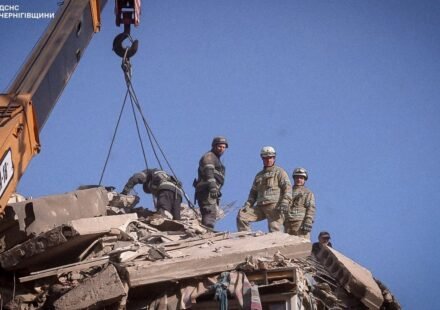
The heaviest casualties were reported in the northern city of Pryluky in Chernihiv region, where a Russian missile destroyed parts of a five-storey residential building. Local officials said at least 18 people, including four children, were killed there, while dozens more were injured.
The attacks also caused deaths in Kyiv, Oleksandria and Kremenchuk, according to Ukrainian authorities. AP later reported that the overall civilian death toll had reached at least 25, including five children, while around 100 people were wounded. The figures were continuing to be updated as rescue teams searched damaged buildings.
Russia launches large-scale overnight attack
According to Zelenskyy, Russia launched around 70 missiles along with dozens of Shahed attack drones during the overnight assault.
Ukraine’s Air Force said it intercepted more than 80% of 46 jet-powered drones involved in the attack. However, Ukrainian officials said ballistic missiles remained a major challenge for the country’s air-defence network.
The strikes hit multiple areas, including Kyiv, Chernihiv, Kirovohrad, Dnipropetrovsk, Poltava and Kharkiv regions. Industrial facilities, residential buildings and energy-related infrastructure were among the sites affected.
Russia’s Defence Ministry said its forces had carried out a “massive strike” against military-industrial facilities. Moscow said the targets included facilities connected to the production and storage of Ukrainian missiles and drones, as well as port and ship-repair infrastructure in the Odesa region.
Zelenskyy calls attacks ‘vile’
Zelenskyy described the bombardment as one of the most “vile” Russian attacks and said Moscow wanted to strike Ukraine “painfully and demonstratively.”
The Ukrainian president also renewed his appeal for additional air-defence systems, particularly Patriot interceptors, saying ballistic missiles remained one of the country's greatest threats.
Kyiv residents took shelter in underground metro stations during the overnight attack as explosions were heard across the capital.
Residential areas hit
The destruction in Pryluky was particularly severe. Rescue workers searched through the remains of the apartment building for survivors and victims.
AP reported that five children were among those killed in the residential building, including three who were just one year old and another who was eight. Ukrainian authorities said the rescue operation continued as emergency workers searched the rubble.
The attack came as Ukraine faces growing pressure on its air-defence capabilities. Ukrainian officials have repeatedly called for additional Western air-defence systems to protect cities and critical infrastructure from Russian missile and drone attacks.
Ukraine reports strikes inside Russia
Ukraine also carried out attacks against targets inside Russia, according to Zelenskyy.
The Ukrainian president said Ukrainian forces struck oil facilities and a military training site in Russia's Perm, Samara and Astrakhan regions. Russian officials did not immediately provide a detailed response to those claims.
The latest exchange of attacks highlights the continuing intensity of the war, with both sides increasingly targeting infrastructure and military-related facilities far from the main battlefield.
The casualty figures and damage assessment could change as emergency crews complete their work and authorities receive reports from affected areas.
North Korea Warns US Over Taiwan Support, Reaffirms Backing for Russia
North Korea has criticised the United States over its military support and arms sales to Taiwan, accusing Washington of increasing tensions in the Taiwan Strait. At the same time, North Korean leader Kim Jong Un has reaffirmed Pyongyang’s continued support for Russia and its strategic partnership with Moscow.
The latest statements were reported by North Korea’s state-run Korean Central News Agency (KCNA) on Wednesday. They come as tensions remain high over Taiwan’s security and as North Korea and Russia continue to deepen their military and diplomatic ties.
Pyongyang Criticises US Military Support for Taiwan
In a KCNA commentary, North Korean international affairs analyst Kim Myong Chol accused the United States of undermining regional stability through its support for Taiwan.
The commentary focused on the recent arrival of US-made fighter aircraft in Taiwan. The first two of 66 F-16V Block 70 fighter jets ordered by Taiwan from the United States in 2019 arrived on the island last week.
North Korea argued that Washington should consider the consequences of its military involvement in Taiwan. The commentary warned that US support could contribute to a confrontation involving China.
Pyongyang also reiterated its support for Beijing’s “One China” principle. North Korea’s position is closely aligned with China’s claim over Taiwan, which Beijing regards as part of its territory.
Taiwan, which has its own democratically elected government, rejects Beijing’s sovereignty claims and maintains that its future should be determined by its people.
Kim Jong Un Reaffirms Support for Russia
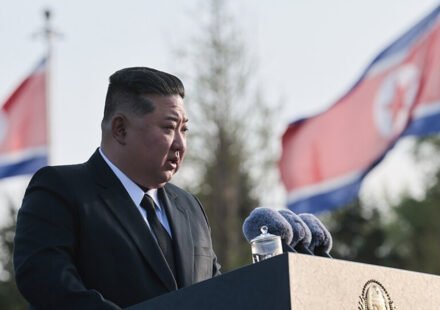
Separately, Kim Jong Un pledged continued support for Russia in a birthday message to Russian President Vladimir Putin, according to KCNA.
Kim said North Korea would continue expanding cooperation with Moscow under the two countries’ comprehensive strategic partnership. He also expressed confidence that Russia’s efforts to defend what it describes as its sovereignty and security interests would ultimately succeed.
The message did not explicitly refer to Russia’s war in Ukraine. However, North Korea has become an important military partner for Moscow since the two countries significantly strengthened their relationship.
North Korea and Russia signed a mutual defence pact in June 2024, further formalising their security relationship.
North Korea’s Growing Role in Russia’s War
North Korea has been accused by Ukraine and Western countries of providing military assistance to Russia during the war in Ukraine. Ukrainian and South Korean estimates cited by Reuters indicate that North Korea has sent between 14,000 and 15,000 troops to support Russia since 2024.
Pyongyang has also been reported to have supplied Russia with artillery ammunition and ballistic missiles. North Korea and Russia have both strengthened their cooperation despite international criticism and sanctions.
Ukraine has separately alleged that Russia may have shared military technology with North Korea in return for Pyongyang’s support. Kyiv has said it believes Russia could be providing technological assistance related to drones and other weapons systems.
Taiwan and Russia Become Part of Wider Security Tensions
The two statements from Pyongyang highlight North Korea’s increasingly close alignment with both China and Russia.
China remains North Korea’s most important traditional political and economic partner, while Russia has emerged as a major security partner for Pyongyang in recent years. North Korea’s support for China’s position on Taiwan therefore adds another dimension to the broader rivalry between Washington and Beijing.
The United States, meanwhile, maintains that Taiwan should have the means to defend itself and has continued providing weapons to the island despite not having formal diplomatic relations with Taipei.
The arrival of the new F-16V aircraft is part of Taiwan’s efforts to strengthen its defence capabilities amid growing military pressure from China.
For North Korea, opposing US military involvement in Taiwan also fits into its broader criticism of Washington’s security alliances and military policies in East Asia.
A More Closely Aligned Pyongyang
The latest comments suggest that North Korea is continuing to strengthen its relationships with Moscow and Beijing while opposing US security policies in the region.
The developments come as tensions remain elevated across several parts of East Asia, including the Taiwan Strait and the Korean Peninsula. North Korea’s growing military cooperation with Russia has also become a major concern for the United States, South Korea, Japan and European governments.
While Pyongyang’s latest statements do not announce any new military action, they underline its continued opposition to US involvement in Taiwan and its commitment to expanding cooperation with Russia.

Russia Investigates Suspected Pneumonic Plague Case as Health Officials Move to Contain Fears
Reports of a suspected pneumonic plague case in Russia's Siberian Irkutsk region have triggered concern over a possible new infectious disease outbreak. However, health authorities have not confirmed that plague caused the death of the laboratory worker at the centre of the reports.
The case involves a 28-year-old employee of the Irkutsk Anti-Plague Research Institute in Shelekhov who died after developing severe pneumonia. Local reports have linked her illness to a possible laboratory exposure, including claims that a test tube containing plague bacteria may have been broken. Those details have not been independently confirmed.
Russian health authorities have instead described the illness as pneumonia of unknown aetiology. Rospotrebnadzor has said testing did not detect microorganisms associated with the woman's professional activities and that the epidemiological situation in Irkutsk and Shelekhov remained stable.
Why the case has attracted attention
The incident is unusual because the woman reportedly worked at an institute specifically involved in research and surveillance related to plague.
Following her illness and death, nearly 200 people who may have been exposed were reportedly placed under medical observation. Authorities have also introduced precautionary measures at medical facilities in the region.
The United States is monitoring the situation as well. A US State Department official said Washington was aware of reports of a fatal suspected pneumonic plague case and was working with the Centers for Disease Control and Prevention and other agencies to monitor developments. The official also stressed that many details remained unconfirmed.
What is pneumonic plague?
Plague is a bacterial disease caused by Yersinia pestis. The bacterium naturally circulates mainly among small mammals and their fleas.
There are three major clinical forms of plague: bubonic, pneumonic and septicemic.
Pneumonic plague affects the lungs and is considered the most serious form because it can spread from an infected person through respiratory particles. Symptoms can include fever, weakness, headache, breathing difficulty, chest pain and coughing, sometimes with bloody or watery sputum.
Unlike Covid-19, however, pneumonic plague is caused by a bacterium rather than a virus. That difference is medically important because bacterial infections such as plague can be treated with appropriate antibiotics.
Why this is not another Covid
The word "plague" can immediately evoke memories of historic pandemics, while the Covid-19 pandemic created widespread fear about respiratory infections.
But the present Russian situation should not automatically be compared with Covid.
Covid-19 was caused by a novel coronavirus that spread efficiently across countries and populations, eventually producing a global pandemic.
Pneumonic plague is a different disease with a different pathogen and different treatment. Although it can spread between people when the infection is in the lungs, transmission generally requires exposure to infectious respiratory particles from an infected person. Early recognition and antibiotic treatment are critical.
The WHO says untreated pneumonic plague can become fatal very rapidly. At the same time, it says antibiotics can effectively treat the infection when treatment begins early.
The biggest reason not to panic
The most important fact in the Russian case is that plague has not been publicly confirmed as the cause of death.
Rospotrebnadzor has reported pneumonia of unknown origin and said expanded testing did not identify microorganisms connected to the woman's professional activities. People identified as contacts are being monitored as a precaution.
That means the current situation should be viewed as a public-health investigation rather than evidence of a new plague pandemic.
Precautionary quarantine and medical observation do not necessarily mean that an outbreak is occurring. Such measures are designed to identify potential infections quickly and prevent transmission if a dangerous pathogen is eventually confirmed.
What happens if pneumonic plague is confirmed?
If laboratory testing eventually confirms Yersinia pestis, health authorities would be expected to identify close contacts, monitor them for symptoms and provide appropriate medical treatment or preventive measures where necessary.
The disease is serious, but modern medicine has changed the outlook dramatically compared with historical plague outbreaks.
The WHO says plague can be diagnosed through laboratory testing of appropriate samples and treated with antibiotics. For pneumonic plague, early treatment is particularly important because the illness can progress rapidly.
Public should rely on confirmed information
The Russian case also highlights how quickly uncertainty surrounding a serious disease can fuel rumours.
Reports of a possible laboratory exposure, hospital precautions and people being placed under observation have generated concern, but none of these developments by themselves establish that a community-wide plague outbreak is underway.
For now, the available evidence supports a cautious approach: authorities are investigating a serious and unusual death, contacts are being monitored and additional testing is being carried out.
Until laboratory confirmation is available, describing the incident as a confirmed Russian plague outbreak would be premature.
The key message is therefore simple: pneumonic plague is a serious disease, but it is not Covid-19, it is treatable when diagnosed early, and the suspected Russian case has not been officially confirmed as plague.
Source attribution: World Health Organization (WHO), US State Department/CDC, Rospotrebnadzor, Reuters, AFP, NDTV, Al Jazeera and other contemporary reports.