
Germany is warning that its security confrontation with Russia is entering a more dangerous phase, as officials raise concerns about alleged espionage, sabotage, cyberattacks and other covert activities targeting European countries.
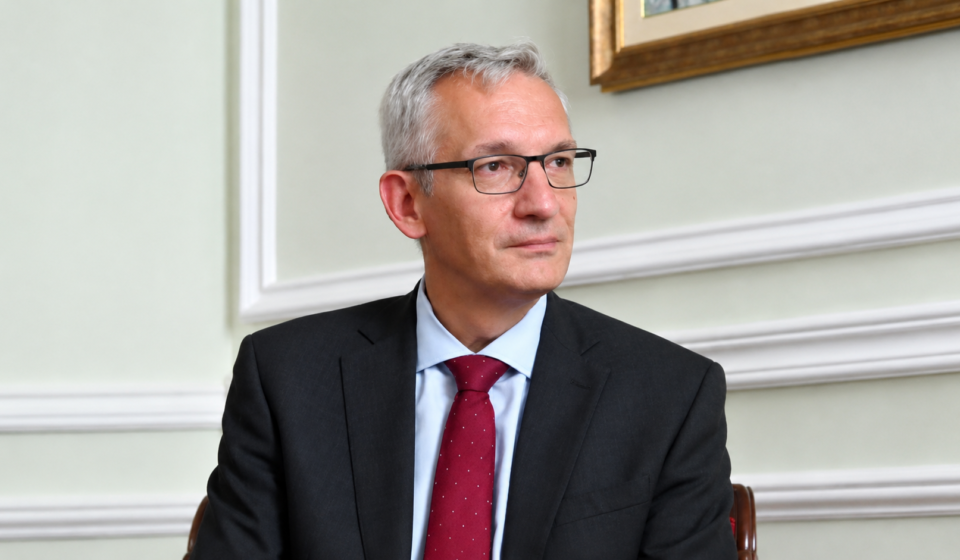
Martin Jäger, head of Germany’s foreign intelligence service, the Federal Intelligence Service (BND), told lawmakers on October 5 that Russia’s so-called “shadow war” had taken on a new and more dangerous dimension. He warned that Germany risked being drawn into a violent conflict with Moscow.
The warning comes as Berlin reviews its security arrangements and considers strengthening intelligence capabilities to counter threats that fall short of conventional military warfare but could still damage critical infrastructure and undermine public confidence.
German officials have repeatedly expressed concern about suspected Russian activities, particularly as Germany remains a major European supporter of Ukraine.
What Does ‘Shadow War’ Mean?
The term “shadow war” describes hostile activities conducted below the threshold of an openly declared military conflict. These operations can include intelligence gathering, cyber intrusions, sabotage, disinformation campaigns and covert attempts to disrupt essential services.
Such activities can be difficult to investigate because responsibility may be concealed, evidence can take time to establish and the incidents may not resemble conventional military attacks.
German intelligence officials say these methods can be used to weaken public trust, create uncertainty and discourage European governments from supporting Ukraine.
Jäger told parliament that Germany was facing an increasingly aggressive intelligence threat. He also warned that Russia could test NATO’s resolve through limited military or other hostile actions, including in the Baltic region.
However, the intelligence assessment did not indicate that a large-scale Russian attack on NATO territory was imminent.
Leipzig Airport Incident Adds to Concerns
One incident cited in Germany’s security debate was an attempted drone attack at Leipzig Airport. German authorities have linked the alleged operation to Russia, making it a prominent example in discussions about possible sabotage and covert activity.
Incidents involving drones, cyber systems and infrastructure have heightened concerns among European governments about how hostile operations could affect airports, transport networks, energy supplies and defence-related facilities.
Attribution remains important in such cases. An allegation that a foreign state was responsible must be distinguished from independently established evidence or a court finding.
Russia has denied intending to attack other countries. President Vladimir Putin has said Moscow has no intention of attacking anyone, while warning that Russia would respond if it came under aggression.
The competing positions underline the continuing tensions between Moscow and European governments over the war in Ukraine and wider European security.
Germany Considers Stronger Security Measures
Germany’s government is considering ways to improve its ability to detect and respond to covert threats. Interior Minister Alexander Dobrindt has been associated with plans to strengthen protections against drone incidents, sabotage, cyberattacks and espionage.
Debate has also focused on whether Germany’s intelligence services should receive additional legal powers. Any expansion would raise questions about oversight, civil liberties and the balance between national security and individual rights.
Germany’s intelligence agencies operate within a legal framework shaped in part by the country’s experience under Nazi rule and the East German surveillance state. Proposals to broaden their authority therefore carry significant political and constitutional implications.
Supporters of stronger powers argue that security agencies need modern tools to respond to changing threats. Critics are likely to focus on safeguards, accountability and the risk of excessive surveillance.
Wider Implications for Europe and NATO
Germany’s warning reflects broader European concerns about covert operations and the possibility that incidents below the threshold of open warfare could escalate into a wider confrontation.
As one of Ukraine’s key European supporters, Germany has become an important part of the strategic dispute between Russia and Western governments. Officials fear that attempts to undermine public support for Kyiv could accompany military pressure on Ukraine.
For NATO, the challenge is to deter hostile activity while avoiding unnecessary escalation. Governments must also distinguish between criminal incidents, cyber operations, intelligence activity and actions that could trigger a collective security response.
The warning does not mean that a direct war between Germany and Russia is inevitable. Instead, it highlights the concern among German intelligence officials that covert operations are becoming more aggressive and could increase the risk of miscalculation.
Berlin’s next steps are likely to focus on improving protection for critical infrastructure, strengthening counterintelligence and determining whether existing laws are sufficient to address emerging security threats.