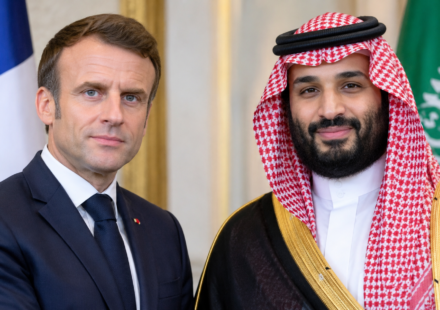
France Begins Implementing Agreement to Protect Saudi Arabia’s Oil Facilities

France has begun implementing operational elements of an agreement to help protect Saudi Arabia’s oil facilities, the French Foreign Ministry said on Thursday. The announcement follows President Emmanuel Macron’s earlier commitment to send military personnel and defensive equipment to help secure the kingdom’s strategic energy infrastructure.
Foreign Ministry spokesperson Pascal Confavreux confirmed that implementation had started but declined to specify which military assets had been sent or how they would be deployed. The announcement signals progress in French-Saudi security cooperation amid heightened risks to energy infrastructure and shipping across the Middle East.
Why Is Yanbu Important to Saudi Arabia?
The agreement centres on protecting the area around Yanbu, a major oil-export terminal on Saudi Arabia’s Red Sea coast. The port is strategically important because it provides an alternative route for shipping crude oil when exports through the Strait of Hormuz face disruption.
Saudi Arabia’s East-West pipeline transports crude from oil-producing areas in the eastern part of the country towards the Red Sea. This route allows the kingdom to move some oil exports without relying entirely on passage through the Strait of Hormuz, a narrow waterway that is vital to global energy supplies.
Any prolonged disruption around Yanbu or the pipeline could complicate Saudi export operations and add pressure to international oil markets.
Macron Had Promised Troops and Defensive Systems
Macron announced in September that France would provide military resources to help protect Yanbu. He specifically mentioned personnel, radar systems and defensive equipment.
The French president described the mission as defensive, saying its purpose was to protect critical infrastructure rather than draw France directly into the regional conflict. However, the precise composition of the deployment, its timeline and the operational arrangements have not been fully disclosed.
Earlier, France’s armed forces chief, General Fabien Mandon, said Paris and Riyadh were examining several options to protect the terminal. His comments indicated that operational planning was still under discussion at that stage. The Foreign Ministry’s latest announcement suggests that at least some elements of the plan have now moved forward.
Rising Threats to Energy Infrastructure
The move comes amid continuing security concerns involving attacks and threats against energy facilities and transport routes in the region. Yemen’s Houthi movement has threatened Saudi interests, while tensions surrounding the Strait of Hormuz have increased uncertainty for commercial shipping and energy exports.
Saudi Arabia’s reliance on multiple export routes makes the protection of Yanbu particularly important. If shipping through the Gulf becomes more difficult, the Red Sea route can provide an alternative, although it also faces security risks.
France has said it supports the protection of Saudi energy infrastructure in a strictly defensive capacity. It is also involved in European maritime security efforts in the region, including the European Union’s Aspides operation. Paris has not publicly detailed how the latest Saudi arrangement will coordinate with other missions.
What Could the Agreement Mean for Oil Markets?
The security arrangement highlights how regional conflict can affect energy supplies far beyond the Middle East. Saudi Arabia is one of the world’s major oil exporters, and uncertainty surrounding its export infrastructure can influence prices, shipping costs and market expectations.
The agreement does not guarantee that oil facilities or export routes will be free from attack. Its effectiveness will depend on the equipment deployed, coordination between French and Saudi forces, and the nature of any future threats.
For now, the public announcement confirms that France has started implementing operational elements of the arrangement. Important details—including the number of personnel assigned specifically to Yanbu, the exact defensive systems involved and the deployment schedule—remain undisclosed.

Saudi Arabia Says It Intercepted Missile Near Medina as Middle East Tensions Escalate
Saudi Arabia’s Saudi-led military coalition said on Thursday that it had intercepted and destroyed a cruise missile in the Medina region, as tensions across the Middle East continued to rise. The coalition also reported destroying a drone over the kingdom’s Eastern Province, an important centre for oil production.
The announcement came amid escalating hostilities involving Saudi Arabia and Yemen’s Houthi movement, with recent attacks and counterstrikes raising concerns about civilian safety, aviation and regional energy infrastructure.
Coalition spokesperson Major General Turki Al-Maliki announced the missile interception in a statement published on social media and carried by Saudi state media. However, the statement did not identify who launched the missile or specify its intended target. Officials also did not provide details of any casualties or damage from the incident.
The Houthis denied carrying out an attack on Saudi territory that day. Their military spokesperson, Yahya Saree, rejected the coalition’s account, according to reports by international media.
The competing statements mean that responsibility for the reported missile incident remains disputed.
Why Is the Medina Incident Significant?
Medina is one of Islam’s holiest cities and is home to the Prophet’s Mosque. Any reported military threat in the region is likely to raise concerns about the safety of residents, visitors and religious travellers.
The missile interception also comes against the background of a wider escalation in the conflict between Saudi Arabia and the Houthis, who control Yemen’s capital, Sanaa, and other parts of the country.
Saudi Arabia has led a military coalition supporting Yemen’s internationally recognised government against the Houthis since 2015. The conflict has caused extensive civilian suffering and contributed to a prolonged humanitarian crisis.
The latest developments suggest that the confrontation is placing renewed pressure on Saudi Arabia’s security arrangements. Nevertheless, the available information does not establish that the missile was aimed specifically at a religious site or that it reached the city itself.
Drone Intercepted in Saudi Arabia’s Eastern Province
The Saudi-led coalition also said it had intercepted and destroyed a drone over the Eastern Province on Thursday.
The region is strategically important because it contains major oil-producing areas and energy infrastructure. Any sustained threat to facilities in the area could have implications for regional security and international energy markets.
The latest report followed other missile and drone incidents involving Saudi territory. On Wednesday, the coalition said it had destroyed a ballistic missile launched towards Riyadh, while the Houthis announced attacks against Saudi targets.
Saudi Arabia has also carried out strikes against Houthi positions in Yemen in response to the escalating confrontation.
Details about the drone’s launch point, intended target and any resulting damage were not fully available in the initial reports.
Flight Disruptions Add to Regional Concerns
The security situation has affected air travel in Saudi Arabia. Reports published on Thursday said services at Riyadh’s international airport had been suspended following attacks, while flights at Jeddah airport faced cancellations and delays.
Airspace and airport disruptions can affect international passengers, airline operations and travellers moving through major Gulf aviation hubs.
The developments are also relevant for pilgrims travelling to Mecca and Medina. Airlines and passengers may need to monitor official travel advisories and updates from airport authorities as the security situation evolves.
The full scale and duration of the reported disruptions remained subject to further updates.
Israeli Strike Reported in Gaza
Elsewhere in the region, an Israeli strike in Gaza killed one man, according to hospital officials cited in Thursday’s reporting.
The Israeli military said it had struck a person it described as a terrorist but did not provide further details in the initial account.
The incident comes despite the ceasefire agreement reached between Israel and Hamas in October 2025. Palestinian health authorities have continued to report deaths from Israeli fire since the ceasefire began.
The circumstances of Thursday’s strike, including the identity of the person killed and the military’s specific allegations, were not fully established in the initial reports.
Syrian Court Sentences Five Over Coastal Violence
In another development, a Syrian court sentenced five people over their roles in violence in the country’s coastal region in March 2025.
According to reports, two people were sentenced to death and three others received prison terms. The cases were linked to violence that followed attacks by loyalists of former president Bashar al-Assad against members of the new government’s security forces.
The subsequent security operation escalated into widespread violence in areas with large Alawite communities. Hundreds of civilians, many of them Alawites, were reported killed during the unrest.
The latest verdicts reflect continuing efforts by Syria’s authorities to prosecute people accused of involvement in the violence. The cases also highlight the challenges facing the country as it seeks accountability and stability after years of conflict.
EU-Gulf Summit Postponed Amid Security Uncertainty
The European Union announced that a joint meeting with Gulf Cooperation Council members scheduled for October 24 in Riyadh had been postponed. A new date had not been announced in the initial reports.
The meeting was expected to bring together representatives of the EU’s 27 member states and Gulf countries, including Saudi Arabia, the United Arab Emirates, Qatar, Kuwait, Bahrain and Oman.
The EU did not provide a detailed public explanation for the postponement in its initial announcement. The unsettled security situation in the region has, however, raised questions about the timing of major diplomatic gatherings.
The postponement adds a diplomatic dimension to a period already marked by military escalation, travel disruption and concerns about energy infrastructure.
What Happens Next?
The immediate questions are whether Saudi authorities will provide further details about the intercepted missile, whether responsibility can be independently established and whether attacks involving missiles and drones will continue.
Developments in Saudi Arabia, Yemen, Gaza and Syria are also likely to influence regional diplomacy and international travel.
For now, the Medina missile incident remains a reported interception announced by the Saudi-led coalition, while the Houthis deny carrying out an attack that day. Further official statements and independently verified reporting will be important in clarifying what happened.
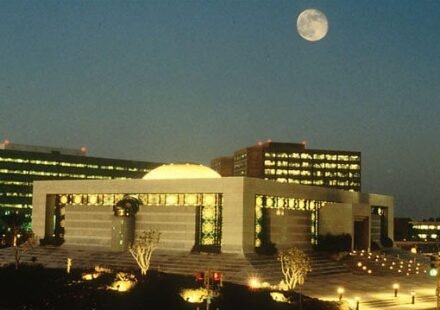
Saudi Aramco Administrative Building Hit in Attack, Limited Fire Reported in Dhahran
An administrative building belonging to Saudi Arabia’s state-owned oil giant Saudi Aramco was targeted in an attack in Dhahran on Tuesday, October 13, triggering a limited fire, according to the Saudi Energy Ministry.
The ministry said authorities responded to the incident and took the necessary measures. No injuries or fatalities were reported.
The incident comes amid escalating hostilities between Saudi Arabia and Yemen’s Iran-aligned Houthi movement, with missile and drone attacks raising concerns about security across the Gulf and the wider Middle East.
Aramco Building Reportedly Sustained Damage
A source at Aramco told Reuters that a ballistic missile struck the company’s headquarters complex in Dhahran, in Saudi Arabia’s Eastern Province. The source said an office tower was hit and its top three floors were damaged.
The Energy Ministry’s public statement described the resulting fire as limited and confirmed that there were no casualties. The full extent of the damage and the operational impact on the company had not been independently established in the initial reports.
Dhahran is an important centre for Aramco, whose operations span oil and gas production, pipelines, refineries and export infrastructure. The company plays a central role in Saudi Arabia’s energy sector.
Attack Amid Rising Saudi-Houthi Tensions
The incident was reported during a renewed escalation in the conflict involving Saudi Arabia and the Houthis in Yemen. The group has threatened Saudi targets amid the kingdom’s military operations against Houthi positions.
Saudi authorities have also reported intercepting missiles and drones targeting areas of the kingdom. In a separate incident in Riyadh, debris from intercepted missiles reportedly injured four people and damaged homes, according to Saudi Civil Defense statements cited by international news agencies.
The circumstances surrounding the attack on the Aramco complex, including the precise weapon involved and responsibility for the strike, should be distinguished from the Saudi government’s confirmation that the building was targeted. Reuters reported the ballistic-missile account from a company source.
Why the Incident Matters
Any attack affecting major energy infrastructure in Saudi Arabia can raise concerns about regional security and the stability of oil supply routes. Aramco oversees extensive energy operations, making the security of its facilities strategically important.
However, the reported fire was described as limited, and the initial official statement did not announce injuries, deaths or a confirmed interruption to Aramco’s wider production. Any assessment of the incident’s effect on oil output or global prices would require further verified information.
Authorities had responded to the incident by Wednesday, while further details about the damage and the investigation remained limited in the initial reporting.
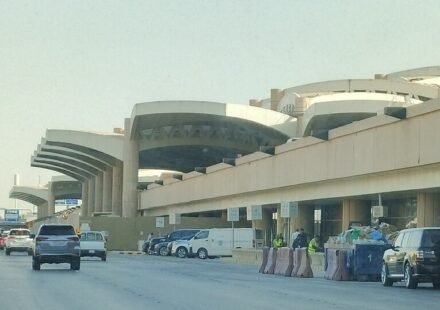
Missile Reportedly Hits Riyadh Airport Passenger Terminal; Several Injured as Flights Disrupted
A missile reportedly struck a passenger terminal at King Khalid International Airport in Riyadh, Saudi Arabia, on Saturday, October 10, injuring several people and triggering evacuations, according to reports by international news agencies.
Two regional officials told The Associated Press that the missile hit a passenger terminal and that many people were wounded. The officials spoke anonymously because they were not authorised to comment publicly. Reuters separately reported that eyewitnesses saw an explosion and injured people inside the airport.
Ambulances were seen heading towards the airport as passengers were evacuated from parts of the facility. The incident added to growing concerns about aviation safety in Saudi Arabia amid escalating regional hostilities.
At the time of the initial reports, Saudi authorities had not publicly confirmed all the details of the latest incident, including the full number of casualties.
Flights Diverted as Airport Operations Disrupted
The reported strike disrupted air traffic at Riyadh’s main international airport. Flight-tracking information showed incoming flights being diverted or cancelled, while airlines issued cancellation notices and urged passengers to check their flight status before travelling.
Kuwait Airways announced cancellations affecting services to and from Riyadh because of the airport closure and security situation. Other carriers have also adjusted services to Saudi Arabia amid the wider security concerns.
The disruption could affect international travellers connecting through Riyadh, as well as passengers travelling between Saudi Arabia and other countries in the region.
Travellers have been advised to follow airline announcements and official airport guidance rather than proceeding to the terminal without checking their flight status.
Latest Incident Follows Earlier Deadly Airport Attacks
The reported Saturday strike came just two days after attacks on Riyadh airport on October 8. Saudi Arabia’s General Authority of Civil Aviation said those earlier attacks killed three Saudi citizens, including Saudia airline captain Hamoud Ali Alkalthami, and injured several other people.
The earlier incidents also damaged airport property and a Saudia aircraft. Airport operations resumed after the attacks, but airlines continued to face disruption as security concerns intensified.
The latest reported incident has raised further questions about the safety of civilian aviation facilities as the conflict involving Saudi Arabia and Yemen’s Houthi movement escalates.
Rising Tensions Between Saudi Arabia and Yemen’s Houthis
The airport incidents have occurred amid an intensifying military confrontation involving Saudi Arabia and Yemen’s Iran-aligned Houthi movement.
The Houthis have claimed responsibility for earlier attacks on Saudi targets, according to media reports. However, responsibility for the latest reported terminal strike had not been independently established in the initial accounts.
Saudi Arabia has carried out military operations against Houthi targets in Yemen as fighting has intensified. The exchanges have increased the risk to civilian infrastructure, including airports and other facilities used by travellers and commercial operators.
The conflict also has wider regional implications because Saudi Arabia is a major aviation hub and an important energy producer. Continued attacks or airspace restrictions could affect passenger travel, cargo movements and business activity.
Travellers Urged to Check Official Advisories
The reported strike highlights the risks facing civilian aviation during periods of military escalation. Airport authorities and airlines may change schedules rapidly in response to security threats, even when the extent of damage or the circumstances of an incident remain unclear.
Passengers travelling to or through Riyadh should confirm their flight directly with their airline and monitor airport notices and government travel advisories. They should avoid relying on unverified social media videos or claims about the attack.
Further information about injuries, damage and the circumstances of the reported strike will depend on statements from Saudi authorities and subsequent verified reporting.
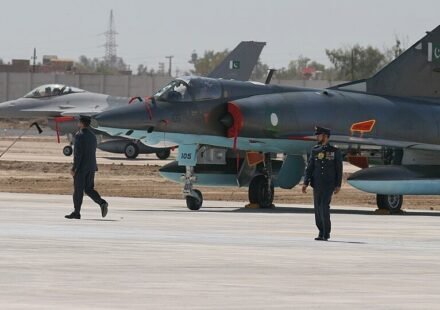
Pakistan Denies Report of Air Strikes on Houthis as Mecca Defence Pact Faces First Major Test
Pakistan has rejected a report claiming that its fighter jets have been used in air strikes against Yemen's Iran-aligned Houthi movement, calling the allegation “fake and fabricated” as the newly activated Makkah defence agreement comes under its first major regional test.
The controversy emerged after The New York Times reported that a senior Pakistani military official, speaking anonymously, said Pakistan Air Force fighter aircraft were taking part in strikes against Houthi targets in Yemen. A second Pakistani official was quoted as saying that Pakistan's role was expected to focus on countering Houthi missile and drone threats through air support rather than a ground operation.
Pakistan's Ministry of Information and Broadcasting subsequently rejected the claim. According to the ministry, the assertion that Pakistani aircraft were being used against the Houthis was “fake and fabricated.”
Report emerges after Makkah defence pact activation
The report comes days after Pakistan, Saudi Arabia and Türkiye activated the collective-defence mechanism of their Makkah Alliance for Defence.
At an emergency meeting in Riyadh on October 5, the three countries agreed to move toward the practical implementation of their collective-defence commitments and take measures to provide agreed military forces and capabilities for rapid deployment in Saudi Arabia, subject to their national laws.
The agreement was activated amid intensified Houthi attacks against Saudi Arabia. Riyadh has accused the group of targeting cities and civilian and economic infrastructure, while the alliance has condemned threats to Saudi territory and the holy cities of Makkah and Madinah.
Pakistan's role remains disputed
The conflicting accounts have created uncertainty over the precise military role Pakistan is playing in the escalating Yemen conflict.
Pakistan has acknowledged that its forces are present in Saudi Arabia, including personnel involved in multiple military capabilities and roles. Pakistani officials have previously described the Makkah agreement as defensive in nature.
Pakistan Defence Minister Khawaja Asif has also said Pakistani and Turkish forces were playing a supporting role, including reconnaissance, while Saudi forces were conducting the combat operations.
That distinction is significant because the official Makkah pact statement specifically refers to the deployment of military forces and capabilities in Saudi Arabia. It does not publicly announce Pakistani combat operations inside Yemen.
Saudi-led offensive intensifies in Yemen
The dispute comes as fighting between Saudi-backed Yemeni government forces and the Houthis has sharply intensified.
A Saudi-led coalition has launched an air campaign supporting Yemen's internationally recognised government along the Red Sea coast. Coalition officials have said around 100 fighter jets are supporting the campaign and that the operation aims to push back Houthi advances.
The fighting has also raised the strategic importance of the Bab el-Mandeb Strait, one of the world's major maritime chokepoints.
Saudi Arabia's renewed military campaign followed Houthi advances in western Yemen and increased missile and drone attacks against Saudi territory. The conflict has therefore become an increasingly important test for the newly established defence partnership between Saudi Arabia, Pakistan and Türkiye.
Türkiye takes a more clearly defensive position
Türkiye has separately indicated that its assistance to Saudi Arabia is primarily technical and defensive.
Reuters reported that Ankara is providing military equipment, intelligence and weapons systems, including air-defence and drone-related capabilities, while the country's Foreign Minister Hakan Fidan has described the Makkah agreement as a defensive arrangement.
This makes the reported Pakistani air role particularly significant if independently confirmed. However, Pakistan's public denial means the claim should currently be treated as disputed rather than established fact.
What happens next?
The conflicting reports are likely to increase attention on how far the Makkah defence agreement will extend.
The pact clearly commits the three countries to collective defence and has already moved into practical implementation. But the publicly available agreement does not establish that Pakistan has authorised offensive air operations inside Yemen.
For now, the most important development is the gap between the NYT's reported account and Islamabad's official denial. Until additional independent evidence or an official Pakistani military confirmation emerges, claims that Pakistani fighter jets have carried out strikes against the Houthis should be presented with that qualification.
Source attribution: Pakistan Ministry of Information and Broadcasting, Pakistan Ministry of Foreign Affairs, Reuters, Associated Press and other international reporting.
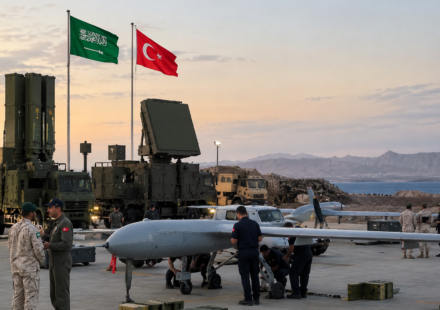
Turkey Prepares Technical Defence Support for Saudi Arabia Amid Houthi Attacks
Turkey is preparing to expand technical and defensive military support for Saudi Arabia as the kingdom faces continued missile and drone attacks by Yemen’s Houthi movement, according to officials familiar with Ankara’s plans.
The assistance is expected to focus on protecting Saudi territory and critical infrastructure rather than sending Turkish forces into Yemen for offensive operations. Turkish officials and regional sources have indicated that Ankara could provide technical teams, air-defence capabilities, electronic warfare support and other military assistance as Saudi Arabia seeks to strengthen its defences.
The move comes after Saudi Arabia, Turkey and Pakistan agreed to move toward implementing their collective-defence commitments under the Makkah Joint Defence Agreement. The pact, signed in August, treats an armed attack against one of the three countries as an attack against all three, although the precise operational obligations are still being worked out.
Focus on Saudi Arabia’s defence
Turkey’s immediate role is expected to centre on defensive capabilities. Turkish officials have previously said Ankara could meet Saudi Arabia’s military requirements in certain technical areas.
Analysts cited by The National said Turkey was more likely to provide advisory assistance, border protection, air and missile defence systems and intelligence cooperation than to launch a large-scale operation involving Turkish troops inside Yemen. Turkish-made systems could also be operated by Saudi personnel with training and technical assistance from Turkey.
Reports have also indicated that Turkey has maintained technical teams and defensive equipment in Saudi Arabia, including systems intended to protect important infrastructure. Additional equipment and personnel could be deployed if the Turkish parliament authorises a broader military role.
Houthi attacks increase pressure on Riyadh
Saudi Arabia has faced a series of missile and drone attacks attributed to the Houthis, increasing pressure on Riyadh to reinforce its air-defence network.
Earlier reports said Saudi air defences intercepted ballistic missiles aimed at areas including Taif and Yanbu, while Houthi forces claimed attacks on Saudi targets. The escalation has also raised concerns over the security of energy infrastructure and important Red Sea trade routes.
The conflict has therefore pushed Saudi Arabia to seek greater cooperation with regional partners. France and Britain have also been involved in defensive measures around Saudi territory, while Pakistan and Turkey have been discussing their responsibilities under the Makkah defence agreement.
Turkey seeks to avoid direct Yemen intervention
Ankara has repeatedly presented the Makkah agreement as a defensive arrangement rather than an offensive alliance. Turkish Foreign Minister Hakan Fidan has said assistance could range from intelligence and logistics to ammunition and, depending on the scale of a threat, military units.
That distinction is significant because direct Turkish military involvement against Houthi positions inside Yemen could substantially widen Ankara’s role in the conflict.
For now, the reported preparations point primarily toward strengthening Saudi Arabia’s ability to detect and intercept missile and drone threats and protect its territory.
A new test for the Makkah defence pact
The developing Saudi-Houthi confrontation is becoming an early test of the Makkah Joint Defence Agreement between Saudi Arabia, Turkey and Pakistan.
While the agreement creates a framework for collective security, its practical implementation depends on each country’s domestic legal procedures and political decisions. Turkey, in particular, requires parliamentary approval for certain overseas military deployments.
The immediate emphasis from Ankara appears to be on defensive assistance, technical cooperation and protecting Saudi territory, rather than committing to a direct offensive campaign in Yemen.
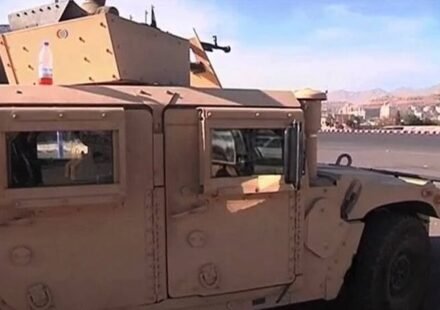
Yemen Launches Major Offensive to Retake Houthi-Held Territory
Yemen’s Saudi-backed, internationally recognised government has launched a major military campaign to retake territory controlled by the Iran-backed Houthi movement, marking a sharp escalation in the country’s long-running conflict.
President Rashad al-Alimi, chairman of Yemen’s Presidential Leadership Council, announced the operation in a televised address on Sunday. He said government forces had been ordered to restore state authority across the country.
Government Forces Target Houthi Positions
Yemeni military forces said they had carried out strikes against Houthi targets in Sanaa, Saada and Taiz.
The fighting has intensified around Taiz, where Houthi forces have attempted to strengthen their position along a key route linking the city with Aden. Government forces and their allies have also increased military activity along the Red Sea front.
The offensive follows recent Houthi advances along Yemen’s western coast, including gains around the strategically important Bab el-Mandeb area. The waterway is a major route for international shipping between the Red Sea and Gulf of Aden.
Conflict Enters a Dangerous Phase
The Houthis seized Sanaa in 2014 and have since maintained control over large parts of northern and western Yemen.
A fragile truce that had reduced major fighting collapsed earlier this year, while recent battlefield advances have renewed fears of a wider conflict.
Saudi Arabia has backed Yemen’s internationally recognised government and is expected to provide significant military support to the new campaign. The United States has also provided intelligence support to Saudi operations, according to Reuters.
The Houthis have responded with missile and drone attacks against Saudi targets, raising the risk of further regional escalation.
Red Sea Security at Risk
The latest offensive could have consequences beyond Yemen.
The Bab el-Mandeb Strait is one of the world’s important maritime chokepoints. Any prolonged fighting near the waterway could threaten commercial shipping and increase pressure on already disrupted regional trade.
The escalation also comes amid wider tensions involving Iran, Saudi Arabia and the United States, increasing the possibility that Yemen could become another major front in the regional conflict.
For millions of Yemenis, renewed fighting could further worsen an already severe humanitarian crisis.
Source attribution: Reuters, Associated Press and Al Jazeera.