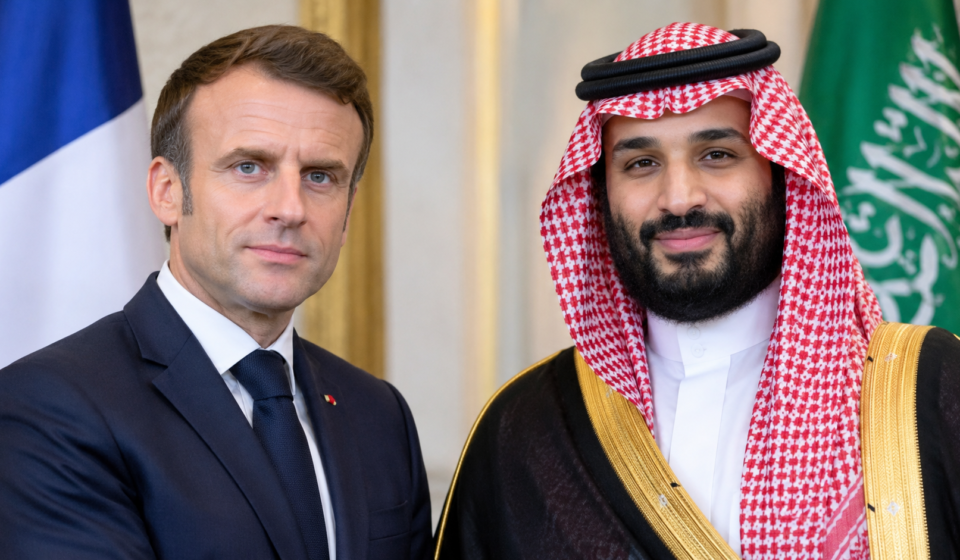

France has begun implementing operational elements of an agreement to help protect Saudi Arabia’s oil facilities, the French Foreign Ministry said on Thursday. The announcement follows President Emmanuel Macron’s earlier commitment to send military personnel and defensive equipment to help secure the kingdom’s strategic energy infrastructure.
Foreign Ministry spokesperson Pascal Confavreux confirmed that implementation had started but declined to specify which military assets had been sent or how they would be deployed. The announcement signals progress in French-Saudi security cooperation amid heightened risks to energy infrastructure and shipping across the Middle East.
Why Is Yanbu Important to Saudi Arabia?
The agreement centres on protecting the area around Yanbu, a major oil-export terminal on Saudi Arabia’s Red Sea coast. The port is strategically important because it provides an alternative route for shipping crude oil when exports through the Strait of Hormuz face disruption.
Saudi Arabia’s East-West pipeline transports crude from oil-producing areas in the eastern part of the country towards the Red Sea. This route allows the kingdom to move some oil exports without relying entirely on passage through the Strait of Hormuz, a narrow waterway that is vital to global energy supplies.
Any prolonged disruption around Yanbu or the pipeline could complicate Saudi export operations and add pressure to international oil markets.
Macron Had Promised Troops and Defensive Systems
Macron announced in September that France would provide military resources to help protect Yanbu. He specifically mentioned personnel, radar systems and defensive equipment.
The French president described the mission as defensive, saying its purpose was to protect critical infrastructure rather than draw France directly into the regional conflict. However, the precise composition of the deployment, its timeline and the operational arrangements have not been fully disclosed.
Earlier, France’s armed forces chief, General Fabien Mandon, said Paris and Riyadh were examining several options to protect the terminal. His comments indicated that operational planning was still under discussion at that stage. The Foreign Ministry’s latest announcement suggests that at least some elements of the plan have now moved forward.
Rising Threats to Energy Infrastructure
The move comes amid continuing security concerns involving attacks and threats against energy facilities and transport routes in the region. Yemen’s Houthi movement has threatened Saudi interests, while tensions surrounding the Strait of Hormuz have increased uncertainty for commercial shipping and energy exports.
Saudi Arabia’s reliance on multiple export routes makes the protection of Yanbu particularly important. If shipping through the Gulf becomes more difficult, the Red Sea route can provide an alternative, although it also faces security risks.
France has said it supports the protection of Saudi energy infrastructure in a strictly defensive capacity. It is also involved in European maritime security efforts in the region, including the European Union’s Aspides operation. Paris has not publicly detailed how the latest Saudi arrangement will coordinate with other missions.
What Could the Agreement Mean for Oil Markets?
The security arrangement highlights how regional conflict can affect energy supplies far beyond the Middle East. Saudi Arabia is one of the world’s major oil exporters, and uncertainty surrounding its export infrastructure can influence prices, shipping costs and market expectations.
The agreement does not guarantee that oil facilities or export routes will be free from attack. Its effectiveness will depend on the equipment deployed, coordination between French and Saudi forces, and the nature of any future threats.
For now, the public announcement confirms that France has started implementing operational elements of the arrangement. Important details—including the number of personnel assigned specifically to Yanbu, the exact defensive systems involved and the deployment schedule—remain undisclosed.