
India’s Aditya-L1 Uncovers How Solar Storms Change Shape on Their Journey Through Space

India's first space-based solar observatory, Aditya-L1, has helped scientists uncover an important detail about how powerful eruptions from the Sun develop as they move into space. New research based on the spacecraft's observations shows that these enormous bursts of solar material do not always spread evenly in every direction. Instead, they can expand asymmetrically, forming tilted and irregular structures.
The finding could improve scientific understanding of space weather and help researchers develop better methods to estimate how solar eruptions travel towards Earth. Such predictions matter because powerful solar events can disturb satellites, radio communication, navigation systems and other technologies that depend on conditions in space.
The research was conducted by scientists at the Indian Institute of Astrophysics (IIA), Bengaluru, an autonomous institution under the Department of Science and Technology. The team combined observations from Aditya-L1 with images from NASA's Solar Dynamics Observatory (SDO) and computer-based three-dimensional modelling.
The study was published in The Astrophysical Journal Letters and examined a coronal mass ejection (CME) observed on August 5, 2024.
A solar eruption that did not behave like a symmetrical bubble
A coronal mass ejection is a large release of plasma and magnetic field from the Sun's outer atmosphere, known as the corona. These eruptions can send vast quantities of electrically charged material into interplanetary space.
Scientists have often used simplified models in which a CME expands outward in a relatively symmetrical, bubble-like form. Such models help explain the general movement of solar material, but they may not capture every detail of an actual eruption.
The August 2024 event provided evidence of a more complicated process. Researchers found that the eruption expanded unevenly and had an inclined structure. A model assuming equal expansion in all directions could not reproduce the observations, while a model incorporating a tilted axis and unequal sideways expansion produced a much closer match.
This distinction is important because the shape of an eruption can influence how it moves through the surrounding solar wind.
How Aditya-L1 detected movement invisible in ordinary images
A major contribution came from the spacecraft's Visible Emission Line Coronagraph, known as VELC. The instrument observes the Sun's corona and studies light emitted by highly heated material.
The research team used a technique called Doppler spectroscopy to understand the movement of plasma. When material moves towards an observer, the wavelength of its emitted light shifts towards the blue end of the spectrum. When it moves away, the wavelength shifts towards the red end.
VELC recorded two distinct spectral features during the eruption. These indicated that different portions of the expanding solar material were moving both towards and away from the spacecraft's viewing direction.
Images from NASA's Solar Dynamics Observatory showed how the eruption spread across the plane of the sky. Aditya-L1's spectroscopic measurements added information about movement along the line of sight. By combining these different observations, scientists could reconstruct a more complete three-dimensional picture of the event.
The researchers then developed a geometric and kinematic model to test possible explanations. The model showed that a tilted CME structure with uneven lateral expansion could reproduce the unusual spectral pattern much more successfully than a symmetrical expansion model.
Why the discovery matters for Earth
The shape of a coronal mass ejection is not simply a visual detail. It can influence how the eruption interacts with the solar wind as it travels through the heliosphere, the region of space dominated by the Sun's influence.
Different parts of an irregular eruption may experience different levels of resistance, or drag, from the surrounding solar wind. This can change the speed at which the material travels and affect estimates of when it might reach Earth.
Accurate arrival-time predictions are important for space-weather monitoring. If a CME is directed towards Earth and carries a strong magnetic field, its interaction with Earth's magnetosphere can trigger a geomagnetic storm.
Depending on its strength and orientation, such a storm can affect satellite operations, high-frequency radio communication, navigation signals and electrical power infrastructure. It can also increase radiation exposure risks for astronauts and spacecraft operating in space.
However, the latest research does not establish that the August 2024 eruption caused a major impact on Earth. Nor does it indicate that a powerful solar storm is about to strike the planet. Its importance lies in improving the understanding of how solar eruptions develop close to the Sun and how their movement can be estimated.
Aditya-L1's role in solar research
Launched by the Indian Space Research Organisation in September 2023, Aditya-L1 is India's first dedicated space-based solar observatory. It operates around the Sun-Earth L1 point, approximately 1.5 million kilometres from Earth towards the Sun.
This location allows the spacecraft to observe the Sun continuously, giving researchers an uninterrupted view that is valuable for studying solar activity and changes in the corona.
The mission carries seven scientific payloads designed to investigate different aspects of the Sun. VELC is its primary payload and is specifically designed to study the solar corona, including the early stages of coronal mass ejections.
The latest study demonstrates the value of combining spectroscopy with conventional imaging. Images can show where an eruption is spreading across the sky, while measurements of wavelength shifts can reveal whether material is moving towards or away from the observer. Together, these techniques provide a richer picture of the event.
What scientists will investigate next
Researchers plan to apply the technique to additional coronal mass ejections. Studying a larger number of events will help establish how consistently VELC can reconstruct the three-dimensional structure, direction and speed of solar eruptions from a single viewing position.
This could eventually contribute to more reliable space-weather models. Better information about the early shape and movement of a CME may help scientists refine estimates of its journey through space and assess possible effects on Earth.
For India, the result also highlights the growing scientific contribution of Aditya-L1. The mission is not only observing solar activity but also providing measurements that can test existing scientific assumptions.
The central message from the research is that solar eruptions are more complex than simplified models may suggest. Understanding their changing shape near the Sun could become an important part of improving forecasts of space weather and protecting the technology that modern societies increasingly depend on.
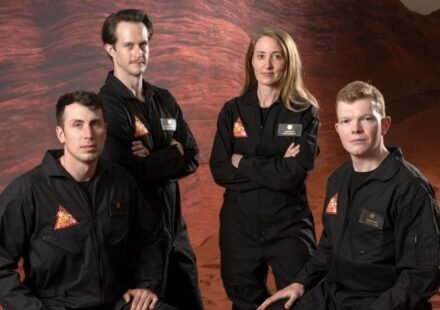
Beyond Earth’s Reach: Four Volunteers Complete NASA’s 378-Day Mars Survival Experiment
Four volunteers have emerged from a simulated Mars habitat after spending 378 days in isolation, completing a demanding experiment designed to help prepare humans for future missions to the Red Planet. The team lived and worked inside a specially designed facility at NASA’s Johnson Space Center in Houston, Texas, experiencing conditions intended to replicate several challenges of living on Mars.
The crew exited the habitat on October 31, 2026, bringing an end to the second mission under NASA’s Crew Health and Performance Exploration Analog (CHAPEA) programme. The experiment focused on how astronauts could maintain their physical health, mental well-being and ability to work together during an extended mission far from Earth.
Although the volunteers never travelled into space, their year inside the habitat offered researchers an opportunity to study some of the practical difficulties that a real Mars expedition could present.
Meet the Four Volunteers Who Completed the Mission
The four-member crew included:
• Ross Elder — Mission Commander
• Ellen Ellis — Medical Officer
• Matthew Montgomery — Science Officer
• James Spicer — Flight Engineer
The volunteers entered the habitat on October 19, 2025. Their assignment was to follow routines resembling those of astronauts living and working on Mars, including maintaining their living environment, conducting scientific activities and managing limited resources.
After more than a year in confinement, the crew members emerged on October 31, 2026, and were welcomed by representatives of the space agency. Their experiences will now be examined by researchers seeking practical lessons for future human spaceflight.
A Special Habitat Designed to Recreate Life on Mars
The experiment took place inside Mars Dune Alpha, a three-dimensional-printed habitat measuring approximately 1,700 square feet, or 158 square metres.
Located at the Johnson Space Center, the facility was designed to recreate selected aspects of a future Mars settlement. Its confined living space allowed researchers to observe how a small team managed daily responsibilities while operating under conditions that differed considerably from normal life on Earth.
The volunteers had to maintain the habitat, organise their work and make decisions while dealing with restricted resources. Their activities also included simulated surface operations, physical exercise and growing crops.
These tasks were important because astronauts on a real Mars mission would not be able to rely on the same immediate support available to people living on Earth. A damaged piece of equipment, a shortage of supplies or an unexpected medical problem could require the crew to find a solution using the resources already available to them.
The simulation provided an environment in which researchers could investigate how people respond to such demands before astronauts face them in space.
Growing Food and Managing Limited Resources
One of the experiment's important elements was food production.
The crew grew crops under simulated Martian conditions, exploring how astronauts might supplement stored food during a long-duration mission. Growing food on Mars would be considerably more complicated than cultivating plants in an ordinary garden because future explorers would have to work within carefully controlled environmental conditions and limited supplies.
A real mission would also require astronauts to manage water, energy, equipment and other essential resources over an extended period.
The simulation did not mean the volunteers were growing food on the actual planet. Instead, researchers used the ground-based habitat to investigate routines and operational challenges that could inform future space exploration.
The information gathered could eventually help scientists determine how much food and equipment a crew might need, which tasks could be performed independently and where additional technology would be necessary.
Such knowledge could become increasingly important as space agencies consider missions lasting months or years rather than the comparatively shorter journeys that have defined much of human spaceflight.
Communication Delays Test Crew Independence
Communication was another major challenge built into the experiment.
Mars is millions of kilometres from Earth, and the distance between the two planets changes as they travel around the Sun. Depending on their relative positions, radio signals can take several minutes to travel in one direction.
NASA's simulation incorporated communication delays of up to 22 minutes, requiring the crew to adapt to a system in which questions and responses could not always be exchanged immediately.
This is a significant difference from operations aboard the International Space Station, where astronauts can generally maintain much more immediate communication with mission control.
On a future Mars expedition, a crew could have to resolve technical difficulties, assess risks and make important decisions before receiving guidance from Earth.
The volunteers therefore had to work with greater independence, follow planned procedures and take responsibility for managing their activities.
The experiment's findings could help mission planners determine how future astronauts should be trained to operate safely when immediate assistance from Earth is unavailable.
The Psychological Challenge of Spending a Year in Isolation
Living in a confined environment for 378 days presents challenges beyond equipment, food and scientific work.
Astronauts on a Mars mission would spend an extended period away from family, friends and familiar surroundings. They would also have limited opportunities for privacy and recreation, while sharing their living and working environment with the same small group of people.
Over time, these conditions could affect sleep, concentration, motivation and relationships among crew members.
NASA's CHAPEA programme is intended to help researchers understand how people adapt to prolonged isolation and confinement. Information about crew health, daily performance and interactions can help scientists develop strategies to support astronauts during future missions.
The volunteers will undergo approximately two weeks of post-mission evaluations and discussions with researchers. These assessments will allow the team to reflect on its experiences and help scientists interpret the information collected during the experiment.
The results may also help researchers identify which routines, recreational activities, communication arrangements and team-management approaches are most useful in a restricted environment.
However, a ground-based simulation cannot reproduce every aspect of an actual Mars mission. The effects of microgravity, radiation and other hazards of deep space require separate investigation.
Why This Experiment Matters for Future Mars Missions
Sending humans to Mars would involve considerably more than building a spacecraft capable of reaching the planet.
Mission planners must also determine how astronauts will live, maintain equipment, manage emergencies, produce or conserve resources and protect their health over long periods.
Unlike astronauts travelling to the International Space Station, a crew on Mars would face substantial communication delays and could not depend on rapid resupply from Earth. These challenges make preparation on the ground particularly valuable.
The latest CHAPEA experiment provides another opportunity to examine how people behave under some of the pressures expected during a long-duration expedition.
Its findings could influence future training programmes, habitat design, food systems, medical planning and procedures for responding to equipment failures.
The research could also support preparations for extended lunar missions. NASA's Artemis programme aims to return humans to the Moon and establish experience relevant to longer-term exploration beyond Earth. Lessons from lunar operations could, in turn, contribute to preparations for eventual human missions to Mars.
Could Humans Reach Mars in the 2030s?
Human exploration of Mars remains a major long-term ambition for NASA and other space programmes. The agency has discussed the possibility of sending astronauts to Mars as early as the 2030s, although such a mission would depend on technological progress, funding, safety assessments and broader programme decisions.
The successful completion of a simulation does not establish a launch date or demonstrate that every challenge of a real mission has been solved.
Instead, it contributes to a wider body of research intended to reduce risks before humans attempt such a journey.
The latest crew's experience will be particularly useful when combined with data from previous simulations, spacecraft testing, robotic Mars missions and other studies of human health in space.
What Happens Next?
Following their exit, the four volunteers will participate in medical and performance evaluations, along with debriefings designed to capture their experiences.
Researchers will examine the information collected during the 378-day experiment to understand how the team managed its responsibilities, adapted to isolation and responded to simulated mission conditions.
The key takeaway is that preparing for Mars begins on Earth. Before astronauts can safely live millions of kilometres from home, scientists must understand not only how spacecraft travel through space but also how humans can remain healthy, capable and cooperative in an unfamiliar and isolated environment.
The experiment brings NASA another source of information for that effort, even though a real human journey to Mars remains a far more complex undertaking.
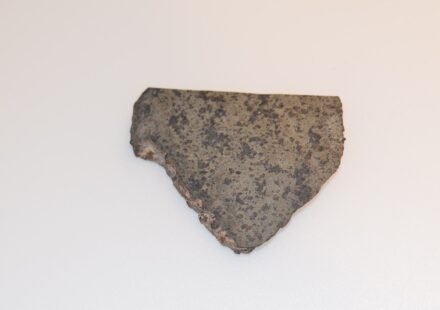
A Pink Rock From the Sahara Is Rewriting What Scientists Know About Ancient Mars
A small, rose-coloured rock discovered in the Sahara Desert has given scientists an extraordinary opportunity to investigate the early history of Mars. Named Teghaza 001, the nearly 800-gram meteorite has been dated to more than 4.1 billion years ago, placing it among the oldest known Martian rocks ever recovered on Earth.
The discovery is important not simply because of the meteorite’s age, but also because its minerals preserve evidence of ancient volcanic activity and interactions between rock and water. These clues are helping researchers reconstruct what Mars was like during a period when its surface and interior were very different from the cold, largely dry environment seen today.
The findings were detailed in a scientific study published in the journal Science on October 29, 2026. Researchers say the meteorite offers a rare opportunity to examine material linked to the early formation of the Red Planet’s crust.
A Desert Discovery With a Planetary Connection
Teghaza 001 was discovered in 2022 in the Sahara region of Mali, near the salt plain after which it was named. At the time, its extraordinary geological significance was not immediately apparent.
Scientists eventually identified the rock as Martian by examining its chemical composition and oxygen isotopes. These measurements act like geological fingerprints, helping researchers distinguish material originating on Mars from rocks formed on Earth or other celestial bodies.
Meteorites from Mars reach Earth after powerful impacts eject fragments of the planet’s surface into space. Some of these fragments travel through space before entering Earth's atmosphere and landing on its surface.
Although hundreds of Martian meteorites have been identified, very few preserve such an ancient record of the planet's formation. Teghaza 001 is particularly valuable because its mineral composition provides information about a part of Martian history that remains poorly represented in the samples available to scientists.
How Researchers Determined the Rock’s Age
Determining the age of a meteorite requires more than examining its appearance. Scientists study the minerals inside it and measure radioactive isotopes that change at predictable rates over time.
In Teghaza 001, researchers examined zircon crystals and used uranium-lead dating to establish its ancient history. They also applied a rubidium-strontium dating technique to individual mineral grains, helping confirm the age estimate while preserving valuable material for future research.
The results indicated that the rock had been altered by water on Mars around 4.1 billion years ago. The material itself may have formed even earlier.
That distinction matters. The date associated with water-related alteration tells researchers when important geological changes occurred, while the rock's original formation may extend further back into the planet's early development.
The study therefore provides more than a single age measurement. It offers a way to investigate the sequence of events that shaped Mars when its crust and interior were still evolving.
Evidence of Volcanoes and Ancient Water
One of the most interesting features of Teghaza 001 is its mixture of igneous minerals. Igneous rocks form when molten material cools and solidifies, making them valuable records of volcanic and internal geological processes.
The meteorite's mineral structure suggests that its original material formed from cooling magma before later changes affected it. Researchers found evidence that water interacted with the rock, providing clues about the movement of fluids through early Martian crust.
Today, Mars is known for its dusty plains, ancient river channels, polar ice and signs of water-related geological activity. However, scientists are still working to understand how much liquid water existed on the planet in its earliest periods and how long favourable conditions may have lasted.
Teghaza 001 adds another piece to this puzzle. Its composition supports the idea that early Mars experienced a more dynamic geological and water cycle than the planet's present-day appearance might suggest.
The meteorite is also chemically distinct from many other Martian samples. Its mineral characteristics resemble materials observed in parts of Mars' ancient southern highlands, although scientists have not established its exact original location. Researchers have identified 13 possible locations whose characteristics match the rock's composition.
Could Ancient Mars Have Supported Life?
The presence of evidence for water naturally raises questions about whether Mars might once have supported life.
On Earth, liquid water is essential for all known forms of life. Scientists therefore consider ancient Martian environments that contained water among the most promising places to investigate when assessing whether the planet may once have offered suitable conditions for biological activity.
Teghaza 001 is relevant to this question because it records interactions between water and rock during Mars' distant past. Studying such interactions can help researchers understand the chemical environments that existed beneath or near the planet's ancient surface.
However, the discovery does not demonstrate that life ever existed on Mars. Evidence of water is not the same as evidence of living organisms, and researchers have not announced a biological discovery from this meteorite.
Instead, the rock offers information about the environmental conditions that may have existed during an important period in Martian history. Further research will be required to determine how those conditions developed and whether they could have supported biological processes.
Why Scientists Need More Martian Samples
Meteorites provide a rare opportunity to study material from another planet without sending a spacecraft to collect it directly. Nevertheless, the available specimens represent only a small and incomplete record of Mars.
Scientists cannot always determine the exact location from which a meteorite originated. Once a rock has been ejected into space and eventually reaches Earth, information about its original geological setting can be difficult to recover.
That is why samples collected directly from carefully selected locations on Mars would be so valuable. They could help researchers connect laboratory measurements with the geological surroundings in which the rocks formed.
Teghaza 001 may also help improve techniques used to date ancient minerals. More precise methods could allow scientists to investigate other meteorites and, potentially, samples returned from planets, moons and asteroids.
The main mass of Teghaza 001 is held by the Maine Mineral & Gem Museum, while additional material is available to research teams for continued study. Preserving such specimens is important because new analytical methods may reveal information that current techniques cannot yet extract.
A New Piece in the History of the Red Planet
Analysis: Teghaza 001 demonstrates how a relatively small object found in a desert can transform scientific understanding of a distant world. Its age and mineral composition provide researchers with a rare record of early Martian geology, while its evidence of water-related changes adds to the growing picture of a planet that once experienced conditions unlike those seen today.
The findings may help scientists decide which geological regions deserve greater attention during future Mars missions. They could also improve understanding of how planetary crusts form and how water changes rocks over billions of years.
For now, the meteorite's greatest contribution is the information it preserves about Mars' distant past. It does not solve the mystery of whether life ever existed there, but it provides researchers with another valuable way to investigate the environments that might have made life possible.
As scientists continue studying Teghaza 001, this ancient fragment may reveal further details about the geological processes that shaped Mars long before the planet became the dry world explored by modern spacecraft.