Beijing Targets Two Officials in Dispute Over Taiwan

China has imposed sanctions on senior officials from Paraguay and Belize over their countries’ diplomatic relations with Taiwan, escalating Beijing’s campaign against governments that maintain formal ties with the self-governed island.
According to Reuters, the measures announced on Monday target Paraguay’s communications minister and Belize’s foreign minister. China’s Foreign Ministry accused politicians in both countries of taking what it described as anti-China positions by supporting continued diplomatic relations with Taiwan.
The sanctions include restrictions on entering mainland China’s special administrative regions of Hong Kong and Macau, along with prohibitions on Chinese organisations and individuals conducting transactions, cooperation or other activities with the officials.
Beijing said the measures were linked to national sovereignty and security concerns.
Why Taiwan Is at the Centre of the Dispute
China considers Taiwan part of its territory and insists that other countries should not maintain formal diplomatic relations with Taipei. Taiwan’s government rejects Beijing’s claim and operates its own democratically elected administration, military and institutions.
The dispute has become a central issue in China’s foreign policy. Beijing has sought to persuade countries that recognise Taiwan to switch diplomatic relations to the People’s Republic of China.
Taiwan, meanwhile, continues to strengthen ties with its remaining diplomatic partners through agreements on trade, education, technology and development assistance.
The latest sanctions illustrate how the Taiwan dispute extends beyond East Asia and affects diplomatic relations in Latin America and the Caribbean.
Paraguay Maintains Its Relationship With Taiwan
Paraguay is Taiwan’s only remaining formal diplomatic ally in South America. The two sides have maintained relations despite repeated pressure from Beijing for Asunción to recognise China instead.
Paraguayan President Santiago Peña has publicly reaffirmed his country’s relationship with Taiwan, describing the partnership as important to shared values and cooperation.
The relationship includes diplomatic engagement and collaboration in areas such as technology, investment and development. A decision to change recognition would represent a major shift in Paraguay’s foreign policy.
China’s latest action adds pressure to that debate, although the sanctions do not themselves change Paraguay’s diplomatic recognition of Taiwan.
Belize and Taiwan Deepen Cooperation
Belize is among the small group of countries that maintain formal diplomatic ties with Taiwan.
In late September, Taiwan and Belize signed agreements intended to strengthen cooperation, including initiatives involving diplomatic training and educational development. The agreements followed a visit by Taiwan’s foreign minister to the Central American country.
Beijing’s decision to sanction Belize’s foreign minister comes against this backdrop of closer bilateral engagement.
The measures could complicate interactions involving Chinese organisations and individuals, but their practical effects will depend on how the restrictions are implemented.
What the Sanctions Mean
China’s actions send a diplomatic warning to governments and officials who support continued recognition of Taiwan. The measures also underline the limits of Beijing’s willingness to accept formal ties between Taiwan and other countries.
However, sanctions against individual officials do not automatically sever diplomatic relations between the countries involved. Paraguay and Belize remain separate sovereign states, and their governments determine their own foreign-policy positions.
The developments also highlight Taiwan’s challenge in maintaining international recognition. It has only a small number of formal diplomatic allies, as many countries recognise Beijing while maintaining unofficial economic or cultural ties with Taipei.
Wider Implications for Global Diplomacy
The dispute is likely to remain an important issue in relations between China and countries that support Taiwan’s international participation.
For Paraguay and Belize, the immediate question is how their governments will respond to the sanctions while preserving existing diplomatic partnerships.
For Beijing and Taipei, the episode reflects a broader contest over Taiwan’s international status and the principle of diplomatic recognition.
China’s latest move increases pressure on two of Taiwan’s partners, but it remains to be seen whether it will influence their diplomatic policies.
Taiwan President Reaffirms Freedom and Self-Defence in National Day Address
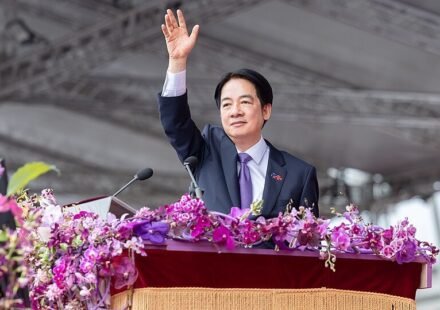
Taiwanese President Lai Ching-te has reaffirmed the island’s commitment to peace while declaring that it will not give up its freedom or accept subordination to China. His remarks came during Taiwan’s National Day celebrations on Saturday, as tensions across the Taiwan Strait continue to shape regional security.
Speaking outside the Presidential Office in Taipei, Lai said Taiwan wanted peaceful relations and dialogue but insisted that the rights and future of its people must be respected.
“Taiwan cherishes peace, but we will not give up our freedom. We are open to exchanges, but will not accept subordination,” Lai said, according to Reuters.
His address placed particular emphasis on the relationship between national defence and diplomacy, with the president arguing that stronger self-defence could help prevent conflict rather than provoke it.
Lai Says Defence Spending Is Intended to Deter War
Taiwan has been increasing investment in its military capabilities and modernising its armed forces amid pressure from China, which claims the island as part of its territory.
Lai said the purpose of strengthening Taiwan’s defences was to deter a potential conflict. He argued that improving military preparedness would also help create conditions for dialogue conducted on the basis of equality and dignity.
“Our aim by increasing investment in national defence is not to provoke; rather, it is to deter war,” Lai said.
The president added that strengthening self-defence was not a rejection of negotiations. Instead, he presented defence preparedness as a way to support meaningful dialogue and protect Taiwan’s democratic way of life.
Taiwan faces a significant military imbalance with China, which has a much larger armed force and continues to expand its military capabilities. Taipei’s defence modernisation efforts are therefore closely linked to concerns about the island’s security and the risk of escalation in the region.
China-Taiwan Tensions Remain a Regional Concern
China regards Taiwan as part of its territory and has not ruled out the use of force to bring the island under its control. Taiwan, meanwhile, is governed democratically and maintains its own political institutions, military and administration.
The two sides have been governed separately since 1949, following the Chinese Civil War. Their competing positions on Taiwan’s status remain a central source of tension in East Asia.
Beijing has criticised Lai in the past, describing him as a separatist, and has rejected his repeated offers for talks. China’s Taiwan Affairs Office had not immediately responded to the latest National Day speech, Reuters reported.
Lai’s comments underline Taipei’s position that peace should be pursued through dialogue, but not through pressure that would require Taiwan to surrender its political autonomy.
President Says Peace Cannot Depend on Wishes Alone
During his address, Lai argued that peaceful intentions alone could not guarantee stability. He said the international community faced a broader question over whether military power should be allowed to override rules or deprive people of the ability to determine their future.
His remarks also highlighted the importance of international support for stability in the Indo-Pacific region, where tensions involving China, Taiwan and the United States have become a major security concern.
The United States has long maintained unofficial relations with Taiwan and provides support for the island’s self-defence. Any escalation across the Taiwan Strait could have wider implications for regional security, trade and global technology supply chains.
Taiwan is an important part of the global semiconductor industry, making stability around the island significant for businesses and economies well beyond East Asia.
Taiwan Keeps the Door Open to Dialogue
Despite his firm language on freedom and defence, Lai reiterated that Taiwan remained open to exchanges and peaceful engagement.
His message sought to draw a distinction between dialogue conducted with mutual respect and negotiations pursued under military or political pressure. The president said Taiwan’s efforts to strengthen its defences were intended to make peaceful engagement possible on more equal terms.
Whether this approach can reduce tensions will depend on developments in cross-strait relations and the willingness of both sides to engage. China’s position on Taiwan remains fundamentally different from that of Taipei’s current leadership.
For now, Lai’s National Day address signals that Taiwan intends to continue strengthening its security while publicly maintaining its commitment to peace and dialogue.
North Korea Warns US Over Taiwan Support, Reaffirms Backing for Russia
North Korea has criticised the United States over its military support and arms sales to Taiwan, accusing Washington of increasing tensions in the Taiwan Strait. At the same time, North Korean leader Kim Jong Un has reaffirmed Pyongyang’s continued support for Russia and its strategic partnership with Moscow.
The latest statements were reported by North Korea’s state-run Korean Central News Agency (KCNA) on Wednesday. They come as tensions remain high over Taiwan’s security and as North Korea and Russia continue to deepen their military and diplomatic ties.
Pyongyang Criticises US Military Support for Taiwan
In a KCNA commentary, North Korean international affairs analyst Kim Myong Chol accused the United States of undermining regional stability through its support for Taiwan.
The commentary focused on the recent arrival of US-made fighter aircraft in Taiwan. The first two of 66 F-16V Block 70 fighter jets ordered by Taiwan from the United States in 2019 arrived on the island last week.
North Korea argued that Washington should consider the consequences of its military involvement in Taiwan. The commentary warned that US support could contribute to a confrontation involving China.
Pyongyang also reiterated its support for Beijing’s “One China” principle. North Korea’s position is closely aligned with China’s claim over Taiwan, which Beijing regards as part of its territory.
Taiwan, which has its own democratically elected government, rejects Beijing’s sovereignty claims and maintains that its future should be determined by its people.
Kim Jong Un Reaffirms Support for Russia
Separately, Kim Jong Un pledged continued support for Russia in a birthday message to Russian President Vladimir Putin, according to KCNA.
Kim said North Korea would continue expanding cooperation with Moscow under the two countries’ comprehensive strategic partnership. He also expressed confidence that Russia’s efforts to defend what it describes as its sovereignty and security interests would ultimately succeed.
The message did not explicitly refer to Russia’s war in Ukraine. However, North Korea has become an important military partner for Moscow since the two countries significantly strengthened their relationship.
North Korea and Russia signed a mutual defence pact in June 2024, further formalising their security relationship.
North Korea’s Growing Role in Russia’s War
North Korea has been accused by Ukraine and Western countries of providing military assistance to Russia during the war in Ukraine. Ukrainian and South Korean estimates cited by Reuters indicate that North Korea has sent between 14,000 and 15,000 troops to support Russia since 2024.
Pyongyang has also been reported to have supplied Russia with artillery ammunition and ballistic missiles. North Korea and Russia have both strengthened their cooperation despite international criticism and sanctions.
Ukraine has separately alleged that Russia may have shared military technology with North Korea in return for Pyongyang’s support. Kyiv has said it believes Russia could be providing technological assistance related to drones and other weapons systems.
Taiwan and Russia Become Part of Wider Security Tensions
The two statements from Pyongyang highlight North Korea’s increasingly close alignment with both China and Russia.
China remains North Korea’s most important traditional political and economic partner, while Russia has emerged as a major security partner for Pyongyang in recent years. North Korea’s support for China’s position on Taiwan therefore adds another dimension to the broader rivalry between Washington and Beijing.
The United States, meanwhile, maintains that Taiwan should have the means to defend itself and has continued providing weapons to the island despite not having formal diplomatic relations with Taipei.
The arrival of the new F-16V aircraft is part of Taiwan’s efforts to strengthen its defence capabilities amid growing military pressure from China.
For North Korea, opposing US military involvement in Taiwan also fits into its broader criticism of Washington’s security alliances and military policies in East Asia.
A More Closely Aligned Pyongyang
The latest comments suggest that North Korea is continuing to strengthen its relationships with Moscow and Beijing while opposing US security policies in the region.
The developments come as tensions remain elevated across several parts of East Asia, including the Taiwan Strait and the Korean Peninsula. North Korea’s growing military cooperation with Russia has also become a major concern for the United States, South Korea, Japan and European governments.
While Pyongyang’s latest statements do not announce any new military action, they underline its continued opposition to US involvement in Taiwan and its commitment to expanding cooperation with Russia.