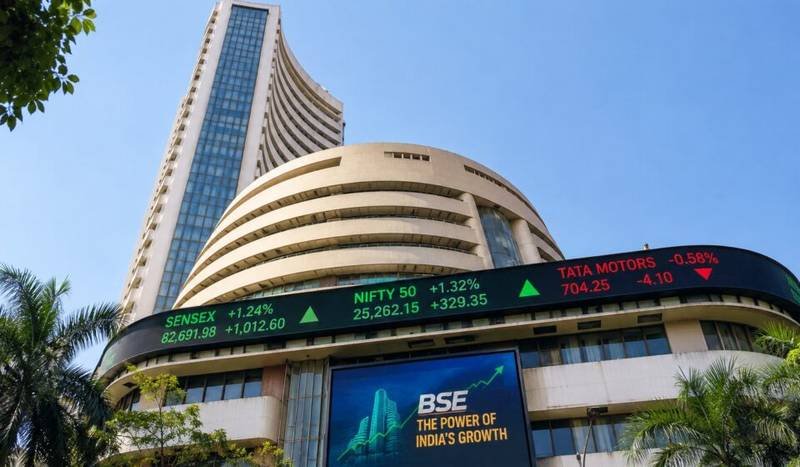

Indian equity markets are heading into Thursday’s session with investors weighing global monetary policy, elevated crude oil prices, currency movements and the latest corporate earnings. GIFT Nifty is signalling a potentially positive opening, but persistent concerns about inflation and international financial conditions could limit the market’s upside.
The focus follows a cautious session on Wednesday, when the BSE Sensex fell 352.64 points, or 0.48%, to close at 73,246.03. The NSE Nifty 50 declined 50.90 points, or 0.22%, settling at 22,698.85.
Investors are now assessing the implications of the US Federal Reserve’s latest interest-rate decision alongside oil prices that have remained above $110 a barrel. The rupee’s performance, foreign investment flows and company earnings could also influence trading activity.
Here are five important factors likely to shape the Sensex and Nifty 50 on October 29.
1. GIFT Nifty Signals the Opening Direction
GIFT Nifty is one of the key indicators traders monitor before the Indian equity market opens. Its movement can provide an early indication of investor sentiment, although it does not guarantee how the domestic market will perform throughout the day.
The latest pre-market reports indicated that GIFT Nifty was pointing towards a potentially positive start for Indian equities on Thursday.
However, the opening direction may change as investors respond to developments in global markets, institutional trading and domestic corporate announcements. A positive opening alone would not necessarily indicate a sustained recovery.
Traders will watch whether buying interest continues after the opening bell and whether the Nifty can regain levels lost during recent sessions.
What to watch: GIFT Nifty’s movement before the opening, early market breadth and whether buying extends beyond a handful of large-cap stocks.
2. US Federal Reserve Decision and Interest-Rate Outlook
The Federal Reserve kept its benchmark interest-rate range unchanged at 3.75% to 4% following its October policy meeting. The decision was broadly in line with market expectations, making the central bank’s comments about inflation and future policy particularly important.
For Indian markets, US monetary policy matters because it influences global borrowing costs, bond yields, the dollar and international investment flows.
If investors believe US interest rates will remain elevated for longer, emerging markets such as India may face pressure as global investors reassess the relative attractiveness of different assets. Higher US yields can also increase the cost of financing for businesses and governments.
Conversely, expectations of a less restrictive policy outlook could improve sentiment towards emerging-market equities. However, the effect will depend on how the Fed’s guidance compares with what investors had already anticipated.
The decision does not automatically translate into a positive or negative session for Indian stocks. Domestic earnings, crude oil prices and currency movements remain important alongside global monetary policy.
What to watch: The Fed’s inflation assessment, US Treasury yields, the dollar’s movement and changes in expectations for future rate decisions.
3. Crude Oil Prices Remain a Major Risk
Elevated crude oil prices are another significant concern for Indian markets. Brent crude has remained above $110 a barrel amid geopolitical uncertainty and concerns about potential disruptions to energy supplies.
India imports a substantial share of its crude oil requirements, making international oil prices an important factor for inflation, the current-account balance and the rupee.
Sustained increases in crude prices can raise fuel and transportation costs, placing pressure on household budgets and businesses that depend on energy-intensive operations. Higher import costs can also complicate the inflation outlook and reduce the scope for monetary easing.
The impact varies across sectors. Airlines, logistics companies, paints manufacturers and other businesses with significant energy-related costs may face margin pressure if they cannot pass higher expenses on to customers. Oil producers and some upstream energy companies can respond differently to changes in crude prices.
A sustained decline in oil prices could ease some of these concerns, although the benefits would depend on how quickly lower international prices feed through to domestic costs.
What to watch: Brent crude prices, developments affecting Middle Eastern energy supplies and any signs of sustained relief in international oil markets.
4. Rupee Performance and Foreign Investor Flows
The rupee’s movement against the US dollar is another important indicator for domestic equities.
Recent market reporting has highlighted pressure on the currency from elevated oil prices, global risk aversion and uncertainty about US monetary policy. A stronger dollar can make imported goods more expensive for Indian businesses and increase the rupee cost of servicing dollar-denominated obligations.
Currency movements can also influence foreign portfolio investors. When global financial conditions become less favourable for emerging markets, foreign investors may reduce exposure to riskier assets or move funds towards markets offering comparatively attractive returns.
Foreign institutional investor activity can therefore affect the demand for large-cap shares and influence the direction of benchmark indices. Domestic institutional investors may provide support, but their activity can vary from session to session.
The currency’s impact is not uniform across the market. Export-oriented companies that earn revenue in dollars may benefit from a weaker rupee, while import-dependent businesses can face higher costs.
What to watch: The USD/INR exchange rate, daily foreign institutional investor flows, domestic institutional buying and movements in US bond yields.
5. Corporate Earnings and Domestic Market Demand
Quarterly earnings remain a key driver of individual stocks and broader market sentiment.
Investors are examining revenue growth, operating margins, management commentary and future business expectations as companies report their financial results. Strong earnings can support share prices even when global conditions are uncertain, while disappointing results may trigger selling.
The market’s reaction will depend not only on whether a company meets its profit expectations but also on its outlook. Investors may be particularly sensitive to signs of rising input costs, weaker consumer demand or slower business investment.
Developments surrounding major corporate listings and investor demand for new shares may also influence sentiment in the broader equity market. However, the performance of an individual listing should not be treated as a reliable prediction of the entire market’s direction.
For benchmark indices, the performance of large constituents can be especially important because their movements carry substantial weight in index calculations.
What to watch: Quarterly results, earnings guidance, changes in profit margins and whether buying interest spreads across sectors.
Sensex and Nifty: What Could Shape Thursday’s Trading?
The combination of a potentially positive opening signal and continuing macroeconomic uncertainty creates a mixed backdrop for the Indian market.
A sustained improvement in global sentiment, stable currency conditions and encouraging earnings could support a recovery. On the other hand, another rise in crude prices, stronger US yields or renewed foreign selling could weigh on equities.
Wednesday’s closing levels provide a reference point for investors assessing the market’s next move: the Sensex settled at 73,246.03, while the Nifty 50 closed at 22,698.85.
These levels are the previous session’s closing values, not guaranteed support or resistance levels. Traders should assess subsequent price action and updated market data before drawing conclusions about the direction of either index.
The market may also remain volatile as investors respond to international developments and company-specific announcements. A positive opening can fade, just as a weak start can be followed by a recovery.
What It Means for Investors
Thursday’s session highlights the importance of considering several factors together rather than relying on a single indicator.
GIFT Nifty may provide an early signal, but the Fed’s guidance, crude oil prices, the rupee and corporate earnings could determine whether any opening gains are sustained.
Investors with longer time horizons may focus on company fundamentals, earnings visibility and valuations rather than short-term index movements alone. Traders, meanwhile, may need to account for volatility around economic news and corporate announcements.
The bottom line: Indian equities are entering October 29 with a potentially positive opening signal but several risks still in play. The direction of the Sensex and Nifty 50 will depend on how investors balance global monetary conditions, energy costs, currency movements and domestic earnings.