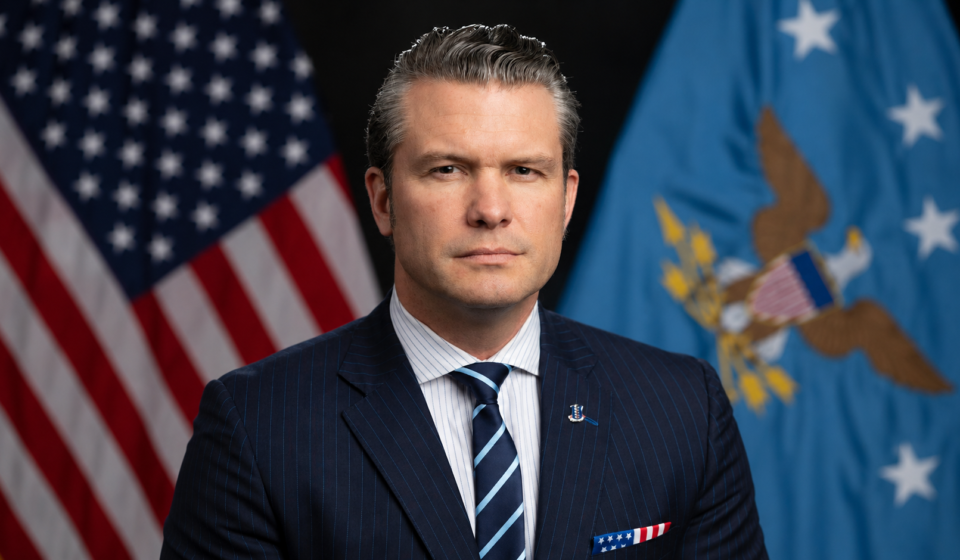

US Defence Secretary Pete Hegseth has removed Army Lieutenant General Brett Sylvia from a senior military planning position at the Pentagon as President Donald Trump considers whether to resume strikes against Iran, adding uncertainty to Washington’s military leadership during a period of heightened regional tensions.
Sylvia served as director of strategy, plans and policy on the Joint Staff, a position commonly known as the J5. The role involves coordinating military planning with senior defence leaders and helping develop options for the president and the chairman of the Joint Chiefs of Staff.
A US defence official confirmed Sylvia’s departure but did not provide a public explanation for the decision. No immediate replacement was announced in the initial reporting.
The leadership change comes as the Trump administration weighs further military action against Iran following months of conflict, economic pressure and diplomatic efforts. US forces are preparing for possible escalation, but the president has not announced a final decision to launch another round of strikes.
Why Sylvia’s Removal Matters
The Joint Staff’s J5 director occupies an important position in the US military planning structure. The office helps develop strategic options, coordinate plans across military commands and connect operational requirements with national defence priorities.
Removing a senior officer from such a position can create a period of transition, particularly when the military is preparing options for a possible new campaign.
However, Sylvia’s departure does not mean the US military has stopped planning for Iran. The Pentagon has established processes and multiple layers of command designed to maintain continuity when senior personnel change.
The immediate question is whether the removal will affect the timing, coordination or presentation of military options to the White House. There is not enough publicly available information to conclude that it will.
The absence of an announced successor could also place additional demands on existing planning staff until a replacement is appointed.
Trump Weighs Another Round of Strikes on Iran
Trump has repeatedly indicated that renewed military action remains an option if negotiations fail to address Washington’s concerns about Iran’s nuclear and military capabilities.
Reports published this week say US officials have been preparing for the possibility of further strikes after the November 3 midterm elections. Potential targets discussed in reporting include Iranian missile capabilities, military infrastructure and nuclear-related facilities.
The president has not publicly confirmed a decision to proceed. The administration has also maintained that diplomacy remains possible, leaving uncertainty over whether the military preparations will lead to a new operation.
The US military’s role is to develop options and provide assessments of their potential costs, risks and consequences. The final decision to authorise military action rests with the president.
A renewed campaign could involve complex decisions about target selection, force protection, weapons availability and the possibility of Iranian retaliation against US personnel and regional partners.
A Broader Pattern of Senior Military Departures
Sylvia is the latest senior military officer to leave a prominent position during Hegseth’s tenure as defence secretary.
His removal follows the departure of Lieutenant General Joseph McGee, who previously held the J5 position and was forced to retire in October 2025. The latest change has drawn attention because both officers held the same influential planning role within a relatively short period.
The administration has also pursued reductions in the number of senior military leadership positions. Hegseth has described the effort as an accountability measure and said the Pentagon should reassess its senior-officer structure.
The reasons for individual departures have not always been publicly explained. In Sylvia’s case, the Pentagon had not provided a detailed explanation in the available reporting.
Without further evidence, it would be premature to conclude that his removal was directly linked to disagreement over Iran policy.
What Does This Mean for US Military Readiness?
The timing of the personnel change is significant because military planning for a potential operation against Iran requires coordination across multiple organisations.
Planners must evaluate intelligence, operational objectives, logistical requirements, weapons stocks, force protection and possible responses from Iran and its regional partners. These assessments are then used to present options to senior political and military leaders.
A change at the top of the planning office may require adjustments in responsibilities, but the overall effect depends on the experience of the remaining staff and the speed with which a successor is appointed.
The United States has extensive planning capabilities across the Joint Staff and regional combatant commands. Consequently, Sylvia’s departure alone does not establish that the military is unprepared for a possible operation.
Nevertheless, repeated changes among senior officers can raise questions about continuity, morale and the preservation of long-term expertise, particularly during an extended conflict.
Iran’s Potential Response Adds to the Risks
Any new US attack would carry the risk of retaliation and a wider regional escalation.
Iran has previously warned that it would respond to renewed attacks. Regional governments are concerned that further fighting could threaten military facilities, energy infrastructure, shipping routes and civilian areas.
The consequences could extend beyond the immediate battlefield. Disruption to oil supplies or transport through strategically important waterways could increase energy prices and add pressure to businesses and consumers around the world.
For Washington, the central challenge is therefore not only whether it can carry out another military operation, but whether the operation would achieve its objectives without producing greater instability.
Analysts have questioned whether another round of strikes would compel Tehran to make significant concessions. Others argue that military pressure could be used to strengthen Washington’s negotiating position. These are competing assessments, not established outcomes.
The removal of a senior planner adds a personnel dimension to this debate, but it does not independently demonstrate a change in the administration’s strategy.
Diplomacy Remains an Alternative
Despite the military preparations, diplomatic efforts have continued. Regional governments have been seeking ways to reduce tensions and prevent another round of large-scale fighting.
Vice President JD Vance has reportedly reached out to Iranian security chief Mohsen Rezaei in an effort to revive negotiations. Regional mediators have also been working to establish a path towards further discussions.
No comprehensive agreement had been announced in the available reports. Key disagreements over Iran’s nuclear programme, military capabilities and regional security remain unresolved.
The administration therefore faces a choice between continuing to pursue diplomatic pressure and authorising another military campaign, although these approaches are not necessarily mutually exclusive.
The success of any negotiations would depend on whether Washington and Tehran can agree on terms that address their respective security concerns.
What Happens Next?
The immediate developments to watch are the appointment of Sylvia’s successor, any explanation from the Pentagon for his removal and further announcements concerning US military preparations.
The White House’s position on Iran will also be important. A decision to resume strikes would carry significant military and diplomatic consequences, while a renewed negotiating effort could change the timetable for any operation.
For now, three points remain clear: Sylvia has been removed from the Joint Staff’s J5 position, the Pentagon has not publicly detailed the reason, and Trump has not announced a final decision to launch new strikes against Iran.
The combination of a senior leadership change and an unresolved conflict places renewed attention on the Pentagon’s planning process. Whether the departure has a meaningful effect on US strategy will become clearer only as further appointments, policy decisions and military developments emerge.