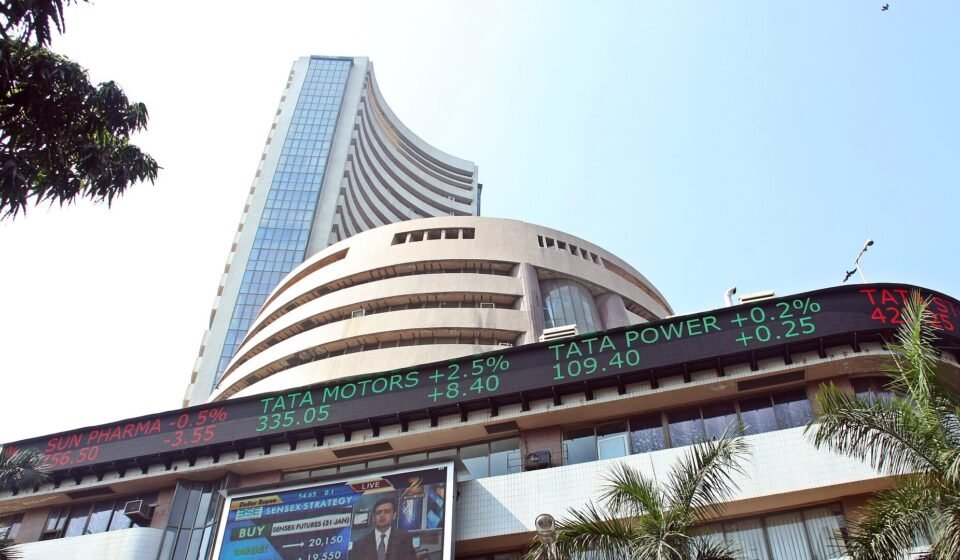

Indian stock markets begin the new week with several important signals competing for investors’ attention. A positive indication from GIFT Nifty, a sharp recent recovery in domestic equities and renewed foreign investment are providing support. However, movements in crude oil, gold, the rupee and global technology shares could influence how much of that optimism carries into Monday’s trading session.
The timing is significant. Indian exchanges are scheduled to remain closed on Tuesday, November 24, for Guru Nanak Gurpurab, making this a holiday-shortened trading week. Investors will also be watching the November flash Purchasing Managers’ Index (PMI), which is due on Monday and will offer an early reading of business activity.
The previous session, Friday, November 20, ended on a strong note. The Nifty 50 closed at 25,800.60, up 286.30 points or 1.12%, while the Sensex finished at 83,919.71, gaining around 1.08%. Bank Nifty advanced 2.49% to 64,635.20, setting a record closing level, according to market data available ahead of Monday’s session.
Key Highlights
• GIFT Nifty was trading around 25,910.50 at 7:03 a.m. IST, indicating a positive opening signal.
• The Sensex and Nifty ended the previous week with gains of 2.85% and 2.61%, respectively.
• Foreign investors have brought substantial money back into Indian equities during November.
• Lower crude prices could help India’s import bill, while gold’s decline reflects changing global commodity sentiment.
• The November flash India PMI and international economic data are among the week’s major events.
1. GIFT Nifty Signals the Opening Direction
GIFT Nifty is among the first indicators domestic traders examine before the regular market opens. At approximately 7:03 a.m. IST on November 23, it was quoted at 25,910.50, suggesting a positive start compared with the Nifty 50’s previous close of 25,800.60.
The futures indicator reflects expectations formed during extended trading hours and can respond to movements in overseas markets, currency rates and global investor sentiment. A higher GIFT Nifty reading may point towards a gap-up opening, but it does not guarantee that the domestic index will sustain gains after trading begins.
Investors will therefore watch the opening orders and the first hour of trading. If buying extends beyond a small group of heavyweight shares, the positive signal could receive broader market confirmation. If participation remains narrow, early gains may become vulnerable to profit-booking.
2. Crude Oil Prices and Gold Rates Remain Important
Commodity prices are another major factor for Indian equities because they influence inflation, corporate costs, currency demand and investor positioning.
Brent crude was quoted near $89.29 a barrel in early Monday data, down around 3.54% from the previous close shown by the market tracker. West Texas Intermediate was near $82.85. Oil had also recorded a weekly decline in the previous week, with reports pointing to strong Middle Eastern export flows and expectations of adequate supply.
For India, which imports a large share of its crude requirements, a sustained decline in oil prices can reduce pressure on the import bill and help contain fuel-related inflation. It may also improve the cost outlook for sectors such as aviation, paints, chemicals and logistics. However, any renewed disruption to shipping routes or geopolitical escalation could quickly reverse the trend.
Gold is also attracting attention. The Financial Express quoted the national 24-carat rate at approximately ₹1,22,310 per 10 grams on November 23, with city-level prices differing. Its quoted 22-carat national rate was around ₹1,12,117.50 per 10 grams. These are indicative retail-market figures, not a single exchange-traded gold price, and rates can vary by city, taxes and jeweller.
A decline in gold prices can reflect shifts in the dollar, interest-rate expectations and demand for safe-haven assets. Equity investors will be interested in whether the move signals changing global risk sentiment, although gold and shares do not always move in opposite directions.
3. Foreign Investment Flows Provide a Major Support
Foreign portfolio investor activity has become one of the most closely watched domestic market drivers. After withdrawing substantial funds in September and October, overseas investors have returned strongly to Indian equities during November.
Business Standard, citing market data, reported that net foreign investment in Indian equities had crossed ₹1 lakh crore and reached approximately ₹1.22 lakh crore during the month so far. Reuters also reported that strong foreign inflows have supported the rupee and Indian government bonds.
This reversal matters because foreign investors can influence demand for large-cap companies and the broader market. Their renewed participation has coincided with lower crude prices and a shift in global investment away from some technology-heavy exposures.
However, monthly inflow figures should not be treated as a guarantee of continued buying. Overseas funds can change their allocations quickly in response to US interest-rate expectations, currency movements, valuations and geopolitical developments. Domestic investors will watch whether the foreign buying trend continues through the shortened week.
4. November Flash PMI Could Offer a Fresh Growth Signal
The HSBC Flash India PMI, scheduled for release on Monday, November 23, is a key domestic data point. The survey provides an early indication of activity in manufacturing and services before the final monthly figures become available.
Investors will look beyond the headline reading to examine new orders, output, employment and input-cost trends. Stronger business activity could reinforce confidence in corporate earnings and domestic demand. A weaker reading, particularly if accompanied by rising costs, could raise questions about the strength of the recovery.
The PMI matters because stock prices ultimately depend on expectations about company revenues, margins and future growth. A strong market rally is easier to sustain when economic indicators support the earnings outlook. If the survey points to slowing momentum, investors may become more selective even if the headline indices open higher.
5. Global Technology Shares, the Dollar and the Holiday Calendar
International markets remain an important source of direction for Indian equities. Recent weakness in global AI-linked and technology shares has raised questions about valuations and the scale of spending required to sustain the artificial-intelligence investment boom.
Business Standard reported that global technology-market volatility could influence Asian sentiment, with Indian IT companies particularly exposed to changes in global risk appetite. Investors will also track US economic releases, including third-quarter GDP and October personal consumption expenditure inflation data, later in the week. These indicators can influence expectations about the Federal Reserve’s next policy decisions.
Currency movements are equally important. The rupee strengthened to around ₹92.67 per US dollar last week, according to Reuters, gaining approximately 1.7%. A firmer rupee can reduce the domestic cost of imports, although it may affect the translation of overseas earnings for some exporters.
The holiday calendar adds another layer to Monday’s session. With the Indian market closed on Tuesday, traders may adjust positions before the break. Expiry-related activity can also increase short-term movement, making intraday price action less reliable as a signal of the broader trend.
What Investors Will Watch During Monday’s Session
The key question is whether Friday’s strong advance receives wider participation. Traders will monitor GIFT Nifty’s opening signal, movements in banking and heavyweight stocks, the PMI release and changes in foreign investor activity.
A positive opening alone will not establish the direction of the entire session. The quality of the advance, the behaviour of the rupee and crude oil, and the response to domestic data will provide a clearer picture of market confidence.
Strategic & Future Implications
The latest market setup combines supportive domestic factors with risks from overseas markets. Strong foreign inflows, a firmer rupee and lower crude prices offer potential support to Indian equities. At the same time, global technology volatility and uncertainty over international interest rates could limit enthusiasm, especially in sectors linked closely to overseas demand.
For the coming sessions, investors will have to distinguish between a short-term rise driven by futures positioning and a broader improvement supported by economic data and corporate expectations. The PMI reading, the continuation of foreign buying and the direction of oil prices will help determine whether the recent recovery can hold through the holiday-shortened week. The figures and market indications in this report are pre-market references and may change during live trading.