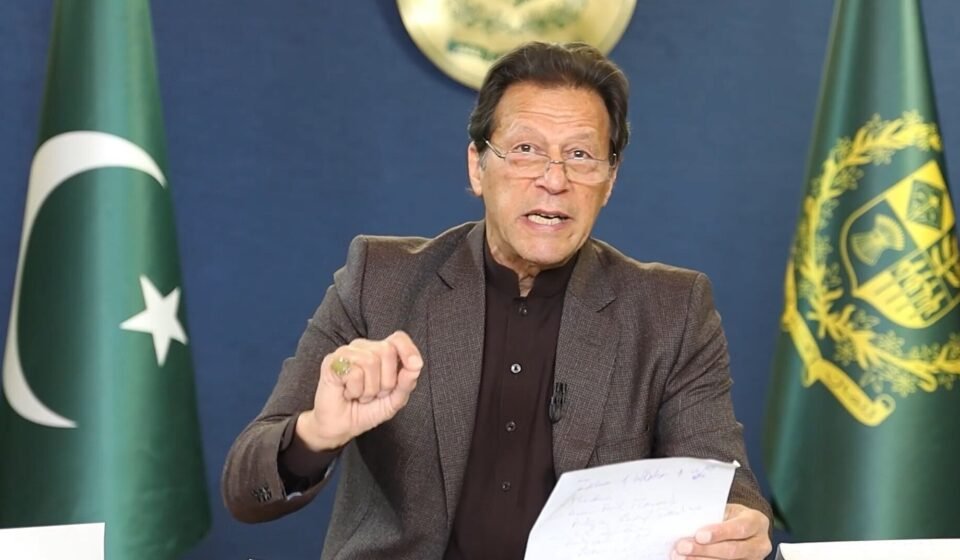

Former Pakistan Prime Minister Imran Khan has been moved back to his prison cell at Adiala Jail in Rawalpindi after receiving medical treatment at a hospital in Islamabad, bringing renewed attention to concerns about his health and access to medical care while in custody.
Khan was taken from the prison to the Pakistan Institute of Medical Sciences (PIMS) late on Tuesday, November 10. He underwent an eye examination and received treatment after experiencing blood pressure-related problems, according to officials familiar with the hospital visit.
He was returned to Adiala Jail after receiving medical attention. The visit is significant because it is the first known occasion since an earlier hospital trip in August that Khan was taken for treatment and subsequently returned to his prison cell.
The latest development comes amid continuing concerns raised by Khan’s lawyers about his physical condition. They have said his health has deteriorated during his imprisonment and that he has suffered a substantial loss of vision in his right eye. The claims have kept the question of his medical care in the public spotlight.
Eye condition and blood pressure concerns
The latest hospital visit involved an examination of Khan’s eyes, while officials also referred to problems related to his blood pressure. He received the required treatment before being transferred back to prison.
The details available so far do not provide a full medical assessment of his condition or explain the extent of any improvement following treatment. No detailed public medical report describing the examination has been made available alongside the announcement of his return.
Khan’s legal team has repeatedly expressed concern about his access to appropriate medical attention. Their statements about his eyesight have become a particularly sensitive issue because the former prime minister is 74 and has spent an extended period in detention.
His lawyers have argued that his health needs should be addressed without delay and that he should have access to suitable medical professionals. However, claims about the extent of his vision loss should be distinguished from a formal medical diagnosis made public by treating doctors.
A continuing dispute over medical access
Khan’s medical care has been a subject of disagreement between his political party, family members and the Pakistani authorities. His supporters have questioned whether he has been receiving adequate treatment and whether his family and personal medical representatives have sufficient access to him.
The government has rejected allegations of medical neglect and mistreatment. Officials have maintained that Khan is being held under the prison system and that medical arrangements are being provided in accordance with applicable procedures.
The issue has also reached the courts. In August, Pakistan’s Supreme Court ordered that Khan should receive a medical examination at a hospital in Islamabad by a specialist medical board that was to include his personal physician. The court also directed prison authorities to permit regular family contact, including weekly meetings and phone calls with his sons.
The arrangements for that medical examination became contentious, with questions raised about the hospital selected and the involvement of doctors trusted by Khan’s family. The latest visit to PIMS has therefore renewed attention to whether the former prime minister’s medical needs and the court’s directions are being adequately addressed.
Imran Khan’s imprisonment and political background
Khan, a former international cricket star who later became one of Pakistan’s most influential political figures, served as prime minister from 2018 until April 2022. His government was removed through a parliamentary no-confidence vote, after which he launched a sustained political campaign against the administration that replaced him.
He has faced several legal cases, including corruption-related charges, and has remained in prison for more than three years. Khan denies wrongdoing and maintains that the cases against him are politically motivated. Pakistan’s government rejects the allegation that the legal proceedings are being used to target him politically.
The legal position is not the same across all the cases. Several of his convictions have been suspended or overturned, while appeals and other proceedings remain pending. One conviction remains in place, according to the latest available account of his legal status.
His continued detention has remained a major issue for his Pakistan Tehreek-e-Insaf (PTI) party and its supporters. The party has repeatedly called for fair legal proceedings, access to Khan and proper medical treatment.
Another senior PTI leader also taken to hospital
The latest medical developments have also involved Shah Mehmood Qureshi, PTI’s deputy chairman and a former foreign minister. He was transferred from a jail in Lahore to a hospital in the city on Tuesday.
Unlike Khan, Qureshi had not been returned to prison at the time of the latest update and remained in hospital. The available information did not provide full details about his diagnosis or the treatment he was receiving.
The hospitalisation of two senior PTI figures within the same period has added to the political attention surrounding the treatment and condition of imprisoned opposition leaders in Pakistan.
What happens next?
Khan’s return to Adiala Jail confirms that his latest hospital visit has ended, but it does not settle the wider questions surrounding his health. Further information from doctors, prison authorities or his legal representatives may be needed to establish the results of the examination and whether additional treatment is required.
The immediate focus is likely to remain on his eyesight, blood pressure and the arrangements for continued medical monitoring. His lawyers and party are also expected to keep pressing for access to him and for compliance with court directions concerning medical care and family contact.
For Pakistan, the episode is about more than a single hospital transfer. Khan remains a powerful political figure despite his imprisonment, and developments concerning his health have the potential to intensify debate over the treatment of political opponents, prison conditions and the independence of legal institutions.
For now, the confirmed development is that Khan received medical attention at PIMS and was taken back to Adiala Jail. The full state of his health, however, remains a matter of concern and continuing scrutiny.