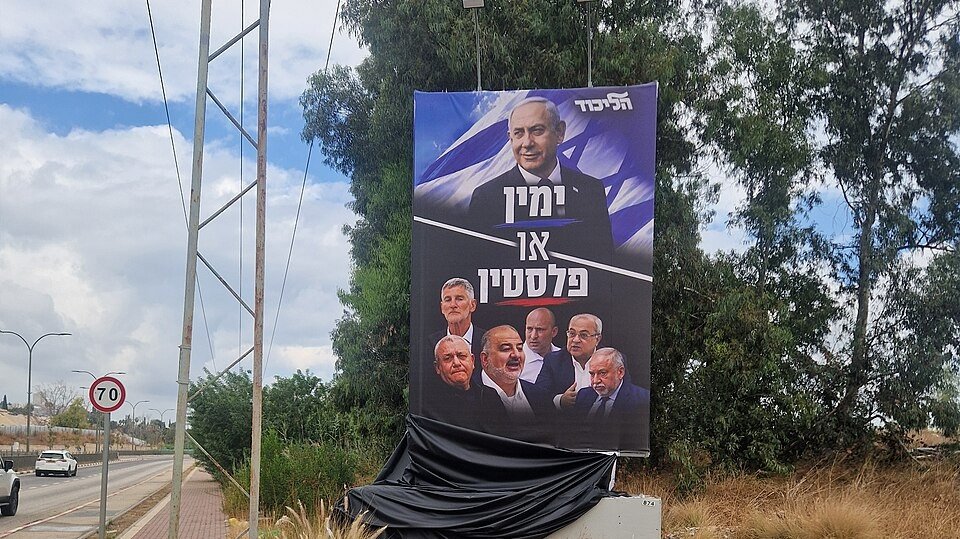

Israeli Prime Minister Benjamin Netanyahu is facing growing frustration among some voters in a traditional stronghold of his Likud party, as residents of the northern border city of Kiryat Shmona question the government’s handling of security threats and the aftermath of the conflict with Hezbollah. The developments come just days before Israel’s October 27 national election.
Kiryat Shmona, located near Israel’s border with Lebanon, has historically been an important centre of support for the political right. However, repeated cross-border attacks, a prolonged evacuation and the slow recovery of everyday life have left some residents dissatisfied with the government’s response.
The shift in sentiment does not mean Netanyahu has lost the support of the entire city. Rather, interviews with residents indicate that some long-standing Likud supporters are reconsidering their political choices, creating an additional challenge for the prime minister as he seeks to retain power.
Security Concerns Shape Voters’ Views
For residents of Kiryat Shmona, security is not an abstract campaign issue. The city has endured repeated threats from Hezbollah, the Iran-backed armed group operating in Lebanon, since the escalation of hostilities in 2023.
The fighting forced many residents to leave their homes for extended periods. Although efforts have been made to restore normal life, the return of residents and businesses has been uneven. Reports indicate that only around half of the city’s pre-war population had returned, highlighting the scale of the disruption.
The consequences extend beyond physical damage. Displacement has affected local businesses, employment, education and community life. Residents who expected a stronger sense of security after months of conflict are now questioning whether the government has delivered on its promises.
Some voters interviewed in the city have expressed disappointment with Netanyahu’s handling of the northern front. Their concerns include whether Hezbollah has been sufficiently weakened and whether the government can provide lasting protection for communities close to the Lebanese border.
Long-Time Likud Supporters Reconsider Their Choices
The emerging dissatisfaction is particularly significant because Kiryat Shmona has traditionally backed Likud, Netanyahu’s right-wing political party. Support for Likud in previous elections has been strong, making the city an important location for understanding the mood among conservative voters.
Some residents who previously supported Netanyahu are now considering alternative political options. These include opposition figures such as Gadi Eisenkot, a former Israel Defense Forces chief of staff whose campaign has sought to attract voters concerned about the government’s leadership and security record.
Other voters may remain on the right but prefer parties that take a harder line on national security. This suggests that frustration with Netanyahu does not necessarily translate into support for the political left or a single opposition party.
The distinction matters in Israel’s electoral system, where voters choose parties for the 120-seat Knesset, or parliament, and governments are formed through coalition negotiations. Changes in support among traditionally reliable voters can affect the distribution of seats and the ability of political blocs to assemble a governing majority.
The Wider Political Challenge for Netanyahu
Netanyahu has built much of his political reputation around security and his claim that he can protect Israel in a hostile regional environment. However, the Hamas-led attack of October 7, 2023, and the conflicts that followed have placed his government’s security record under sustained scrutiny.
The prime minister has highlighted military operations against Israel’s adversaries as evidence of his government’s approach. Critics, however, continue to question how the October 7 attack occurred and whether the government has adequately addressed the consequences of the ensuing conflicts.
The situation in northern Israel adds another dimension to that debate. For residents who experienced evacuation and prolonged insecurity, national security is measured not only by military operations but also by whether they can safely return home and rebuild their lives.
Netanyahu’s political difficulties are also unfolding amid a closely contested national campaign. Recent polling reported by Israeli media has shown the main political blocs struggling to secure the 61 seats needed for a majority in the Knesset. Polls are snapshots of voter opinion, however, and do not determine the final result.
Local Frustration Does Not Guarantee an Election Shift
Despite signs of discontent, it would be premature to conclude that Netanyahu has lost his political base in Kiryat Shmona or that dissatisfied residents will all vote for the opposition. Long-standing political loyalties, ideological preferences and concerns about alternative leaders may still influence voting decisions.
Some voters may also judge the government according to its wider security policies rather than the situation in their own city. Others could remain loyal to Likud while demanding changes in how the northern region is protected and rebuilt.
The election will reveal whether these frustrations translate into a measurable change in support. For opposition parties, the challenge is to persuade dissatisfied voters that alternative leadership can address security concerns and the region’s economic recovery.
Northern Israel Becomes a Test of Government Accountability
Kiryat Shmona illustrates the difficulties governments face when military action does not quickly restore normal life in communities affected by conflict. Security guarantees must ultimately be assessed against the everyday experiences of residents who have lost homes, businesses and a sense of stability.
For Netanyahu, the concerns emerging from a traditional Likud stronghold represent a test of whether his long-established political appeal can withstand dissatisfaction over security and recovery. For voters, the election offers an opportunity to evaluate the government’s record alongside the proposals of competing parties.
As Israelis prepare to vote on October 27, the mood in northern border communities provides one indication of the issues shaping the campaign. Whether that frustration leads to a significant electoral change remains uncertain, but the experiences of residents have placed security, accountability and reconstruction firmly in the political debate.


