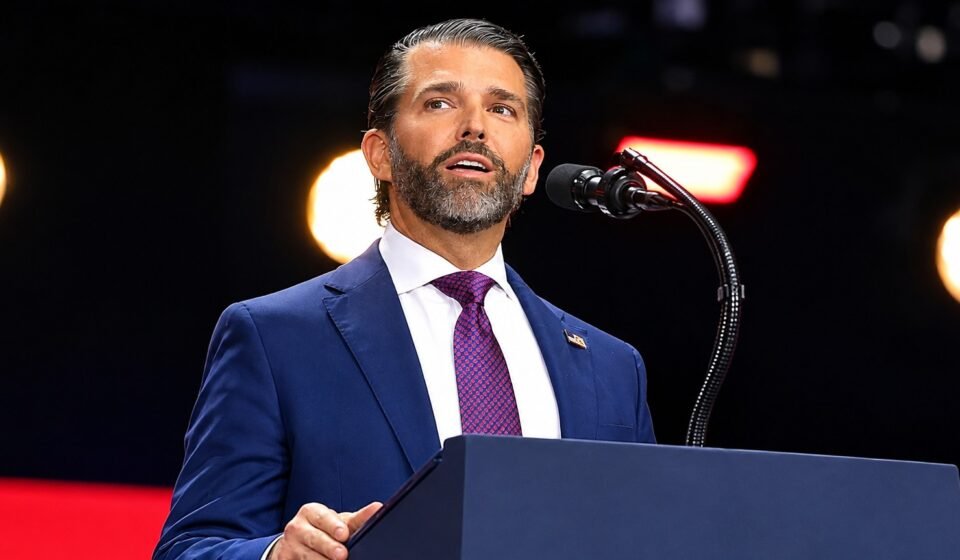
House Democrat Widens Trump Jr. Investment Probe: Four Companies Face New Congressional Scrutiny

A congressional investigation into Donald Trump Jr.’s investment firm has expanded, bringing four companies with links to its investment portfolio under fresh scrutiny. Representative Jamie Raskin, the leading Democrat on the House Judiciary Committee, has requested business records and communications from Hadrian Automation, Juul Labs, Polymarket and GrabAGun as part of an inquiry into whether political connections helped companies associated with 1789 Capital benefit from government decisions.
The latest development, announced on November 24, 2026, broadens an investigation that began earlier this year. Lawmakers are examining whether investments made by 1789 Capital were followed by federal contracts, regulatory changes or the closure of government investigations that improved the position of portfolio companies.
Donald Trump Jr. is a partner at 1789 Capital. He and the firm have rejected suggestions that political influence or confidential government information played a role in their investment decisions. No finding of wrongdoing has been established.
Key Highlights
• Jamie Raskin has sent record requests to four companies linked to 1789 Capital.
• The inquiry focuses on government contracts, regulatory decisions and investment timing.
• Investigators are examining the firm’s reported growth from $150 million to around $3 billion in managed assets.
• Trump Jr. and 1789 Capital deny using political access to secure business advantages.
Why the investigation has expanded
The latest requests are intended to help investigators understand the relationships between 1789 Capital and companies in which it has invested. Congressional investigators have asked the businesses to preserve records and provide a broad range of communications and documents covering their dealings with the investment firm.
The inquiry is being led by Raskin, a Maryland Democrat who is expected to take a prominent role in House oversight if his party assumes control of the chamber. His investigation began in August 2026, when he questioned the investment firm’s performance and its connections to businesses that later received government-related benefits.
According to figures cited by investigators, 1789 Capital’s managed assets increased from approximately $150 million to about $3 billion. They want to establish whether Trump Jr.’s involvement helped the firm gain access to opportunities that would otherwise have been difficult to identify or secure.
The growth of an investment business is not, by itself, evidence of misconduct. The central question is whether any government action was influenced by private financial relationships or whether the developments resulted from ordinary commercial and regulatory processes.
Four companies at the centre of the inquiry
Hadrian Automation and defence contracts
Hadrian Automation manufactures advanced components for industrial and defence applications. Investigators are examining military contracts signed in March 2026 that were reportedly worth close to $1 billion.
The congressional inquiry has highlighted that the company had a much smaller manufacturing operation in 2024 and, according to investigators, no previous record of fulfilling federal contracts. 1789 Capital invested in Hadrian in July 2025.
Lawmakers want to understand the company’s growth, the investment process and whether any political relationships played a role in its access to government business. Hadrian had not publicly responded to the latest request at the time of reporting.
Juul Labs and regulatory developments
Juul Labs is another company under examination. Investigators say 1789 Capital acquired a stake in the electronic cigarette business in March 2025, when the company was facing serious commercial difficulties.
Four months later, the Trump administration authorised five new Juul e-cigarette products, according to the account presented in the congressional inquiry. Lawmakers are seeking records that could clarify the timing of the investment, the regulatory process and any communications between the parties.
The company has also indicated that it plans to pursue further flavour-related product authorisations. Juul had not immediately responded to the latest request for comment.
Polymarket and closed federal investigations
Polymarket, a prediction-market platform, is being examined because of its regulatory history in the United States.
Investigators say company executives met Trump Jr. during the 2024 Republican National Convention before 1789 Capital invested in the platform. At that time, Polymarket was barred from operating in the United States.
In July 2025, the Justice Department and the Commodity Futures Trading Commission informed the company that investigations initiated during the previous administration had been closed. The CFTC later authorised a US version of the platform to launch.
Raskin’s inquiry is examining whether the investment benefited from these developments. Investigators have alleged that 1789 Capital’s investment produced a return of around 70 times its original value. That figure is an allegation cited in the inquiry, not an independently established finding of wrongdoing.
GrabAGun and proposed firearms rules
GrabAGun, an online firearms retailer, is also part of the expanded investigation. Trump Jr. serves on the company’s board, and investigators are examining the firm’s transition into a publicly traded business with involvement from 1789 Capital leadership.
Another issue concerns a proposed rule announced by the Bureau of Alcohol, Tobacco, Firearms and Explosives in May 2026. The draft proposal would make it easier for firearms to be shipped directly to customers’ homes.
Investigators want to determine what Trump Jr. knew about the proposed change and whether he had any involvement in discussions connected to it.
GrabAGun rejected the allegations, calling the congressional letter politically motivated and baseless. The company said the regulatory review was already known across the firearms industry and that its own input had been made through public comments.
Trump Jr. and the investment firm reject the claims
Trump Jr. has defended his business activities, saying his appointment at 1789 Capital followed years of professional contact with the firm’s founder, Omeed Malik. He has also said that he makes clear to foreign investors that he has no role in government.
The firm’s attorney, Bill Burck, has criticised Raskin’s investigation, arguing that the congressman’s understanding of the business contains factual errors. The lawyer said the firm had already responded to earlier questions and described the accusations as personal attacks unsupported by evidence.
The dispute therefore involves competing interpretations of the same business developments. Investigators see a pattern that warrants examination, while the firm says its investments reflect commercial analysis rather than political access.
A possible clash over congressional oversight
The inquiry is unfolding amid a wider dispute about the ability of lawmakers to obtain information from private companies that hold federal contracts.
A recent executive order from President Donald Trump directs federal contractors and subcontractors to consult the administration about congressional inquiries and withhold communications that the White House considers privileged.
That measure could complicate the response from companies such as Hadrian, which has federal defence contracts. Raskin has criticised the order, arguing that contractors should be able to answer legitimate congressional questions truthfully.
The issue could become more significant if Democrats gain control of the House and obtain stronger committee oversight powers. Congressional requests for information are not the same as compulsory subpoenas, and the ability to enforce demands depends on the committee’s authority and applicable legal procedures.
Strategic & Future Implications
The investigation could become an important test of how Congress examines possible conflicts of interest involving the business activities of a president’s relatives. Its findings may influence debates about financial disclosure, government contracting and the safeguards needed when private investment interests overlap with federal policy. The key issue is not simply whether companies received contracts or regulatory approvals, but whether there is evidence connecting those decisions to improper influence.
For 1789 Capital and the four companies, the next stage will depend on the records they provide and the explanations they offer. Documents could clarify whether the timing of investments and government decisions reflects legitimate business activity or raises further questions about access and influence. Until investigators establish the facts, the allegations should not be treated as proof of illegal conduct. The credibility of the inquiry will ultimately depend on documentary evidence, transparent procedures and an opportunity for all parties to respond.