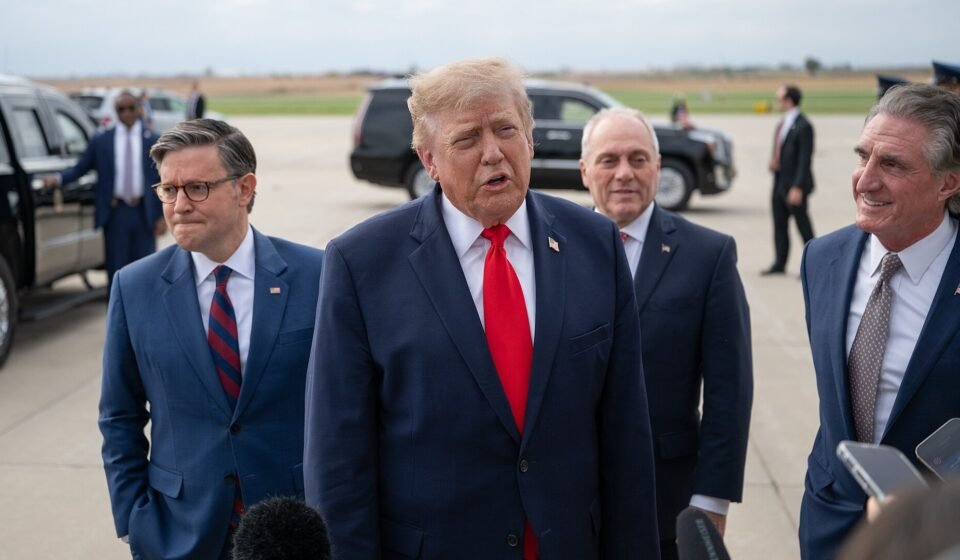

US President Donald Trump has said Washington wants a genuine agreement with Iran, but warned that Tehran has not offered terms acceptable to his administration. His comments came as Iran continued to signal that diplomacy remains possible, raising the prospect of negotiations even as military tensions and threats across the Middle East persist.
Speaking at a White House news conference on November 20, Trump said Iran wanted a deal but was unwilling to accept the conditions he considered necessary. He insisted that the United States wanted a “real deal, not a fake deal” and reiterated that Iran would never be allowed to develop a nuclear weapon.
Iranian Foreign Minister Abbas Araqchi offered a different message. He said Tehran still believed a fair diplomatic solution could end the conflict, but wanted guarantees that Washington was serious about negotiations and would not use talks as a path towards another military confrontation.
The contrasting statements reveal the difficult position facing both governments. Washington wants an agreement that addresses its security concerns, while Tehran is unwilling to surrender what it considers essential parts of its nuclear programme and national sovereignty.
Key Highlights
• Trump says the United States wants a genuine agreement but rejects Iran’s current negotiating position.
• Iranian Foreign Minister Abbas Araqchi says Tehran still believes diplomacy can end the war.
• Iran insists that enriched uranium must remain inside the country.
• US envoys Steve Witkoff and Jared Kushner have discussed mediation efforts with Qatari officials in Berlin.
• The Strait of Hormuz, sanctions and the possibility of renewed military action remain major obstacles.
Trump Says Iran’s Offer Is Not Acceptable to Washington
Trump’s latest comments underline that his administration has not abandoned the possibility of a diplomatic agreement. However, he made clear that Washington would not accept a deal simply for the sake of ending the conflict.
At the White House briefing, he accused Iran of misleading international negotiators for decades and said the United States wanted an agreement that would produce a lasting result.
He also repeated his position that Iran must never possess nuclear weapons. The issue remains central to Washington’s approach because American officials view Iran’s nuclear capabilities as a major security concern for the United States, Israel and regional partners.
Trump has alternated between expressing interest in negotiations and suggesting that Washington does not need an agreement with Tehran. His latest remarks therefore leave uncertainty over how much flexibility the administration is prepared to offer.
The president has also indicated that he is not rushing to make a decision about the next stage of the conflict. In an interview with an Israeli television network, he said he could wait until after the beginning of 2027 before deciding what to do next.
That statement suggests that Washington may continue applying economic and military pressure while keeping diplomatic options open.
Iran Says Diplomacy Remains Possible
Iran’s Foreign Minister Abbas Araqchi has maintained that Tehran is still interested in finding a diplomatic solution.
In comments published by Iranian newspapers, Araqchi said Iran wanted an agreement that would ensure there was no further war. He also stressed that Tehran needed guarantees that Washington was genuinely committed to negotiations.
According to Araqchi, discussions with mediators have included possible confidence-building measures. Such arrangements could help reduce mistrust and create conditions for more formal negotiations.
However, Iran has identified a major red line: it wants to retain enriched uranium inside the country.
This position creates a fundamental disagreement with Washington. The United States wants strict assurances that Iran cannot develop nuclear weapons, while Tehran does not want an agreement that forces it to surrender its nuclear material or abandon what it describes as its legitimate rights.
Araqchi nevertheless expressed confidence that a fair solution could be reached if both sides showed seriousness.
His remarks are important because they indicate that Tehran has not publicly closed the door to diplomacy, despite the continuing military confrontation.
Enriched Uranium Remains the Biggest Nuclear Disagreement
The future of Iran’s enriched uranium is likely to be one of the most difficult questions in any potential agreement.
Enriched uranium can be used for civilian nuclear activities, but higher levels of enrichment can also bring material closer to the level required for nuclear weapons. This is why the issue has remained at the centre of international negotiations over Iran’s nuclear programme.
Washington wants arrangements that prevent Iran from acquiring a nuclear weapon. Tehran, however, is resisting demands that would require it to remove enriched uranium from the country.
A possible compromise would need to address the quantity and level of enrichment, international monitoring, verification and guarantees against future military action.
Neither side has publicly announced an agreement on these questions.
The disagreement also raises a broader issue: even if both governments reach an understanding on the nuclear programme, they will still need to decide how sanctions, maritime restrictions and regional security concerns will be handled.
Qatar Tries to Keep Negotiations Moving
Diplomatic contacts have continued through regional intermediaries, with Qatar playing an important role.
US envoys Steve Witkoff and Jared Kushner met senior Qatari officials in Berlin on Thursday to discuss mediation efforts between Washington and Tehran, according to reports cited by Axios.
The discussions are part of broader attempts to prevent the conflict from returning to a full-scale military confrontation.
Qatar has previously played a mediation role in regional disputes and maintains communication channels with several governments involved in Middle Eastern diplomacy.
The Gulf states also have strong reasons to support a negotiated outcome. A prolonged conflict could threaten shipping routes, energy infrastructure, investment and economic stability across the region.
However, mediation does not mean that a breakthrough is close. The positions of Washington and Tehran remain far apart, and no comprehensive agreement has been announced.
Strait of Hormuz and Sanctions Complicate the Situation
The Strait of Hormuz has become another major factor in the diplomatic dispute.
The narrow waterway connects the Persian Gulf with international shipping routes and is one of the world’s most important passages for oil and gas exports. Any prolonged disruption can affect energy supplies, shipping costs and international markets.
The conflict has already created uncertainty for commercial vessels operating in the Gulf. Iran has intensified pressure on shipping, while the United States continues its naval blockade and economic restrictions targeting Iranian oil exports.
For Tehran, sanctions relief and freedom of maritime trade are important elements of any potential settlement. Washington, meanwhile, wants to maintain pressure until Iran accepts conditions that address American security concerns.
A possible interim arrangement could involve reducing restrictions on shipping in exchange for limited sanctions relief, allowing wider negotiations to continue. However, this remains a diplomatic possibility rather than an agreed deal.
Risk of Renewed Military Action Remains
Despite the continued diplomatic contacts, the possibility of further military action has not disappeared.
US and Israeli officials remain concerned about Iran’s missile capabilities and the rebuilding of its military and nuclear infrastructure. Reports have suggested that Washington and Israel are considering possible future operations, although no new decision has been publicly confirmed.
Trump has said he is not rushing to make a decision. His administration continues to maintain economic and military pressure, while Tehran has warned against further attacks.
The uncertainty is also creating concern among Gulf countries, which fear that another major escalation could threaten their security and economic interests.
For now, both sides appear to be keeping diplomatic communication open while maintaining pressure on the other.
Strategic & Future Implications
The latest statements show that the central challenge is no longer simply whether Washington and Tehran are willing to talk. Both governments have indicated some interest in diplomacy, but they disagree over what an acceptable agreement would actually require. Iran wants guarantees against another war and the right to retain enriched uranium, while the United States wants firm restrictions that prevent Tehran from acquiring nuclear weapons. Unless both sides find a way to address these competing demands, diplomatic contacts may continue without producing a settlement.
The role of Qatar and other regional mediators could become increasingly important in the coming weeks. A limited arrangement covering maritime security, sanctions relief and confidence-building measures might provide an initial path towards broader negotiations. However, the Strait of Hormuz and the possibility of renewed military action mean that the consequences of failure could extend well beyond the two countries. For global markets, energy importers and regional governments, the difference between a negotiated pause and another escalation could be substantial.


