
The United States has launched a new military task force aimed at disrupting Iran’s overland supply networks, expanding its pressure campaign against Tehran beyond the naval blockade already imposed on Iranian ports.
The US Central Command (CENTCOM) announced the creation of Task Force Iron Gate on November 7. The initiative is designed to prevent Iran from using land routes and the Caspian Sea to transport advanced weapons, military equipment, restricted technologies and other sanctioned materials.
The development represents an expansion of Washington’s efforts to restrict Iran’s ability to replenish its military resources and maintain financial networks supporting its regional activities.
According to CENTCOM, the new unit will work with several US government agencies to identify and disrupt the movement of materials and financial resources that Washington considers connected to Iran’s military supply system.
What is Task Force Iron Gate?
Task Force Iron Gate is an internal CENTCOM team consisting of approximately 20 civilian and military personnel. It will be based in Tampa, Florida, where the US Central Command maintains its headquarters.
The task force was established under the direction of CENTCOM Commander Admiral Brad Cooper.
Its responsibilities include coordinating efforts to prevent the movement of advanced weapons systems, dual-use technologies, sanctioned materials and what the US government describes as illegal revenue streams.
Dual-use technologies are products or equipment that can serve civilian purposes but may also be adapted for military applications. These can include specialised electronic components, industrial machinery, communication equipment and technologies used in weapons production.
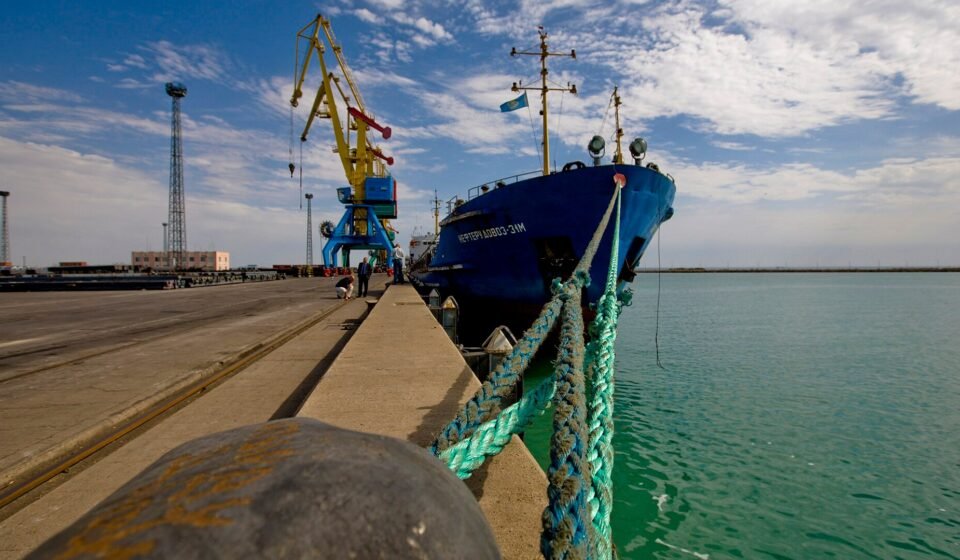
The initiative will focus on Iran’s land borders and the Caspian Sea, two important routes through which Tehran can potentially receive supplies from neighbouring countries and international trading networks.
Admiral Cooper said the initiative would strengthen the existing maritime restrictions by improving cooperation between CENTCOM and other US government agencies.
The military has not publicly disclosed a detailed operational schedule, specific border locations or a list of companies and transport networks that could face action.
US expands pressure beyond naval blockade
The creation of Task Force Iron Gate comes after months of American efforts to restrict Iran’s maritime trade through a naval blockade targeting Iranian ports.
CENTCOM has claimed that the blockade has prevented Iran from exporting more than $25 billion worth of crude oil in recent months.
The figure represents the US military’s own assessment and has not been independently verified in full.
The naval restrictions have targeted vessels entering or leaving Iranian ports, with American forces claiming that several commercial ships have been redirected or disabled after allegedly attempting to violate the blockade.
The latest development extends the pressure campaign to land-based commercial and logistical networks.
Unlike a maritime blockade, which focuses on ships and port access, monitoring land transportation requires coordination across borders, customs systems, intelligence agencies and financial institutions.
This is why the new task force is expected to work with multiple American departments rather than operate as a conventional combat unit.
Iran’s supply networks remain a concern for Washington
Despite American sanctions and maritime restrictions, Iran has continued to obtain military-related equipment through alternative international channels.
A Reuters investigation reported that Iran had imported at least $2 billion worth of military-related equipment, explosives and heavy-duty trucks since January 2025 through a covert supply network.
The reported routes included cargo ships travelling across the Caspian Sea from Russia, trucks entering through Central Asian countries and freight aircraft operating from China.
These findings highlight the challenges facing Washington as it attempts to restrict Tehran’s access to foreign equipment.
Iran shares land borders with several countries, including Iraq, Turkey, Armenia, Azerbaijan, Turkmenistan, Afghanistan and Pakistan. Its geographical position also gives it access to the Caspian Sea, which connects it with Russia and other regional economies.
These connections create multiple possible channels for commercial and industrial supplies to enter the country.
Washington is particularly concerned about technologies that could be used to rebuild weapons factories, manufacture missiles and drones, or replenish military inventories.
However, the movement of civilian goods through these routes also raises questions about how the new restrictions will distinguish between legitimate trade and shipments considered connected to military activities.
Why the Caspian Sea matters
The Caspian Sea has become an important part of the wider geopolitical and logistical picture surrounding Iran.
Iran shares the Caspian coastline with Russia, Azerbaijan, Turkmenistan and Kazakhstan. Commercial shipping across the sea provides another route for transporting goods that might otherwise face restrictions through conventional maritime channels.
The region also has strategic importance because of its energy resources, transport infrastructure and growing economic connections between Russia, Iran and Central Asian countries.
For Washington, monitoring this network is important because supplies entering through the Caspian region may support industries connected to Iran’s defence sector.
The new task force is therefore expected to strengthen intelligence-sharing and coordination aimed at identifying shipments and financial transactions that could violate American restrictions.
Nevertheless, the announcement does not mean that every commercial shipment or land route connected to Iran will automatically be blocked.
Wider consequences for regional tensions
The establishment of Task Force Iron Gate comes amid an ongoing conflict involving the United States, Israel and Iran, with regional security concerns continuing across the Middle East.
American officials have argued that restricting Iran’s access to weapons and military technologies is necessary to limit its ability to rebuild its military capabilities and support armed groups in the region.
Iran, meanwhile, has repeatedly criticised American sanctions and military restrictions, describing them as pressure on its sovereignty and economic interests.
The expanded American campaign could create additional complications for countries maintaining trade relations with Tehran.
Neighbouring states may face greater scrutiny over cross-border shipments, banking transactions and transportation networks. Businesses involved in logistics, energy and industrial trade could also encounter increased compliance requirements.
There is also a risk that stronger enforcement measures could intensify diplomatic tensions between Washington and countries whose companies or transport networks are suspected of facilitating restricted shipments.
A new phase in the US strategy against Tehran
Task Force Iron Gate signals that Washington intends to target not only Iran’s access to the sea but also the wider logistical networks that help sustain its military and industrial capabilities.
Its effectiveness will depend on intelligence cooperation, the ability to identify suspicious shipments and coordination with international partners.
For now, the initiative is primarily an interagency coordination effort rather than a publicly announced programme of direct military operations against Iran’s land borders.
The key question is whether the United States can significantly restrict Iran’s alternative supply channels without triggering further confrontation or disrupting legitimate regional commerce.
As the conflict continues, the new task force adds another dimension to Washington’s pressure campaign and places Iran’s land-based trading networks under increased scrutiny.