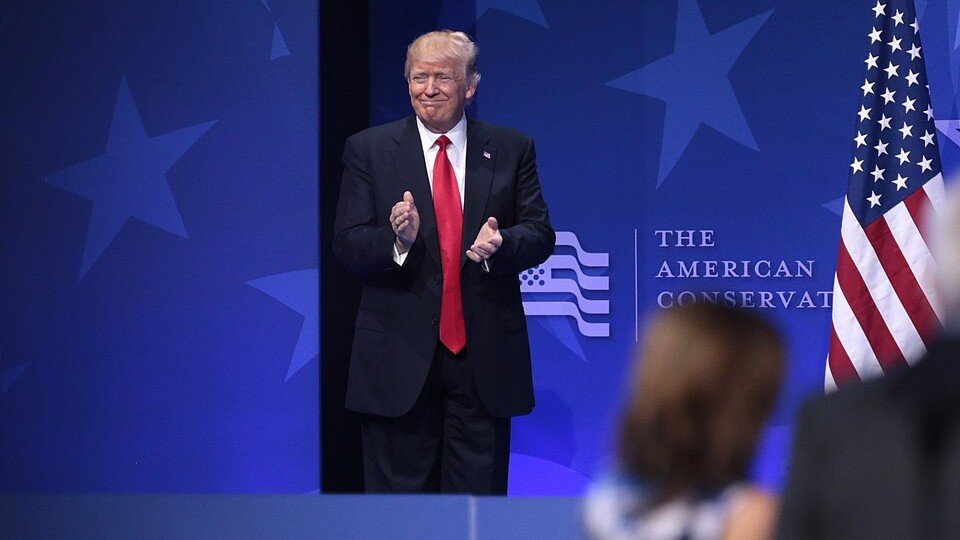

US President Donald Trump has renewed his criticism of France’s immigration policies, claiming that “Paris is going to be a Muslim city very soon” as unrest and violent demonstrations continue to draw attention across the country.
Speaking to reporters in Washington on Monday, October 19, Trump linked the disorder to immigration and urged French President Emmanuel Macron to tighten border controls. His remarks have added an international political dimension to France’s domestic crisis, with migration and religious identity once again becoming central to the debate.
The comments came after demonstrations over rising living costs and public services escalated into violence, looting and clashes with police in several French cities.
Trump Blames Immigration for France’s Unrest
Trump said he had warned Macron that allowing people from around the world to enter France was a mistake. He argued that the French president should have closed the country’s borders earlier and presented the unrest as evidence of the consequences of immigration policies.
The US president also warned that Europe faced serious consequences if governments failed to tighten border controls and remove people they considered criminals.
Trump’s remarks reflect his long-standing criticism of immigration into European countries. However, his prediction about Paris becoming a Muslim city was a political assertion, not a verified demographic forecast.
He did not present demographic evidence to substantiate the claim during his remarks.
What Is Behind the Protests in France?
France has experienced widespread demonstrations in recent days, with grievances including the rising cost of living, deteriorating public services and concerns about conditions in schools.
Student-led protests had previously highlighted shortages of teachers and staff, overcrowded classrooms and problems with school facilities. The demonstrations subsequently broadened, while violent groups and looters contributed to confrontations and property damage in some locations.
The different grievances have complicated attempts to explain the unrest through a single cause. Although Trump attributed the violence primarily to immigration, reporting on the protests has also documented economic and public-service concerns.
No evidence presented in Trump’s remarks established that the demonstrations as a whole were driven by Muslim communities or religious demands.
Curfews and Security Measures
French authorities have faced pressure to restore order following a weekend of serious disturbances. Localised curfews and restrictions have been imposed in parts of several cities, while police have stepped up security measures.
Reports published on October 19 described thousands of arrests and extensive damage to businesses and public property. The scale of the disruption has raised concerns among shopkeepers, residents and local officials about public safety and the economic consequences of prolonged unrest.
French authorities have also faced the challenge of distinguishing peaceful demonstrators from people involved in violence and criminal damage.
The government’s response has become a domestic political issue, with competing explanations for the unrest and disagreement over how best to restore public order.
Immigration Debate Takes Centre Stage
Trump’s comments have intensified discussion over immigration, integration and national identity in Europe. Immigration policy remains a divisive issue across the continent, particularly as governments face pressure over public services, economic conditions and border management.
However, claims about the religious composition of a city require reliable demographic evidence. A statement predicting that Paris will soon become a Muslim city should not be treated as an established fact without supporting data.
France’s political debate also involves questions about economic inequality, the quality of public services and the relationship between the government and younger protesters. These issues cannot be resolved simply by attributing the unrest to one religious or demographic group.
What Happens Next?
French authorities are continuing efforts to contain the violence, protect businesses and restore normal life in affected areas. The government also faces pressure to address the grievances that helped fuel the demonstrations.
Trump’s intervention has brought additional international attention to the crisis and highlighted differences between the US president’s explanation of the unrest and accounts that emphasise economic, educational and public-service concerns.
The situation remains fluid, and the longer-term political impact will depend on developments on the ground and the French government’s response.