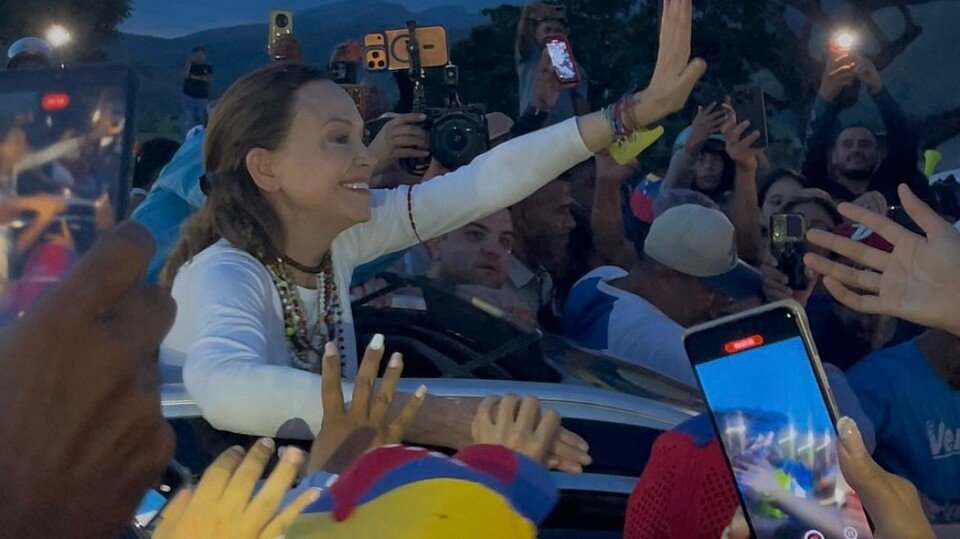

Venezuelan opposition leader María Corina Machado is expressing optimism about the possibility of a presidential election in 2027 as the country navigates a major political transition. Her return to Venezuela has renewed attention on the opposition’s efforts to restore democratic institutions and establish conditions for a credible vote.
Machado returned home on October 25 after spending months abroad. Speaking publicly in Caracas on October 29, she indicated that the transition toward democracy was moving forward. However, Venezuela has not officially announced a date for its next presidential election, and important questions about electoral reforms and political negotiations remain unresolved.
Machado Calls for a Democratic Transition
Machado, who received the 2025 Nobel Peace Prize, has become one of the most prominent figures in Venezuela’s opposition movement. She has consistently called for democratic reforms, political freedoms and the release of political prisoners.
Her latest remarks reflect her belief that recent political developments have created an opportunity for change. She has also emphasized the importance of ensuring that Venezuelans living abroad can participate in future elections.
For the opposition, the challenge will be to translate public support into a political process that allows voters to choose their leaders freely. This will require more than announcing an election date. Electoral rules, institutional independence and the ability of candidates to campaign will also be important.
Machado’s return could help her reconnect with supporters and strengthen her political movement as discussions about the country’s future continue.
The 2024 Election Dispute Remains Important
Venezuela’s political crisis is closely connected to the disputed 2024 presidential election.
Machado won the opposition’s presidential primary but was prevented from running in the national election. She subsequently backed former diplomat Edmundo González as the opposition candidate.
The opposition published vote tallies that it said showed González defeating Nicolás Maduro. However, Venezuelan authorities declared Maduro the winner, prompting widespread criticism and international disputes over the credibility of the result.
The disagreement remains significant because it has weakened confidence in the country’s electoral institutions.
Machado and her supporters want the next election to offer a credible opportunity for political change. That would require transparent vote counting, reliable electoral oversight and clear rules for candidates and political parties.
The experience of 2024 is likely to shape negotiations over the conditions for the next presidential vote.
US-Backed Roadmap Points Toward 2027
The United States has outlined a proposed transition process for Venezuela that includes stabilization, economic recovery and movement toward a new political system.
Machado has interpreted the roadmap as pointing toward a possible presidential election in 2027. US officials have also discussed the institutional changes needed to establish conditions for a credible vote.
However, the proposed timeline should not be confused with an officially scheduled election. The exact date and the arrangements for the vote remain uncertain.
Interim President Delcy Rodríguez has also promised elections, although she has not announced a specific date.
Despite this apparent agreement on the need for a future vote, disagreements remain over the political process and the institutions that would organize it.
Machado has indicated that she will not obstruct negotiations between the interim government and other opposition representatives, even though her political movement is not directly participating in those discussions.
Whether the different groups can agree on electoral reforms and political participation could determine how quickly Venezuela moves toward an election.
Economic Recovery Adds to the Pressure
Venezuela’s political future is also closely tied to its economic recovery. The country possesses substantial oil resources, but restoring investor confidence will depend on political stability, predictable regulations and stronger institutions.
Machado has called for transparent investment agreements and international financial support to help address the country’s economic difficulties.
A credible political transition could encourage investment by reducing uncertainty about future government policies. However, prolonged political disputes could discourage businesses and investors from making long-term commitments.
For Venezuelans, the success of the transition will ultimately depend not only on elections but also on improvements in employment, living standards and access to essential services.
Economic recovery and democratic reforms are therefore likely to remain closely connected during the coming months.
What Happens Next?
Several questions will determine whether Venezuela can hold a presidential election in 2027.
The government and opposition will need to address electoral reforms, political participation and the independence of institutions responsible for organizing the vote. Authorities will also need to consider how Venezuelans living abroad can register and participate.
Machado’s return has strengthened her visibility at a critical moment, but her political ambitions will depend on how the transition develops.
The key question is whether Venezuela can turn the current political opening into a credible electoral process. If the main political groups reach agreement on the necessary reforms, 2027 could become an important year for the country’s democratic future. Continued disagreements, however, could prolong uncertainty.
For now, Machado remains hopeful about the possibility of an election, but Venezuela’s next presidential vote has yet to be officially scheduled.