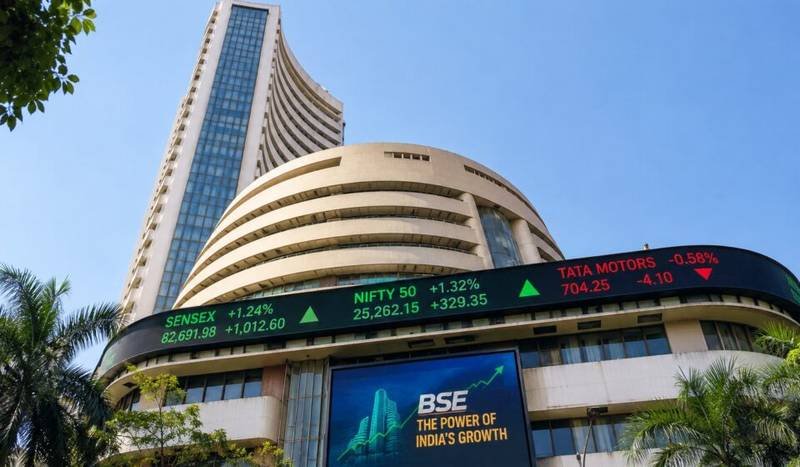

Indian stock markets enter Friday’s trading session with renewed optimism after the Sensex and Nifty 50 recorded solid gains on Thursday. Investors will now look for signs that the recovery can continue, with quarterly corporate earnings, crude oil prices, global market trends and foreign investment flows likely to influence trading activity.
The previous session brought relief to investors following several days of weakness. However, uncertainty surrounding international energy supplies and the outlook for interest rates means that traders may remain cautious despite the rebound.
Sensex and Nifty Recover After Recent Weakness
Indian equities staged a broad recovery on Thursday, October 29, as buying interest strengthened across several major sectors.
The BSE Sensex climbed 905.01 points, or 1.24%, to close at 74,151.04. The NSE Nifty 50 advanced 238 points, or approximately 1.05%, to finish at 22,936.75.
The gains followed a period of weakness in which both benchmark indices had come under pressure. Improved sentiment after the US Federal Reserve’s interest-rate decision and encouraging corporate earnings helped support the rebound.
Several heavyweight stocks participated in the rally, suggesting that buying was not limited to a single industry. Financial, information technology, infrastructure and consumer-related shares also contributed to the positive mood.
However, one strong session does not necessarily establish a lasting market recovery. Investors will want to see whether buying interest continues on Friday before concluding that the recent weakness has eased.
1. US Federal Reserve Decision Remains Important
The US Federal Reserve kept its benchmark interest rates unchanged, a decision that investors had anticipated.
Interest-rate decisions in the United States can affect financial markets worldwide because they influence borrowing costs, bond yields, currency movements and the relative attractiveness of emerging-market investments.
For India, the direction of US monetary policy matters partly because foreign portfolio investors regularly reassess their exposure to Indian equities against other global investment opportunities.
A more supportive international interest-rate environment could help sentiment toward emerging markets. However, investors must also consider inflation, bond yields and the strength of the US dollar.
The Fed’s decision should therefore be viewed as one influence on the Indian market rather than a guarantee of further gains.
2. Crude Oil Prices Remain a Major Risk
Oil prices remain an important factor for India’s economic and market outlook.
India imports a substantial share of its crude oil requirements, making the economy sensitive to changes in international energy prices. Higher oil prices can increase the import bill, put pressure on inflation and complicate the outlook for interest rates.
Brent crude was reported at around $114.40 per barrel during Thursday’s market developments, although prices can change rapidly as trading conditions evolve.
If crude prices ease further, investors may become more comfortable with the outlook for inflation, corporate costs and India’s external balance.
On the other hand, a renewed increase in oil prices could put pressure on oil-consuming industries, transportation companies and businesses with limited ability to pass higher costs on to customers.
The direction of crude oil will therefore be an important factor to monitor during Friday’s session.
3. Quarterly Earnings Could Drive Stock-Specific Moves
The ongoing September-quarter earnings season is another major influence on market activity.
Investors are examining company results for signs of revenue growth, profitability, demand conditions and management confidence. Shares may react sharply when reported earnings differ from market expectations.
Friday’s scheduled results include companies such as Sun Pharmaceutical Industries and Bharat Electronics. Bank of Baroda, GAIL, Indian Oil Corporation, Aditya Birla Capital and LIC Housing Finance are also among the companies on the results calendar.
The timing of individual announcements and their availability during the trading session should be checked against official company disclosures.
Strong results could support buying in individual stocks, particularly where earnings growth is accompanied by improved business guidance. Disappointing numbers, however, could trigger selling even if the broader indices remain positive.
For investors, the earnings season makes it particularly important to distinguish between a general market rally and the performance of individual companies.
4. Foreign and Domestic Investors Remain in Focus
Institutional investment flows are another factor that could influence the market’s direction.
Foreign portfolio investors can have a significant impact on Indian equities because of the size of their investments and their sensitivity to global financial conditions.
Domestic institutional investors, including mutual funds and insurance companies, can help absorb selling pressure when foreign investors reduce their exposure.
Recent trading has shown that changes in institutional activity can influence sentiment from one session to another. However, a single day’s investment flows do not necessarily establish a longer-term trend.
Investors should examine official exchange data for foreign institutional investor and domestic institutional investor activity as it becomes available.
A sustained improvement in foreign buying, combined with continued domestic support, could provide a stronger foundation for the market. Renewed foreign selling could make it more difficult for the benchmarks to maintain their recovery.
5. Which Stocks Could Remain in Focus?
Several sectors and companies may attract attention as investors assess Thursday’s gains and Friday’s corporate developments.
Banking and financial stocks: These shares could respond to changes in global interest-rate expectations, investor risk appetite and company-specific earnings.
Information technology: IT companies may react to global technology-sector performance, overseas demand expectations and currency movements.
Oil-sensitive companies: Airlines, transportation businesses and other fuel-consuming industries could be affected by changes in crude oil prices.
Energy companies: Oil marketing companies and other energy-related businesses may experience stock-specific reactions to international energy prices and their quarterly results.
Companies reporting earnings: Shares of businesses announcing their results may see increased trading activity as investors assess profitability, revenue growth and future guidance.
Thursday’s session also saw strong gains in Adani Ports and Adani Enterprises, while other major companies advanced. Their performance on Friday will depend on fresh buying interest, broader market sentiment and company-specific developments.
These are areas to watch, not assured trading opportunities. Investors should review official disclosures and current prices before making decisions.
6. What Should Traders Watch Before the Market Opens?
Before trading begins on Friday, market participants should examine several indicators rather than relying on the previous session’s closing levels alone.
GIFT Nifty: Its latest available futures indication can provide an early signal about the potential opening direction of the Nifty 50. It is not a guarantee of where the index will open.
Global markets: Movements in US equities and major Asian markets may influence investor sentiment in Mumbai.
Crude oil: Changes in international oil prices could affect inflation expectations and energy-related stocks.
Corporate earnings: Results and management commentary may generate sharp movements in individual shares.
Institutional flows: Foreign and domestic investor activity can help traders assess the strength of buying demand.
Currency movements: Changes in the rupee against the US dollar may affect foreign-investment sentiment and companies with significant overseas revenue or import costs.
The latest available pre-market figures should be checked shortly before the opening bell. Futures prices and international market indicators can change between publication and the start of trading.
7. Market Outlook for October 30: Recovery or Consolidation?
The immediate outlook for Indian equities will depend on whether buyers continue to support the market after Thursday’s rebound.
If buying interest persists and global conditions remain supportive, the Sensex and Nifty could attempt to extend their recovery. Strong corporate earnings and a further easing in crude oil prices would also help sentiment.
However, investors should not assume that the market will continue rising simply because the previous session ended higher.
Profit-taking could emerge after the rebound, while renewed concerns about oil prices, foreign investment outflows or global financial conditions could limit further gains.
Traders should pay attention to how the indices behave around their recent trading levels, together with market breadth and the performance of heavyweight stocks. A rise supported by a broad range of companies would generally provide a more convincing signal than a move driven by only a few large stocks.
No single indicator can reliably predict the full trading session. Market direction may change as new information becomes available.
What Could This Mean for Investors?
Friday’s trading could help investors assess whether the recent rebound represents the beginning of a more sustained recovery or a temporary pause in the market’s weakness.
For long-term investors, daily index movements are only one part of the investment decision. Company fundamentals, earnings quality, valuations, debt levels and business prospects remain important considerations.
Short-term traders, meanwhile, should be prepared for volatility around corporate announcements and changes in global market sentiment.
Avoiding decisions based solely on market headlines or a single strong session may help investors maintain a more disciplined approach.
Conclusion
Indian stock markets begin October 30 with improved sentiment following Thursday’s gains, but several important uncertainties remain.
The US Federal Reserve’s policy stance, elevated crude oil prices, institutional investment flows and the ongoing earnings season will help shape the next phase of trading.
Investors should watch fresh pre-market indicators and official company announcements before deciding how to approach Friday’s session. The key question is whether buying demand can sustain the recovery or whether caution returns as traders reassess the broader economic outlook.