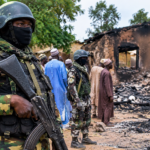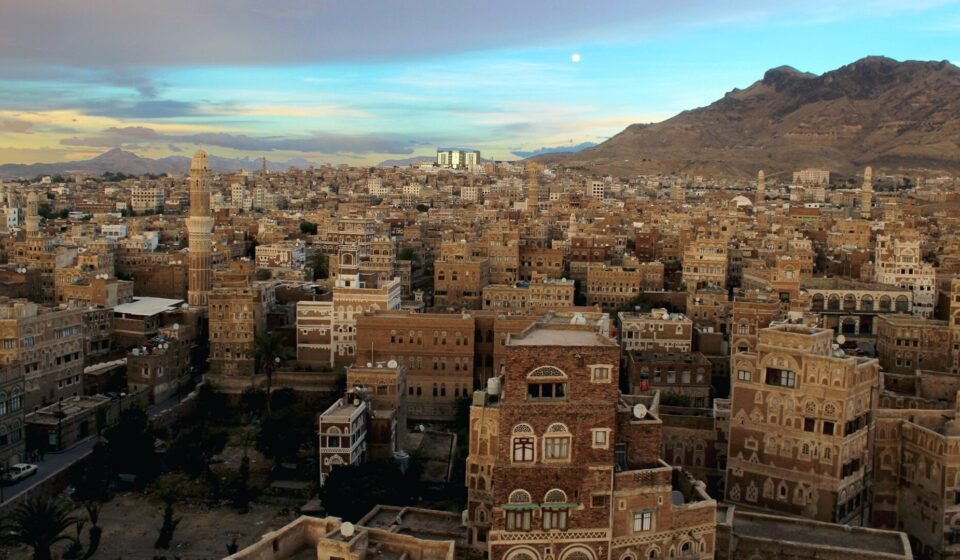

At least 44 people have reportedly been killed and 40 others injured in an airstrike that hit a residential area near Yemen’s capital, Sanaa, according to the latest figures released by Houthi-run health authorities. The attack took place in Al-Shariya village in the Bani Hushaysh district, east of the capital, on Saturday, November 7.
The reported casualties include 21 children and 10 women, making the incident one of the deadliest attacks reported since fighting between Houthi forces and their opponents intensified earlier this year. Eight children and nine women were also among those reported injured.
The Houthis have blamed Saudi Arabia for carrying out the airstrike. However, the responsibility for the attack has not been independently established, and the casualty figures remain claims issued by authorities operating under Houthi control.
Death Toll Rises as Rescue Operations Continue
The number of reported deaths increased as information from the affected area continued to emerge. Initial accounts on Saturday gave a substantially lower casualty figure. Subsequent updates raised the reported toll, with the Houthi-run Health Ministry announcing on Monday that 44 people had died and 40 had been wounded.
Rescue teams have continued searching the affected area for people who may still be missing. The strikes reportedly hit residential buildings, raising concerns about the number of civilians caught inside homes when the attack occurred.
The high number of women and children among the reported casualties has intensified concern over the impact of the renewed fighting on ordinary families. Residents in conflict-affected communities often have limited access to safe shelters, emergency medical services and reliable transport when airstrikes take place.
The latest figures should be treated with caution because independent verification of the full death toll has not been established. The situation may change if additional victims are recovered or if further information becomes available from the area.
Houthis Accuse Saudi Arabia
Houthi authorities have accused Saudi Arabia of carrying out the strikes near Sanaa. The accusation comes amid renewed military confrontation between the Iran-aligned movement and forces supported by Saudi Arabia.
Saudi Arabia has been involved in Yemen’s conflict for years, supporting forces opposed to Houthi control. The latest escalation has brought renewed airstrikes, missile launches and drone-related security incidents into the conflict.
Saudi authorities had not publicly confirmed responsibility for this particular strike in the initial accounts. The Saudi side had indicated that it was examining reports surrounding the attack. Until further details are established, the accusation remains a claim made by the Houthi authorities.
The incident also highlights the difficulty of obtaining independently confirmed information from areas affected by active hostilities. Access restrictions, damaged infrastructure and the danger faced by journalists and emergency workers can make it difficult to establish exactly what happened.
Yemen’s Fragile Calm Has Collapsed
The airstrike comes during a renewed phase of fighting in Yemen. A period of relative calm that followed the 2022 truce has broken down, with clashes between Houthi forces and Saudi-backed government forces intensifying again during 2026.
The latest confrontation has expanded beyond isolated clashes. Both sides have been involved in attacks and counterattacks, while military operations have increased pressure on communities already struggling with years of conflict.
The Houthis control Sanaa and large parts of northern Yemen. Their opponents include forces aligned with Yemen’s internationally recognised government, which has received support from Saudi Arabia. The country’s political and military divisions have made a lasting settlement difficult to achieve.
The renewed fighting has also increased the risk of further regional escalation. Missile and drone attacks attributed to the Houthis have raised security concerns inside Saudi Arabia, including around airports and energy infrastructure. Saudi military operations in Yemen have, in turn, added to the pressure on Houthi-controlled areas.
The latest airstrike near Sanaa is therefore part of a wider confrontation rather than an isolated security incident.
Civilian Communities Face a Growing Humanitarian Burden
Yemen was already facing a severe humanitarian emergency before the latest escalation. Years of war have weakened hospitals, damaged roads, disrupted electricity supplies and made access to food and clean water difficult for millions of people.
The renewed violence has added another layer of hardship. Families forced to leave their homes need temporary shelter, food, drinking water, medicines and protection. Those who remain in affected areas face the risk of further attacks and interruptions to essential services.
Humanitarian organisations have warned that fighting and restrictions on movement are making it harder to deliver assistance. Medical facilities in several parts of the country are under pressure, while damaged transport routes can delay the movement of emergency supplies.
The displacement crisis has also grown. More than 300,000 people have reportedly been forced from their homes in western Yemen amid the latest wave of fighting, according to figures cited by humanitarian officials. Many displaced families have limited resources and depend on outside assistance for basic necessities.
For children, the consequences extend beyond immediate injuries and loss of life. Displacement can interrupt education, separate families and expose young people to hunger, disease and psychological distress.
International Concern Over Further Escalation
The growing number of civilian casualties is likely to increase pressure on the parties involved to reduce attacks in populated areas and protect non-combatants.
International humanitarian law requires parties to a conflict to distinguish between civilians and military targets and to take precautions to limit harm to civilians. Residential areas, hospitals and essential civilian infrastructure require particular protection.
A credible investigation into the Sanaa-area strike would help establish the circumstances of the attack, including the target, the weapons used and the forces responsible. Independent access to the affected location would also be important for verifying the casualty figures.
For now, the reported death toll of 44 remains the latest figure released by Houthi-run health authorities. The continuing search for missing residents means the final human cost may not yet be known.
What Happens Next?
The immediate priority is to locate missing people, provide medical care to the injured and support families affected by the destruction. The wider challenge is preventing the renewed confrontation from developing into an even more destructive phase of Yemen’s long-running war.
Without steps to reduce military operations and restore humanitarian access, civilians are likely to remain exposed to further violence. The latest attack near Sanaa is a reminder that the cost of the conflict continues to fall heavily on ordinary people, particularly women and children.
Analysis: The rising reported death toll near Sanaa illustrates how quickly civilian harm can escalate when fighting returns to populated areas. The competing claims over responsibility also underline the need for independent verification before conclusions are drawn. Any further regional retaliation could deepen Yemen’s humanitarian crisis and make a return to negotiations even more difficult.