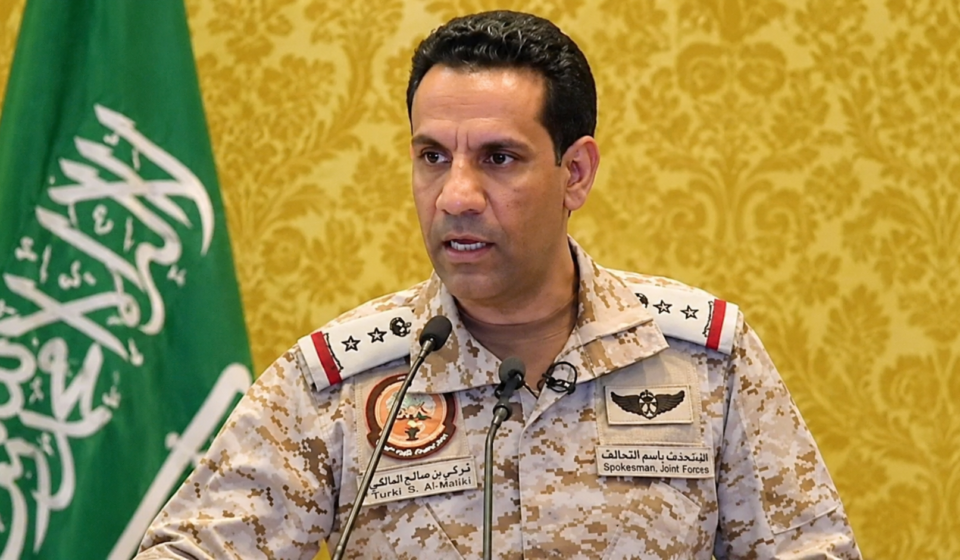

Yemen peace talks could bring the conflict to an end “tomorrow” if the Iran-aligned Houthi movement accepts a United Nations-backed peace roadmap, Saudi-led coalition spokesperson Major General Turki al-Maliki said on Sunday, November 29. In an interview, Maliki said the coalition would continue military pressure for as long as necessary to bring the Houthis to negotiations, as fighting and regional attacks intensify.
Key Highlights
• Saudi-led coalition spokesperson Turki al-Maliki said the war could end quickly if the Houthis accept a UN-backed peace roadmap.
• He said the coalition would maintain military pressure until the movement agrees to negotiate.
• The conflict has intensified, with Houthi forces advancing toward Aden and fighting around Taiz and the Red Sea coast.
• The latest remarks come amid renewed Houthi attacks and Saudi claims of intercepting missiles and other projectiles.
Coalition Says Peace Is Possible if Houthis Negotiate
Maliki said the path to ending the war depended on the Houthis accepting a UN-backed roadmap and entering negotiations. He presented the proposal as a route to a rapid end to hostilities, while warning that the coalition would not suspend pressure in the absence of talks.
The statement reflects Riyadh’s position that military action and diplomacy will continue in parallel. The coalition spokesperson said its forces would keep targeting Houthi military capabilities, including ballistic missiles, launchers and drones. He also described Houthi attacks on civilian targets as terrorism. These are the coalition’s characterizations of the conflict and its operations.
The comments did not set out a new timetable for negotiations or provide details of the roadmap’s provisions. Nor did they indicate that the Houthis had agreed to the proposed process. The immediate question remains whether the parties can move from military pressure and public statements to direct negotiations.
Fighting Intensifies Around Aden and Taiz
The interview comes as the conflict has grown more intense this year. According to Maliki, Yemeni government forces have lost ground, while Houthi forces have advanced toward Aden, the interim capital, and moved to within about 60 kilometres of the city. The Houthis have also taken areas along the Red Sea coast near Bab al-Mandeb and encircled Taiz, Reuters reported.
Aden is a significant political and strategic centre for the internationally recognised Yemeni government. Maliki said Riyadh had drawn a “red line” around the city, signalling that the coalition views a Houthi advance toward it as a serious security concern.
The battlefield picture remains fluid. The coalition says it provides continuing air support to Yemeni forces, but Maliki acknowledged coordination gaps that have contributed to setbacks. He rejected the prospect of Saudi ground troops being sent into Yemen, saying Yemeni forces had sufficient manpower and support.
Houthi Attacks Raise Pressure on Saudi Arabia
The latest diplomatic comments follow a series of reported Houthi attacks and Saudi defensive actions. On Saturday, Saudi Arabia said its air defences intercepted several projectiles, including a cruise missile aimed at Riyadh and a ballistic missile targeting Al-Shuqaiq in Jazan province. The Houthis claimed attacks on King Khalid International Airport, Saudi Aramco’s Jazan refinery, two power stations in the southwest and the Hawiyah gas plant.
Saudi authorities said debris from the interception near Al-Shuqaiq caused no civilian injuries. The Jazan refinery was struck earlier in the week, with a Nepalese worker killed and several people injured; operations were temporarily disrupted, according to the report. The Saudi-led coalition also announced an operation against resources it said supported Houthi missile and drone attacks, but did not identify the targets.
The attacks have raised concerns about the security of Saudi cities, energy infrastructure and Red Sea shipping. The Houthis have also threatened Saudi Red Sea ports, including Jeddah, in retaliation for what they described as a Saudi attack on a fuel terminal in Houthi-held territory. Those claims and counterclaims have added to the risk of further escalation.
What the Houthis Want
Maliki said the Houthis were seeking an end to Saudi support for Yemen’s internationally recognised government, the easing of restrictions on ports and compensation. The coalition’s position, as described in the interview, is that the movement must accept the UN-backed roadmap and negotiate rather than continue military operations.
The public statements do not establish whether the parties are close to agreement on these issues. The demands involve security, access to ports and the political arrangements that would follow a ceasefire. Any negotiations would need to address those disputes, as well as the future of armed forces and the governance of areas controlled by the Houthis.
The United Nations has been involved in efforts to find a political settlement, but the current reports do not provide details of a new negotiating date or confirm that a fresh round of talks has been arranged. The coalition’s “tomorrow” formulation therefore describes its view of what could happen if the Houthis accept the roadmap, rather than a confirmed deadline for ending the war.
Regional Security and the Risk of Wider Escalation
The conflict’s effects extend beyond Yemen’s front lines. Houthi attacks on Saudi territory and infrastructure have brought the security of the kingdom and Red Sea routes into sharper focus. The Bab al-Mandeb Strait is a key passage linking the Red Sea with the Gulf of Aden, making instability in the area a concern for regional and international shipping.
The coalition has said it is targeting Houthi missiles, launchers and drones, while Saudi Arabia reports intercepting incoming projectiles. The Houthis, meanwhile, have threatened further attacks on Saudi ports. These developments increase the risk that the conflict could widen, even as officials continue to speak about a possible negotiated end.
Strategic & Future Implications
Maliki’s remarks present a clear condition for ending the war: the Houthis must accept the UN-backed roadmap and come to the negotiating table. His comments also indicate that the coalition intends to keep up military pressure until that happens. The message is therefore both an invitation to talks and a warning that the current campaign will continue in the meantime.
Whether the conflict can end quickly will depend on the Houthis’ response and on whether the parties can agree on the terms of a political settlement. The latest reports show no confirmed agreement or timetable. With fighting near key Yemeni cities and attacks affecting Saudi territory and infrastructure, diplomacy faces a narrowing window in which to prevent further escalation.